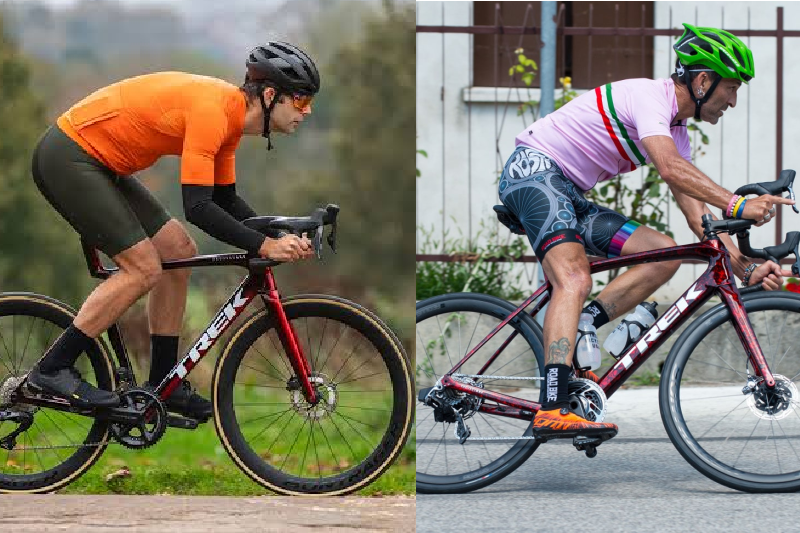
Lightweight/aero or endurance/all-road capability: which Trek road bike is best for you?
By Paul Norman
Trek has reduced its range of road bikes from three to two over the last few years. The Madone, now in its eighth generation, fills the lightweight aero bike space in the lineup. Meanwhile, the Domane’s fifth generation simplifies Trek’s endurance bike, making it a lightweight alternative to the Madone for those not planning to race anywhere.
We reckon that the Madone is one of the best all-round road race bikes, while the Domane features in our list of the best endurance bikes. Its 40mm tyre clearance allows it to double up as an all-road bike too, if you plan to stray off-road. While top spec bikes are expensive in both ranges, there are lower-priced alternatives further down the model hierarchy that share many of the features of the premium bikes.

Here, we’ll run through key aspects of the Domane and Madone’s specs and features, then we’ll document all the specs available and help you to choose between the Trek Domane and the Trek Madone, if you’re looking at a Trek for your next bike purchase.
Trek Madone vs Domane key features
Trek Madone
- Generation 8 is both aero and low in weight
- Two carbon frame grades: OCLV 9, OCLV 5
- Trek Race Geometry
- Aero bar/stem on SLR specs
- 32mm tyre clearance
Trek Domane
- Simplified design reduces weight
- Two carbon and one alloy frame options
- Trek Endurance Geometry
- Mudguard mounts
- 40mm tyre clearance for carbon frames
Trek Madone vs Domane aerodynamics
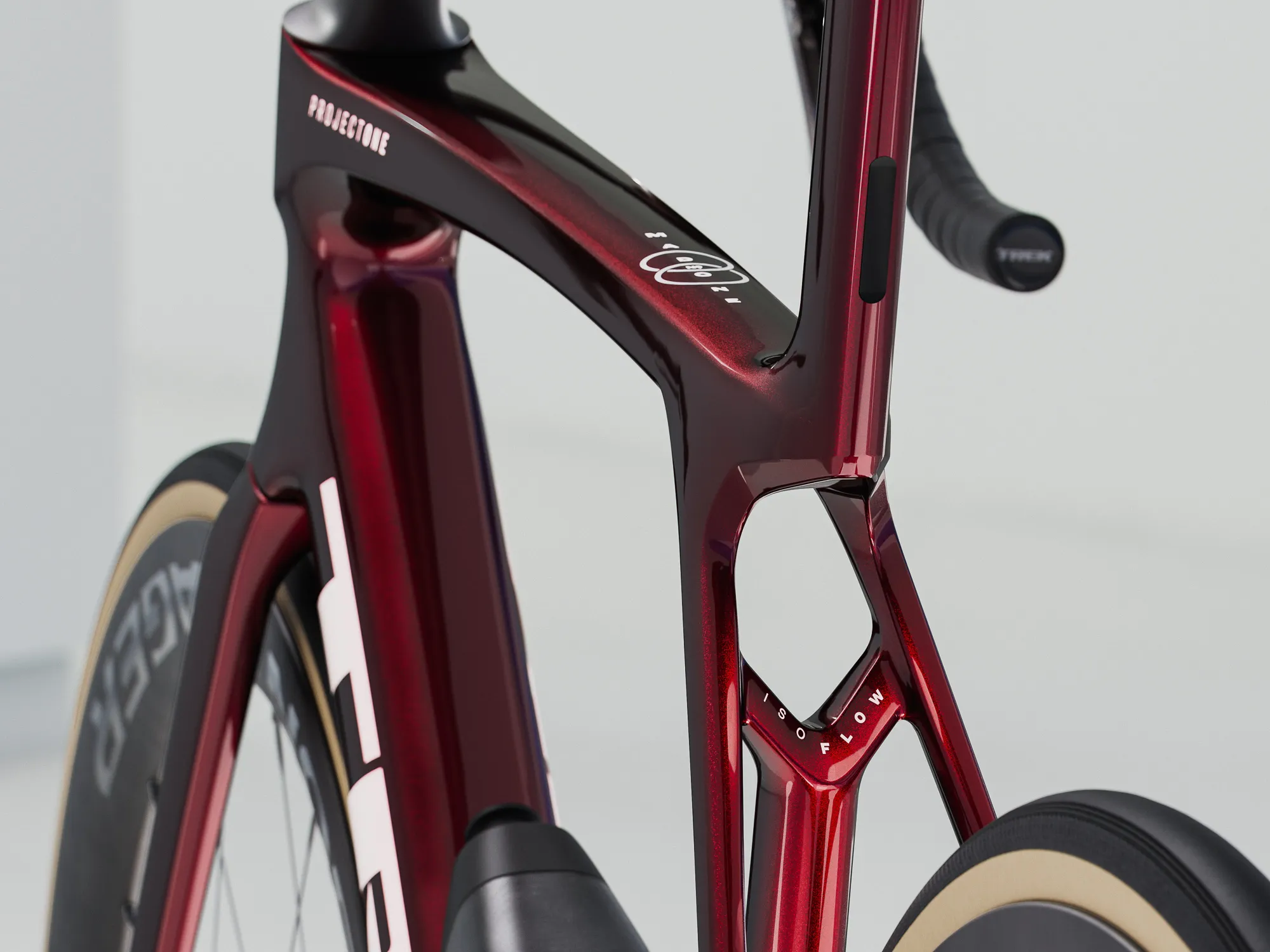
The Madone platform has focused on aerodynamics for almost ten years. In the past, that’s led to some chunky-looking bikes with weights to match.
That changed with the Gen 7 Madone, which, although retaining quite a chunky profile, shed around 300g from its frame weight, thanks in large part to the abandonment of the IsoSpeed rear decoupler.
The Gen 8 Madone has taken that a stage further, losing yet another 320g from the top spec frame, while retaining similar aerodynamic performance to the Gen 7 model. Its IsoFlow seat tube is a little slimmer than that of its predecessor, but there are other aero gains that make up for this.
The 2027 model year Domane is another Trek bike that has lost a claimed 300g from its predecessor, but Trek doesn’t make any specific aero frames for this fifth generation bike.
Trek Madone vs Domane comfort
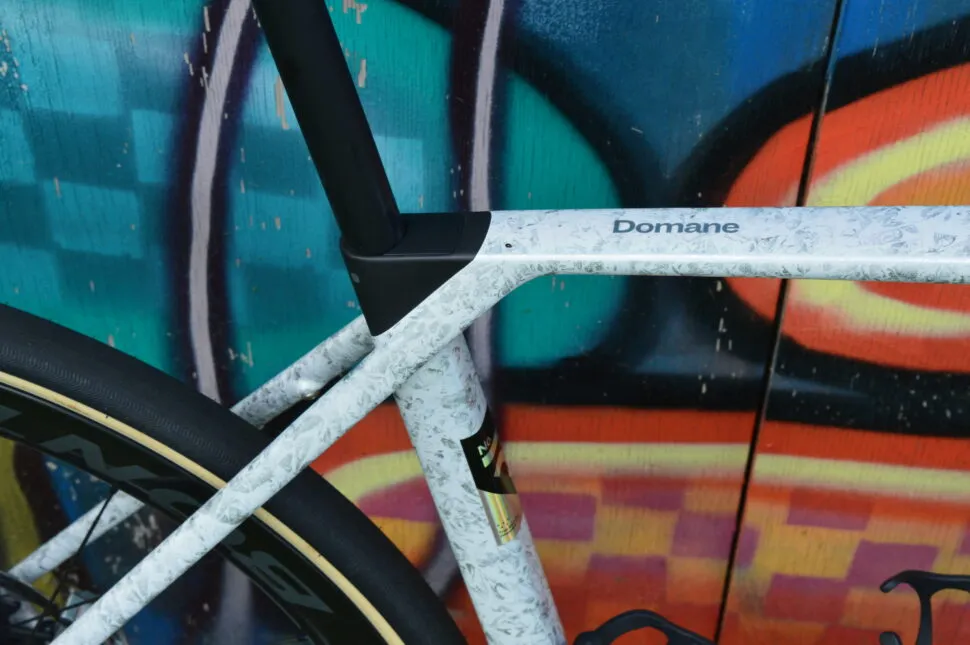
Ride comfort is the Domane’s calling card. As an endurance bike, it’s designed to place you more upright, which can help avoid aches and pains in the back, shoulders, arms and neck.
But, for the first time since the Domane’s launch in 2012, the current fifth generation bike doesn’t include an IsoSpeed seat tube decoupler. Instead, Trek has built compliance into the frame and switched to a softer, round carbon seatpost. Along with the option to fit 40mm tyres, it reckons that vibration absorption is as good as the previous bike.
Trek cited the removal of adjustable IsoSpeed as a major factor in the 300g weight loss when it moved from the Gen 6 to the Gen 7 Madone. It also claimed that few riders were making use of the system’s adjustability.
Don’t think that the latest Gen 8 Madone is an uncomfortable bike. Although its Trek Race Geometry (a successor to its H1.5 geometry on its previous generation race bikes) is more aggressive than the Domane, Trek claims that it’s made the latest Madone 80 percent more compliant than its predecessor.
Nevertheless, the Madone Gen 8 is a race bike, so the focus is on speed and performance, rather than ride comfort.
Tires are a major contributor to road smoothing and here too the Domane has the advantage, with its 40mm tire clearance rather than the Madone’s now slightly regressive 32mm.
Trek Madone vs Domane weight
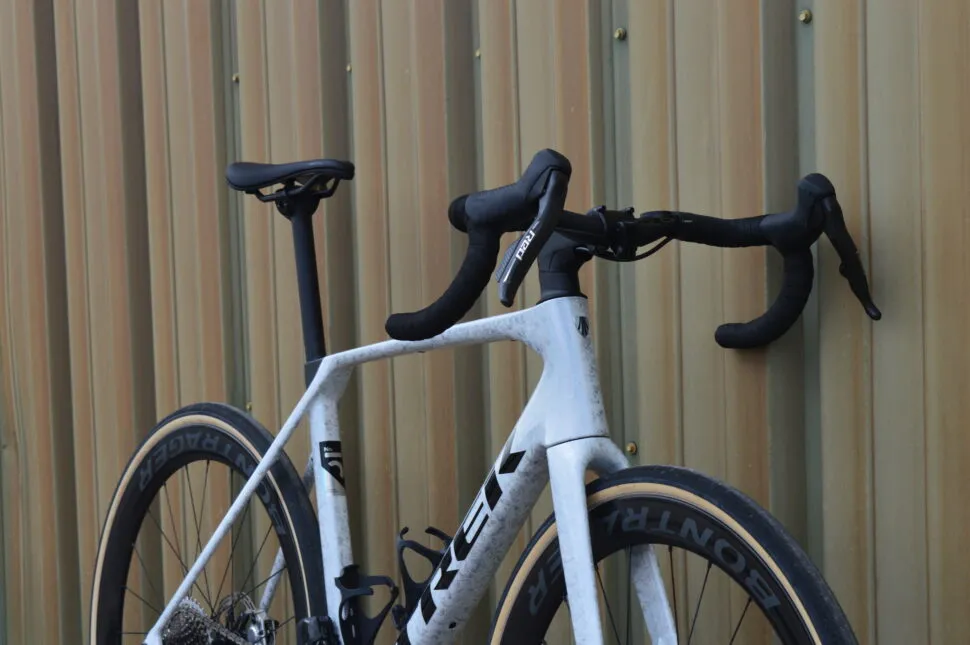
Aero race bikes used to be heavy, but they’ve gradually slimmed down. The Madone Gen 8 is no exception, with full bike weights as low as 7kg for the top spec model. That’s allowed Trek to kill off the Emonda, its lightweight bike platform. In contrast, we weighed the top spec of the Gen 6 Madone at 7.6kg when we reviewed it in 2019.
The Domane too has gone on a diet, with the lightest 1x SRAM Red XPLR AXS spec weighing a claimed 6.63kg. According to Trek, even mid-spec bikes come in under 8kg. In contrast, we weighed a highish spec Gen 4 Domane SLR at 8.2kg in 2022.
Trek Madone vs Domane sizing
Trek has reduced the number of frame sizes it sells, with both the Madone and Domane available in six sizes from XS to XL.
Don’t think that the six sizes will make it difficult to find your size though. Although Trek eliminated two sizes available in the Gen 7 Madone when it introduced the Gen 8 bike, it says that this reduces overlaps between sizes, making it easier to choose your frame size if you’re at the cusp between two.
Trek claims that, despite the reduced number of frame sizes, the Madone will accommodate riders between 143cm and 213cm tall, while the Domane should fit riders from 143cm to 199cm.
Trek Madone vs Domane geometry
| Madone SLR | Domane SLR | |
|---|---|---|
| Frame size | ML | ML |
| Seat tube length | 512 | 533 |
| Seat tube angle | 73.4° | 73.3° |
| Head tube length | 150 | 170 |
| Head tube angle | 73.5° | 71.9° |
| Trail | 59 | 63 |
| Effective top tube length | 557 | 553 |
| Bottom bracket drop | 70 | 78 |
| Chainstay length | 410 | 420 |
| Frame reach | 389 | 377 |
| Frame stack | 562 | 596 |
| Wheelbase | 980 | 1010 |
Trek calls the Madone Gen 8’s geometry Trek Race Geometry. It’s only marginally different from the H1.5 geometry of the previous generation Madone. In the past, Trek offered its race bikes in either H1 or H2 geometry, with H1 being more aggressive, for racers, and H2 being a little more upright, for Joe Average.
It pared this down to H1.5 only, as pros generally became less focussed on super-aggressive ride positions. This also avoided the need to produce two sets of framesets, and Trek has now rebranded the H1.5 geo as Trek Race.
The Domane, meanwhile, has Trek Endurance Geometry. As you’d expect, this is much more relaxed, with a frame stack that’s over 30mm higher for the mid-sized ML bike, even before the new 20mm bar rise is added in. There’s a chunk taken off the frame reach too and the 1.6 degree slacker frame angle pushes out the trail, which should make the bike more stable. The wheelbase and chainstay length are significantly longer too.
Trek Madone vs Domane frame grades
Both the Madone and the Domane are available in two grades of carbon fibre. The higher spec bikes use the SLR platform, while lower specs sit on the SL frameset. The Domane adds an alloy AL version.
Trek calls its carbon frame tech OCLV for optimum compaction-low void. It’s an acronym that it’s been using since its first carbon frames, with increments in the OCLV number.
So both the latest Madone SLR and Domane SLR are made of OCLV 900 carbon to help keep frame weight low. The Madone SL and Domane SL, meanwhile, are both fabricated with OCLV 500 carbon.
Trek Madone vs Domane gearing and groupsets
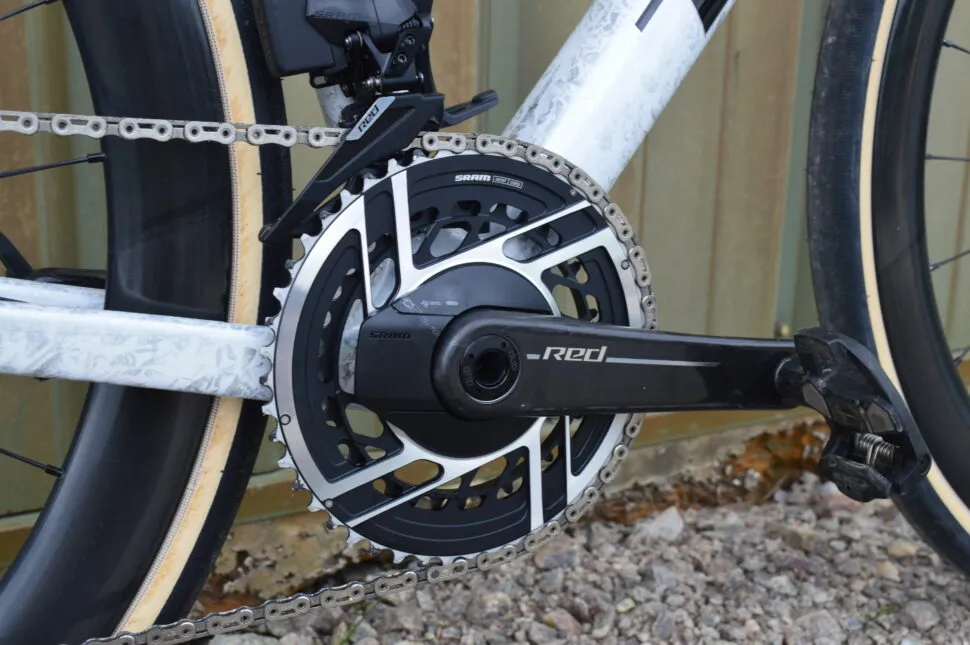
Endurance bikes generally offer lower gearing and wider spreads than race bikes and the Domane is no exception. All Shimano specs are equipped with a 50/34t compact crankset, but SRAM 2x bikes have slightly higher gearing, being fitted with a 48/35t crankset. All get a wide-range cassette: 11-34t or 11-32t for Shimano or 10-36t for SRAM.
The generation 5 Domane also offers two 1x SRAM XPLR AXS specs, with a 44t crankset and 10-46t cassette. The 1x bikes are claimed to be both lighter and more aero than their 2x counterparts.
Lizzie Deignan won the inaugural Paris-Roubaix Femmes in 2021 on a Domane equipped with a 1x groupset and Elisa Longo Borghini repeated the feat on a 1x bike in 2022.
The Madone, meanwhile, is equipped with higher ratios, with Shimano bikes having a semi-compact 52/36t crankset or SRAM 48/35t. Cassettes are narrower range on higher spec bikes, with 11-30t on Shimano and 10-33t on SRAM spec bikes, although an 11-34t or 10-36t feature lower down the range, in line with the Domane.
The lowest Shimano spec Madone has 12-speed 105 mechanical shifting, while SRAM specs include a Rival AXS option.
The Madone is designed for pro-level racing and can also accommodate larger chainrings to satisfy the pros: a 56/43t double or a 54t 1x.
The carbon Domane, because of its tyre clearance, is limited to a 52/36t maximum and the alloy bike to 50/34t.
Trek Madone vs Domane handlebars
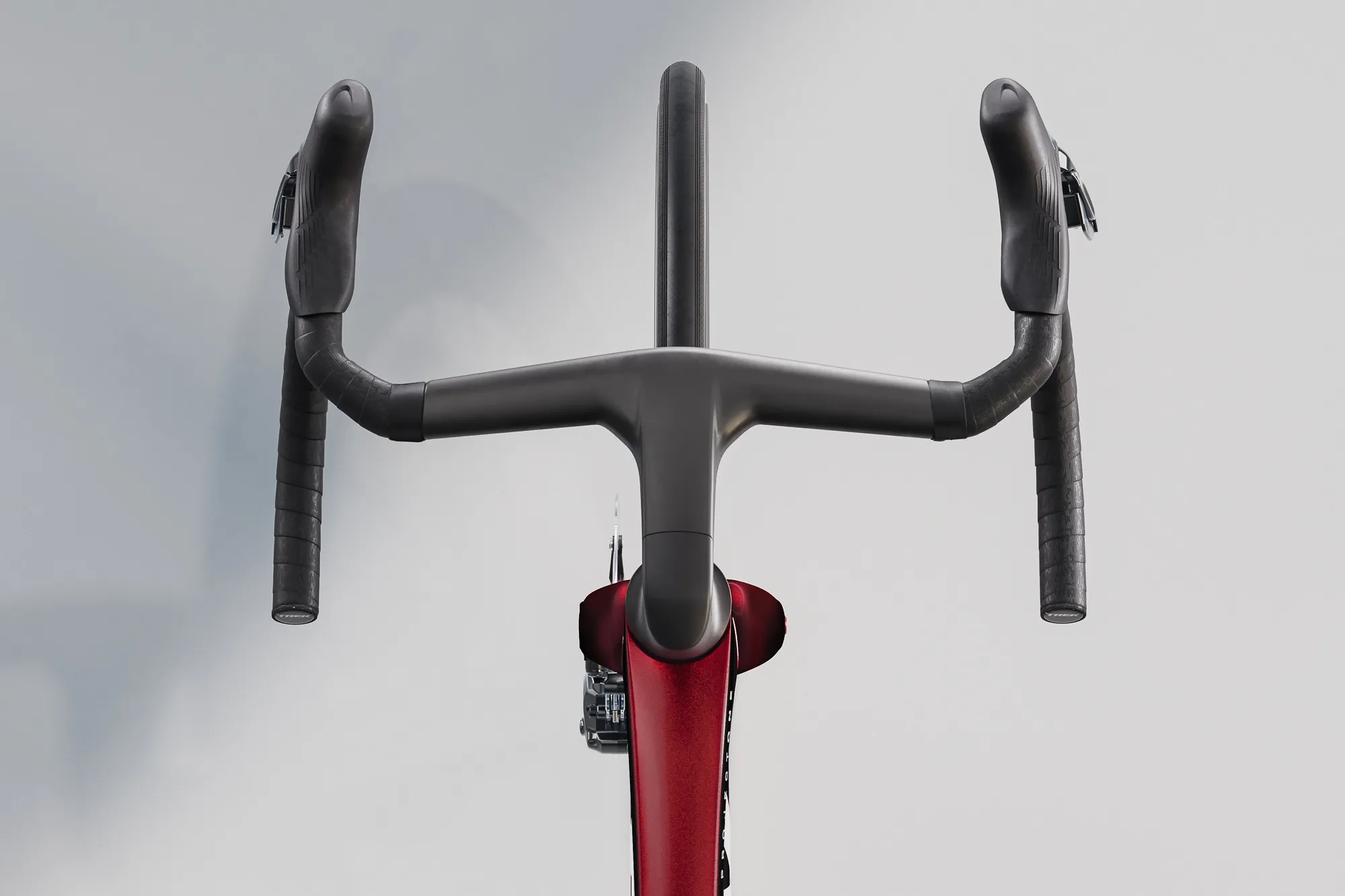
Another differentiator between the Madone and the Domane is the handlebars.
The Madone SLR has a single piece bar/stem. Its carbon Trek Aero RSL Road bar has a slightly deeper section to the tops than the Gen 7 Madone’s bar/stem. Trek says that its wind tunnel testing shows that this is more aero than the Madone 7’s as it deflects the wind more effectively from the rider’s legs.
Even the highest spec Domane SLR models are equipped with a separate bar and stem, offering adjustability. The Bontrager Pro Riser bar is available in either carbon on higher spec bikes or alloy on mid-priced specs. The exception is the Domane SLR 9 AXS 1x, which has the Trek Aero RSL Road one-piece cockpit, as also used in top spec Madones. All Domane bars and stems provide semi-integrated cabling.
The Madone’s bar/stem has a more pronounced 6 degree flare than the Domane’s bars. This places the rider’s hands 3cm closer together on the tops than in the drops, providing a more aero ride position while still offering control when descending.
The SL grade Madones have a two-piece bar and stem, with the carbon bars also designed with aero tops and a flare.
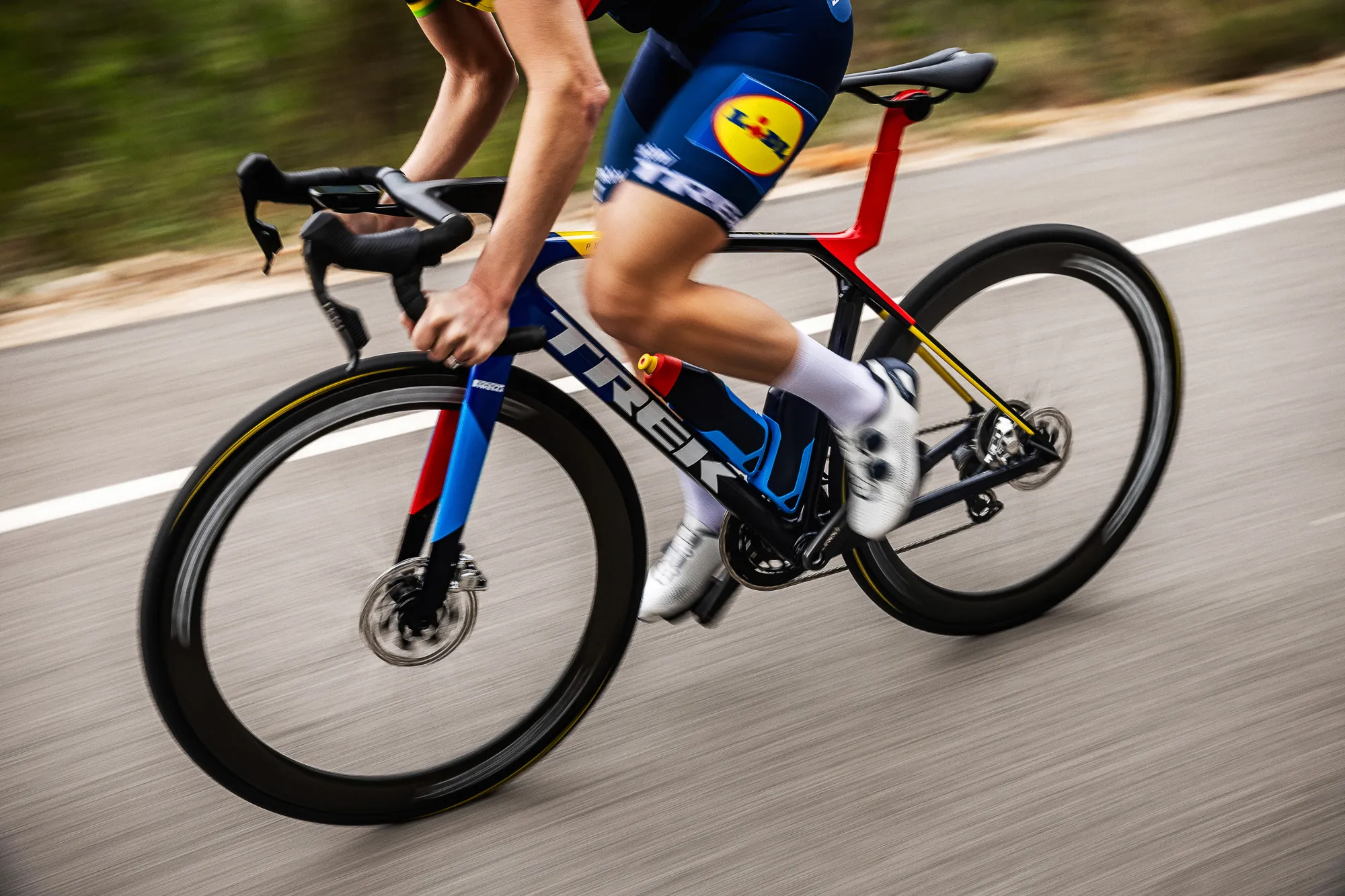
For the performance road rider, the Madone makes a compelling case. The Gen 8 bike is more compliant than its predecessor, as well as being lighter. If your budget stretches to the Madone SLR, you’ll get low weight and deep integration. The bike looks the part and its seat tube design turns heads and stands out from the aero bike crowd.
In both cases, you’ll need to enjoy the pro-focused ride position to get the best out of the bike.
The endurance-focused Domane is likely to prove more comfortable for many riders. In fact, Trek claims it’s the best bike for the majority of purchasers, with the Gen 5 Domane offering lower weight and comparable ride quality to its predecessor.
If you like to head off-road a bit, the Domane’s all-road credentials offer a less aggressive ride position and significantly wider tire clearance. Both make for added comfort over the Madone, but may lead to slower progress. In alloy form it’s the bike for entry-level riders too, and is now more affordable than ever.