Famously won on a drop barred MTB last year, the organizer behind the Leadville 100 has announced its ban on curly bars… but is this a positive step? You might be able to guess Matt Page’s answer already.
By Matthew Page, January 19, 2026
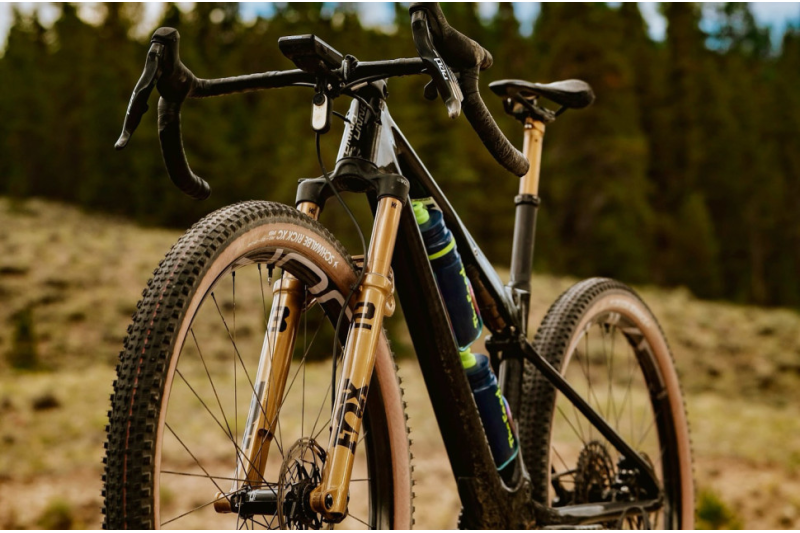
Life Time, the US events company behind races such as the Leadville 100 and the Life Time Grand Prix, has announced a ban on drop handlebars at the Leadville Trail 100 and Little Sugar MTB races. The timing is awkward for Pinarello, perhaps, as it has just unveiled the Grevil MX drop bar MTB, but the bigger question is simpler: does this ban actually solve a problem? Not in my opinion, and below I will attempt to divulge the numerous reason why I think that’s the case.
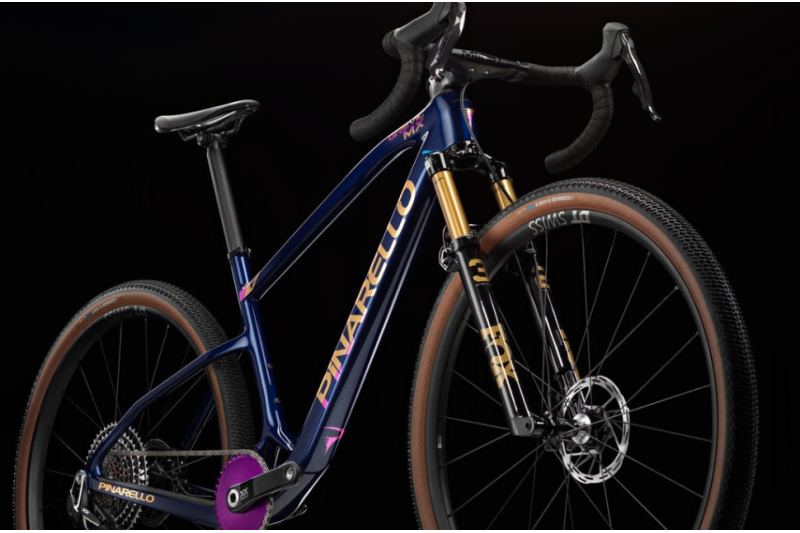
These are two of the biggest off-road races in the United States, attracting international fields and offering serious prize money. But when riders are choosing to race, and in recent years win, on drop-bar bikes, it raises an uncomfortable question. Are these really mountain bike races anymore, or just off-road events clinging to an outdated label? Ironically, this is one of the rare occasions where the UCI appears more relaxed and progressive than an independent race organizer.
Drop handlebars on mountain bikes are nothing new. John Tomac famously fitted drops on his Yeti C-26 at the first UCI Mountain Bike World Championships in 1990 in Durango, Colorado, finishing fourth in the downhill category. The UCI later restricted their use in MTB racing, a rule that still stands, but mountain biking has always allowed far more freedom than road racing when it comes to equipment.
Compared to the myriad technical regulations, MTB rules have traditionally been minimal, banning little more than metal-spiked tires and motors. 32” wheels have started to become popular, and the UCI has publicly stated that it has no intention of banning this (or not yet, at least).
Using road components off-road is also hardly controversial. Riders have always chased marginal gains, adapting bikes to suit specific courses. Steve Peat’s Santa Cruz V10 at the 2009 World Championships in Canberra is a great example, where carefully chosen components and weight savings were tailored to the track and likely contributed to his world title.
So does Life Time’s decision matter beyond the US and those couple of races? Nope. Not even slightly.
Life Time operates entirely outside the UCI and British Cycling. In the UK, almost all officially sanctioned off-road racing is governed by BC or the UCI, making Life Time’s rule change irrelevant here, both now and in the future.
Life Time’s statement reads: “For rider safety and course compatibility, drop-style handlebars (road or gravel bars with drops) are no longer permitted for the Life Time Leadville Trail 100 MTB and Life Time Little Sugar MTB. All competitors must use flat or riser-style handlebars at these events.”
I’d be interested to see the data behind this decision. Are there statistics or recorded incidents showing accidents caused directly by the use of drop handlebars? Or is this simply an attempt by Life Time to preserve the classification of Leadville 100 and Little Sugar as mountain bike races?
In Britain, the trend arguably runs in the opposite direction. We increasingly see events labelled as gravel races that are, in reality, faster on mountain bikes. Under UCI gravel regulations, flat bars are banned, but gravel remains a broad and loosely defined discipline. Terrain varies massively by region. What counts as gravel in the New Forest bears little resemblance to gravel riding in the Scottish Highlands.
Try taking a drop-bar gravel bike, even a so-called ‘monster gravel bike’, down a proper MTB singletrack, and the limitations quickly become clear. On rough, technical terrain, flat handlebars offer more control, more confidence and, crucially, more speed. This isn’t ideological, it’s practical.
So, in pure handling terms, Life Time may well be right. Flat bars do make sense on genuinely technical courses. The issue is that Leadville isn’t a modern mountain bike race. The course has remained largely unchanged since the event began in 1994, despite dramatic advances in bike design and riding standards.
When the UCI returns the Mountain Bike World Championships to Durango in 2030, it won’t be using the same course as it did in 1990. Progress demands evolution. Life Time has a choice to make: update the courses to reflect modern mountain biking, or be honest about what these events really are. Because by today’s standards, Leadville 100 and Little Sugar aren’t mountain bike races, they’re off-road races. Banning drop bars doesn’t change that.