Every road cyclist knows the feeling: you are pedaling along a scenic route, maintaining a solid pace, when a car pulls up behind or alongside you and simply stays there. It does not pass, it does not honk, it just matches your speed. For many riders, this ambiguous behavior triggers immediate anxiety. Are they waiting for a safe opportunity to pass? Are they distracted? Or is it something more sinister, like harassment or intimidation?
A recent discussion Reddit I followed highlighted this exact scenario. A female cyclist riding on an island near Detroit shared her experience of a Tesla matching her speed several times on a trail with no intersections and plenty of room to pass. While some commenters suggested the driver might have been using cruise control or waiting for a safe passing distance, others validated her discomfort, noting that such behavior can feel highly intrusive and threatening.
From a legal perspective, this scenario touches on several critical areas of bicycle law, including safe passing statutes, anti-harassment ordinances, and the fundamental right of cyclists to use public roadways. Understanding these laws can empower cyclists to protect themselves and hold aggressive or negligent drivers accountable.

The Legal Framework of Safe Passing
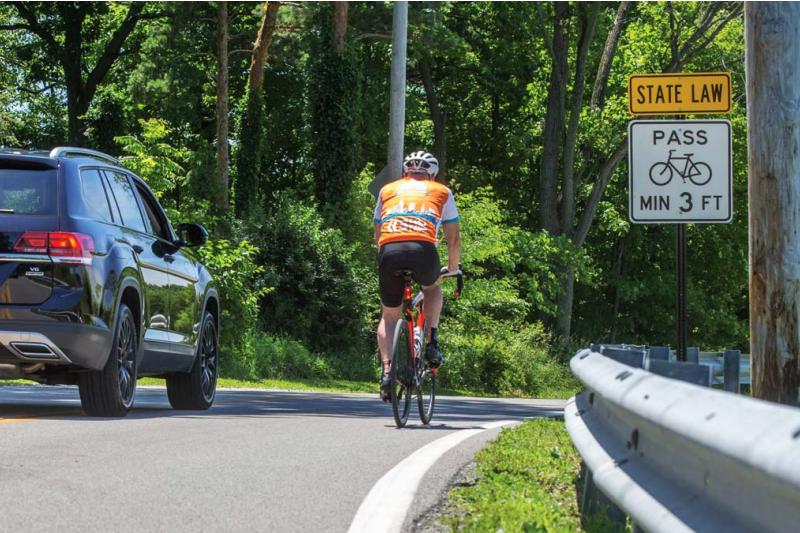
When a motorist encounters a cyclist on the road, the law dictates how they must behave. The most common legal mechanism governing this interaction is the “Safe Passing Law.” As of recent legislative updates, over 40 states have enacted specific statutes requiring motorists to leave a defined distance when overtaking a bicycle.
In Michigan, the law is clear. Under Michigan Compiled Laws (MCL) Section 257.636, a driver overtaking a bicycle must pass at a safe distance of at least three feet to the left of the cyclist. If it is impracticable to provide three feet of clearance, the driver must still pass at a safe distance and at a safe speed. Furthermore, Michigan law allows drivers to cross a double-yellow line in a no-passing zone to safely overtake a cyclist, provided there is no oncoming traffic.
When a driver matches a cyclist’s speed instead of passing, they may be acting out of an abundance of caution, waiting for a clear line of sight to provide that mandated three-foot buffer. However, if the road is clear and the driver continues to hover alongside the cyclist, their behavior moves from cautious to potentially unlawful, especially if it impedes the cyclist’s safety or constitutes harassment.
| State | Minimum Safe Passing Distance | Key Legal Provisions |
| Michigan | 3 Feet | Drivers may cross double-yellow lines to pass safely. |
| Pennsylvania | 4 Feet | Cyclists are not required to pull off the road for faster traffic. |
| California | 3 Feet | Anti-harassment ordinances allow civil suits against aggressive drivers. |
| Virginia | 2 Feet | Minimum distance required when overtaking a bicycle. |
| Texas (Austin/San Antonio) | 6 Feet (Commercial Trucks) | Enhanced distance requirements for large vehicles. |
The Right to the Road: Recent Landmark Rulings
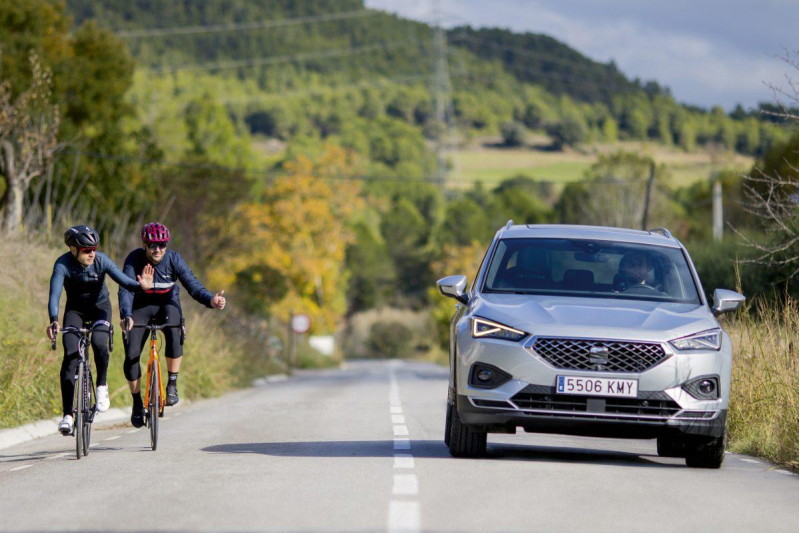
A common misconception among motorists is that bicycles are a nuisance that should yield to faster-moving vehicular traffic. This bias often leads to aggressive driving behaviors, such as tailgating or punitive speed-matching. However, recent court rulings have strongly reaffirmed that cyclists have an equal right to the road.
In June 2025, the Pennsylvania Supreme Court issued a landmark decision in Commonwealth v. Linton, ruling that cyclists are not required to pull off the road to allow faster traffic to pass. The case involved a cyclist who was ticketed for impeding traffic while riding 19 mph in a 55 mph zone on a road with an unsafe shoulder. The state’s highest court affirmed that cyclists can determine the safest lane position and must only make “reasonable efforts” not to impede traffic, which does not inherently mean exiting the roadway. This ruling solidified the “take the lane” principle, emphasizing that the safety of the cyclist supersedes the convenience of the motorist.
Similarly, in May 2025, the California Supreme Court ruled unanimously in Whitehead v. City of Oakland that liability waivers cannot shield municipalities from their statutory duty to maintain safe roadways for cyclists. While this case focused on infrastructure rather than motorist behavior, it underscored a vital legal philosophy: cycling on public roads is a protected activity, and cyclists are entitled to the same safety standards and legal protections as drivers.
When Speed-Matching Becomes Harassment
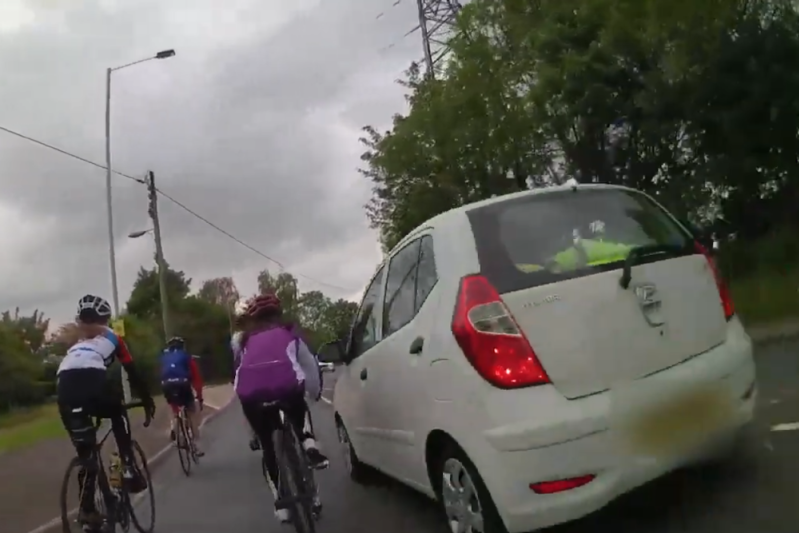
If a driver’s behavior escalates from merely matching speed to active intimidation, cyclists have legal recourse. Harassment on the road is a serious issue, and several jurisdictions have implemented specific laws to address it.
Vulnerable Road User Laws and Anti-Harassment Ordinances
Vulnerable Road User (VRU) laws provide enhanced legal protection for individuals not protected by the steel frame of a car, including cyclists and pedestrians. These laws typically impose harsher penalties on motorists whose negligent or intentional actions injure or kill a vulnerable user.
In addition to state-level VRU laws, several cities have adopted Cyclist Anti-Harassment Ordinances. Los Angeles pioneered this approach in 2011, granting bicyclists a civil cause of action against drivers who harass them. Under this ordinance, cyclists can sue drivers for behaviors such as attempting to physically assault them, threatening them with a vehicle, or intentionally distracting them. Successful plaintiffs can be awarded $1,000 or treble damages, plus attorney’s fees. This civil remedy is crucial because it allows cyclists to seek justice even if the police decline to file criminal charges.
Criminal Stalking and Assault Charges
In extreme cases, a driver’s actions can cross the line into criminal territory. In Michigan, the stalking statute (MCL 750.411h) defines stalking as a willful course of conduct involving repeated or continuing harassment that would cause a reasonable person to feel terrorized, frightened, or intimidated. If a driver repeatedly follows a cyclist, matches their speed aggressively, or engages in threatening behavior, they could potentially face stalking or harassment charges.
Furthermore, using a vehicle to intimidate a cyclist can lead to severe felony charges. In April 2026, a BMW driver in Newport Beach, California, was arrested and charged with assault with a deadly weapon after video footage showed him deliberately swerving into a marked bike lane to intimidate two cyclists. The case highlighted how quickly aggressive driving can be classified as a violent crime when a 4,000-pound vehicle is used as a tool of intimidation.
What to Do If You Feel Threatened
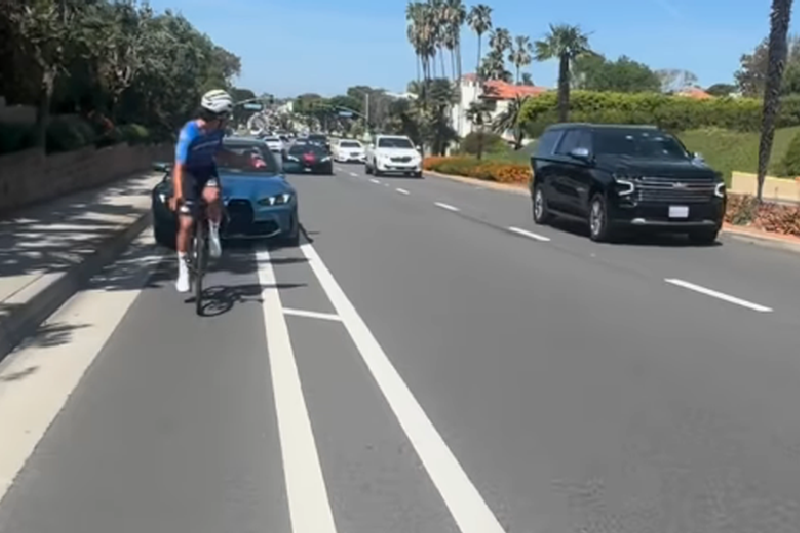
If you find yourself in a situation where a car is matching your speed and you feel unsafe, prioritize your immediate well-being. As noted by experienced riders, a bicycle has advantages in maneuverability. You can pull over, hop a curb, or turn onto a path where a car cannot follow.
From a legal standpoint, documentation is your best defense. If possible, memorize or record the vehicle’s license plate number. Many cyclists now ride with front and rear-facing cameras, which provide irrefutable evidence of aggressive behavior, close passes, or harassment. If an incident occurs, report it to local law enforcement. Even if an immediate arrest is not made, creating a paper trail is essential for establishing a pattern of behavior or pursuing civil action under anti-harassment ordinances.
The road belongs to everyone. By understanding your rights and the laws designed to protect you, you can ride with greater confidence and help foster a culture of accountability and safety on our streets.