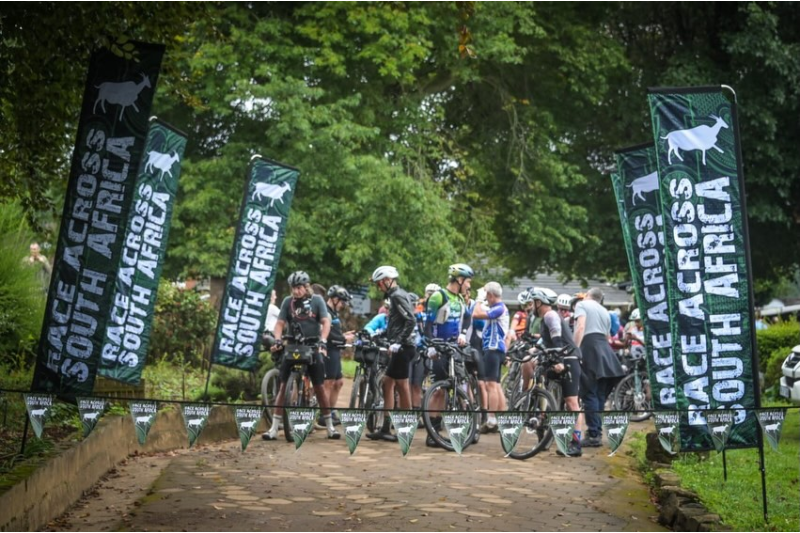
With the leading rider not far from the finish line of this year’s RASA, here’s an overview of this 2000km self-supported monstrosity of a bike race.
The Race Across South Africa (RASA) is a long-distance, self-supported bikepacking race that follows the historic Freedom Trail across the country. It stretches for roughly 2000km, beginning inland near Pietermaritzburg in KwaZulu-Natal and finishing in Wellington in the Western Cape. What defines the race is not just its length, but the character of the route and the way riders are required to move through it.
.

The route itself is deliberately indirect and shaped by history rather than modern transport efficiency. Instead of sticking to tarred roads, it weaves along old wagon routes, farm tracks, gravel roads and remote passes, linking together a network of paths that reflect earlier patterns of movement across South Africa. As a result, riders pass through a wide range of landscapes, from greener eastern regions through mountainous terrain and into the dry expanses of the Karoo before reaching the Western Cape.



Although the race is not divided into stages, there are checkpoints placed at intervals along the route. These serve as control points rather than rest stops in the traditional sense, marking progress through the course while maintaining the continuous nature of the event. Riders are effectively always “on the clock” from start to finish, with total elapsed time determining their result.

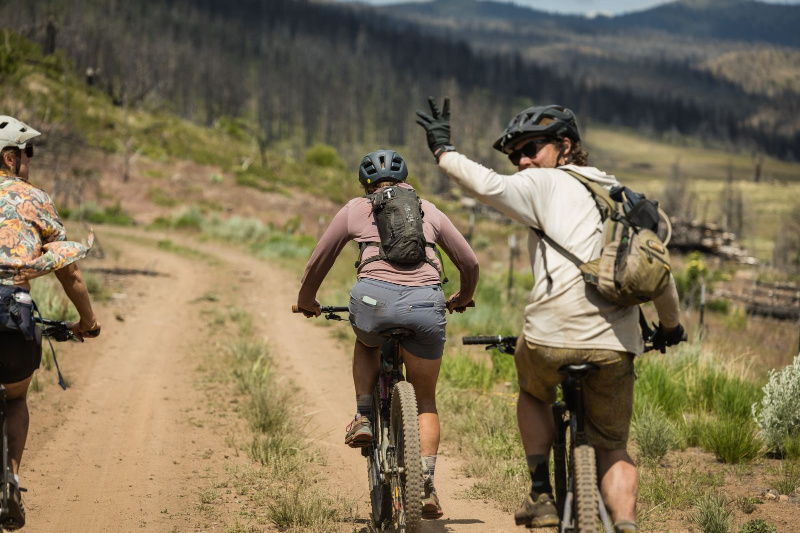
A defining aspect of the route is that it is not entirely rideable. Riders regularly encounter steep climbs, rough terrain, and sections where they are forced to dismount and push or carry their bikes. Even in the RASA format, which is somewhat more rideable than the original Freedom Challenge race, the terrain remains demanding and often remote, requiring both physical endurance and careful judgment.

The method of racing is what sets RASA apart most clearly from conventional racing. It is a non-stop race in which riders continue forward for days at a time, deciding for themselves when to sleep, how long to rest, and how to manage fatigue. There are no stages, no scheduled breaks, and no external structure beyond the overall cutoff times. This creates a continuous effort where pacing and decision-making become as important as physical speed.

Self-sufficiency is central to the event. Riders must operate without outside assistance, carrying their own gear and handling their own repairs and resupply. Any support must come from what is available along the route or from predefined race infrastructure, rather than from personal support crews. This requirement reinforces the sense that each rider is responsible for their own progress across the country.

Navigation also plays a crucial role. Traditionally, the Freedom Trail required riders to navigate without GPS, relying instead on maps, written directions, and compass work. The RASA version allows GPS navigation, but the route is still unmarked, and riders must interpret and follow it independently. This means that navigation is not just a background task but an active part of the race, influencing both efficiency and overall performance.

Because of all these factors, the race becomes as much a strategic and mental challenge as a physical one. Riders must constantly weigh decisions about rest, pace, route choices, and resource management, often in isolation and in changing environmental conditions. The combination of a complex, varied route and a strict self-supported format turns the event into something closer to an expedition than a conventional race.

In essence, the Race Across South Africa is defined by the interplay between its route and its rules. It is a crossing of the country along rugged, historically rooted paths, undertaken in a continuous, unsupported manner that demands independence, resilience, and careful decision-making from start to finish.

As I write this, (Monday at 6am) Drikus Coetzee has a commanding lead and is about 300km from the finish line. Follow the live tracking here or learn more about the RASA here //