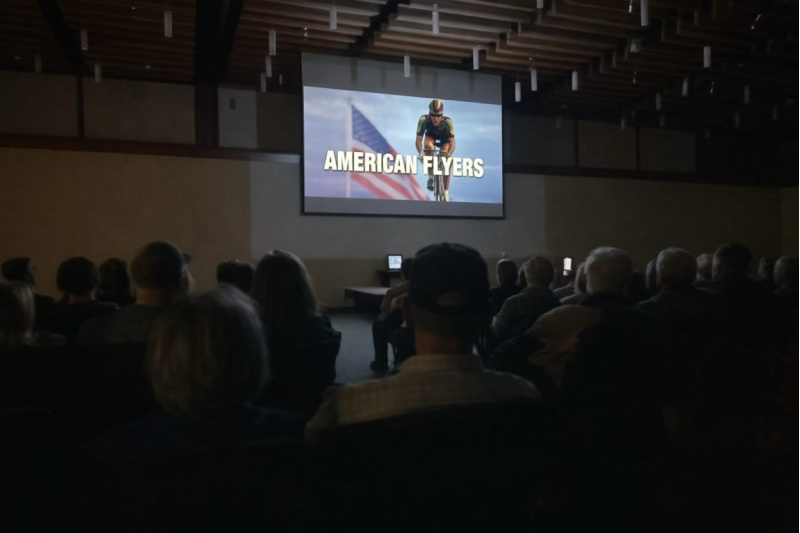
Recap: American Flyers’ 40th Anniversary in Grand Junction
This post is belated recap of the 40th anniversary screening of American Flyers in Grand Junction—an event I felt genuinely fortunate to attend. The screening coincided perfectly with Andrea’s and my Great American Southern Road Trip through the Southwest, making it possible for me to be there in person. That timing mattered, because this wasn’t just a movie night; it was the culmination of nearly a year of work by people deeply invested in cycling, its history, and its future.
In the months leading up to the event, I had corresponded quite a bit with Bob Shaver. Bob is one of those figures whose influence quietly threads through decades of American cycling culture. A lifelong rider with more than 200,000 miles in the saddle, he founded ShaverSport Cycle Wear—a U.S. company that introduced several clothing and accessory innovations to the cycling market—and supplied gear directly to Warner Bros. for American Flyers, where ShaverSport appears as the principal sponsor of the film’s protagonists. Just as importantly, Bob has spent decades channeling his love of cycling into philanthropy, especially initiatives focused on making roads safer for cyclists and other vulnerable users.
For the 40th anniversary of American Flyers, Bob wanted to do more than celebrate a cult classic. His motivation was twofold: to honor the film’s legacy and to raise meaningful funds for organizations working to protect cyclists and support those affected by serious injuries and disease. Two screenings were organized—one in Grand Junction and one in Denver—along with a four-day awareness ride across Colorado that would end in Grand Junction just in time for the first showing.
Because I was running the Berlin Marathon, I knew I’d miss the Denver screening. But Grand Junction lined up perfectly with our road trip, giving me the chance to finally meet Bob in person, attend the event, and—perhaps most importantly—experience American Flyers the way it was meant to be seen.
Arriving in Grand Junction
Andrea and I arrived at the Grand Junction Convention Center about fifteen minutes before the event began. Even then, it was obvious this would be a well-attended evening. Hundreds of people were already seated or filing in, many of them cyclists in town to ride the Tour of the Moon the following day.
Once we found our seats, I immediately spotted Bob Shaver. I walked over to introduce myself, and within moments he introduced me to Davis Phinney. As someone who grew up reading about Davis in Bicycling Magazine in the late 1980s and early 1990s, meeting him in person—some thirty-five years later—was genuinely surreal. Despite living with Parkinson’s disease, he was sharp, engaged, and warm, very much the gracious champion he has always been known as.
The Master of Ceremonies
The evening was guided by master of ceremonies Scott Christopher. Scott brought a rare mix of humor, storytelling, and first-hand experience to the stage. Not only is he deeply rooted in the cycling community, but he also appeared as a “Cycle Team Leader” (per IMDb) in the movie, which gave his commentary ‘extra’ authenticity. He kept the program moving smoothly while weaving in personal anecdotes that set the tone for what followed.
Stories From the Film and the Community
Another Extra’s Perspective
The first speaker was an audience member named David, who shared how he appeared as an extra in the film. Hoping to be later recognizable in the movie, he had worn a bright red shirt that ended up visible during a brief two-second flyover shot. It was a small role, but his story captured how many local cyclists felt personally connected to the movie.
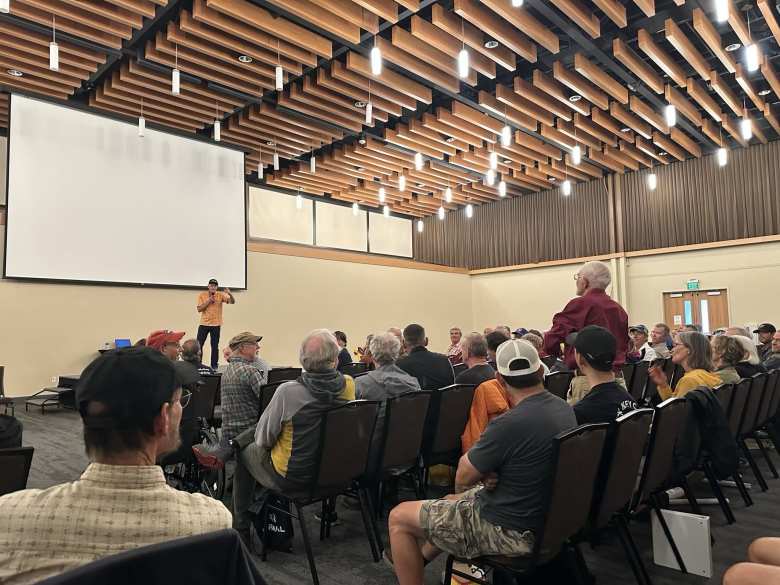
Bob Shaver and ShaverSport
Scott then formally introduced Bob Shaver, who spoke about founding ShaverSport. I later learned about how it became the first American company to bring four-way-stretch Lycra cycling shorts with grippers to the public. Those innovations alone reshaped comfort and performance for generations of riders, and its appearance in American Flyers permanently tied the brand to cycling cinema.
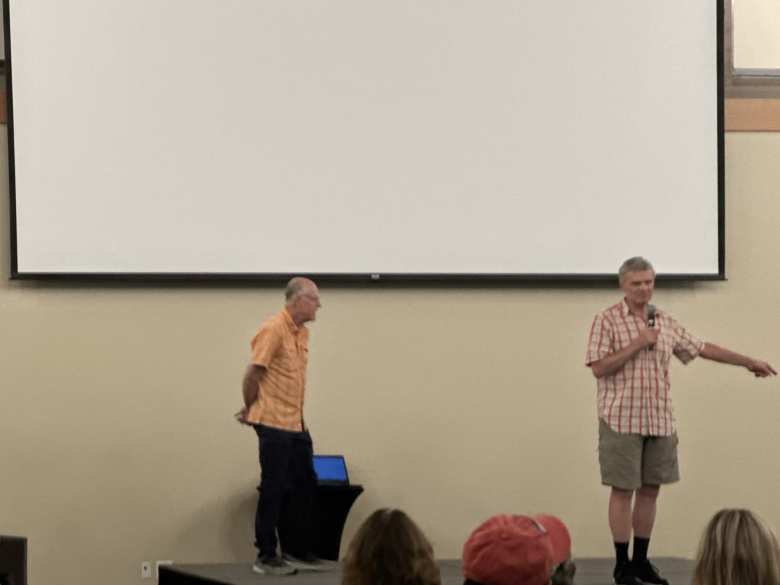
The Five Empty Chairs
One of the most powerful moments of the evening came with the five empty chairs placed at the front of the stage. Each chair was draped with a jersey and accompanied by a framed portrait and short biography, honoring cyclists who had passed away—many due to collisions with cars. Scott spoke about each one:
- Steve Tesich, the screenwriter of American Flyers and Breaking Away
- Dr. Thomas Starzl, pioneering transplant surgeon and avid cyclist who called the bicycle “an anti-aging machine”
- Bob Cook, known as the “Cookie Monster,” a USA team member and legendary climber
- Alan Fine, longtime Denver bike shop owner and generous supporter of cycling
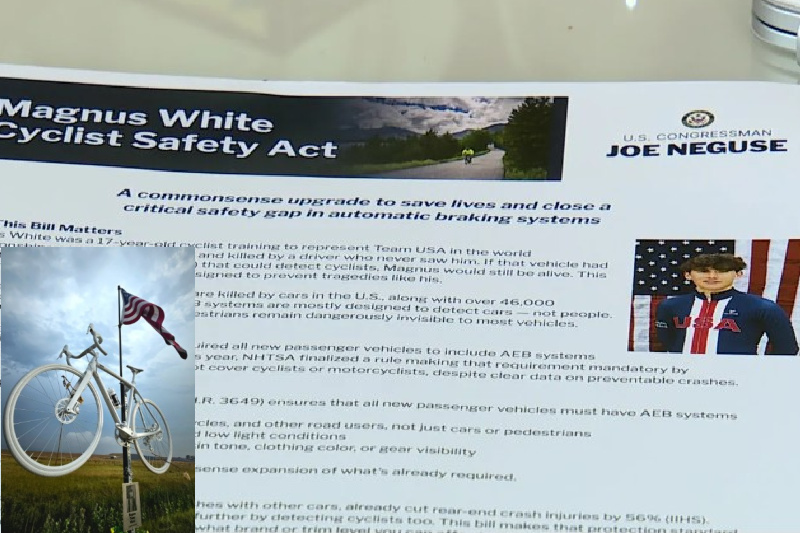
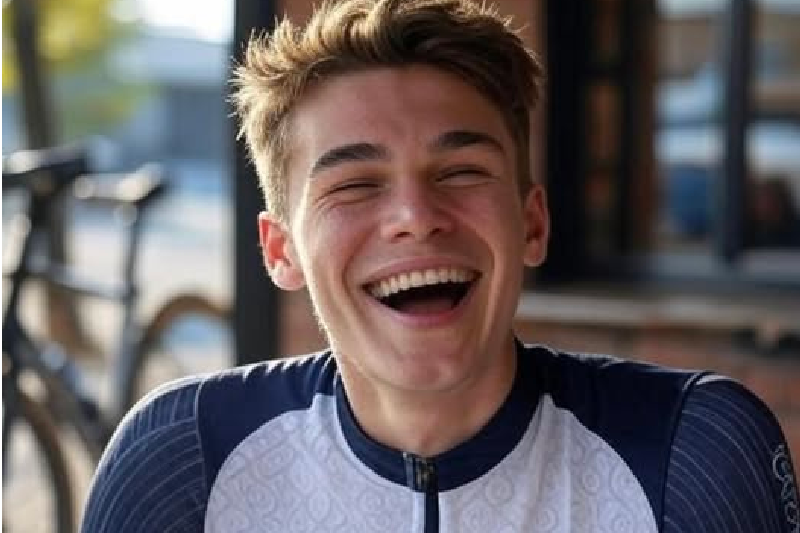
- Magnus White, a young Team USA rider whose life was tragically cut short in 2023 by a reckless driver near Boulder, Colorado
The empty chairs served as a sobering reminder of why cycling advocacy and safer roads remain so important.
Advocacy, Organizations, and Impact
Tour of the Moon
Chandler Smith, half-owner of Ride Collective and organizer of the Tour of the Moon, spoke next. He explained how the event has raised around $100,000 for Bicycle Colorado and other organizations, while also generating over $1 million in economic activity for the Grand Junction area.

Grand Valley Streets Alliances
Julia Wildman, a board member of the Grand Valley Streets Alliance, discussed the organization’s work promoting safer, more inclusive streets in the region.
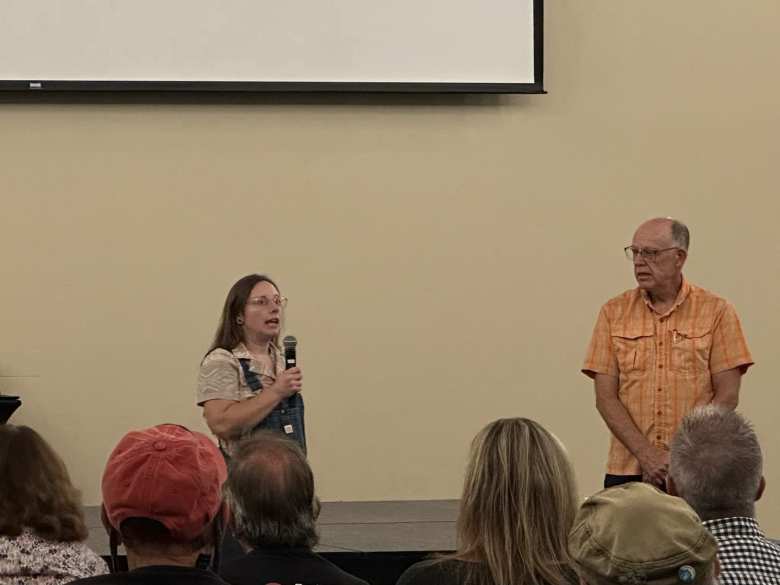
Bicycle Colorado
Pete Piccolo, Executive Director of Bicycle Colorado, followed with an overview of Bicycle Colorado’s statewide advocacy efforts and why continued funding is critical.
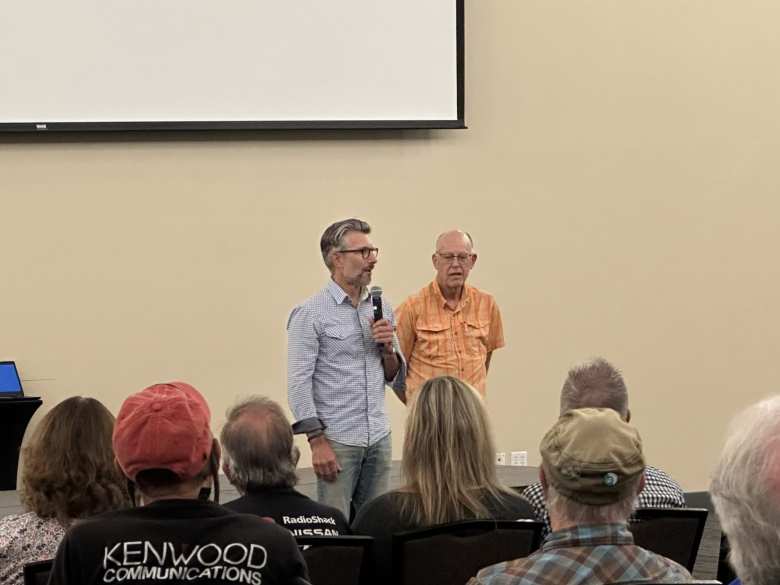
The Davis Phinney Foundation
Polly Dawkins, Executive Director of the Davis Phinney Foundation, spoke about the foundation’s mission to improve the lives of people living with Parkinson’s through research, education, and programs emphasizing movement and exercise. She then introduced Davis Phinney to the crowd.
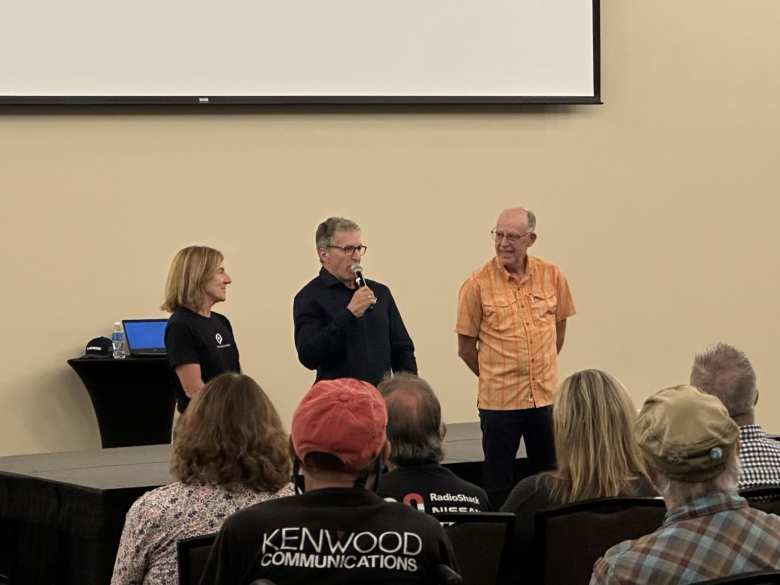
Davis shared a humorous story about being compared by a frustrated competitor to Barry Muzzin—the villain of American Flyers. Given Davis’s reputation as one of the sport’s kindest and most respected champions, the comparison drew laughter. He also reflected briefly on his career, which included 328 professional victories, and how being on the bike remains central to his well-being.
More Film Connections
John Bowen from the audience spoke about serving as a double for Kevin Costner in the film.
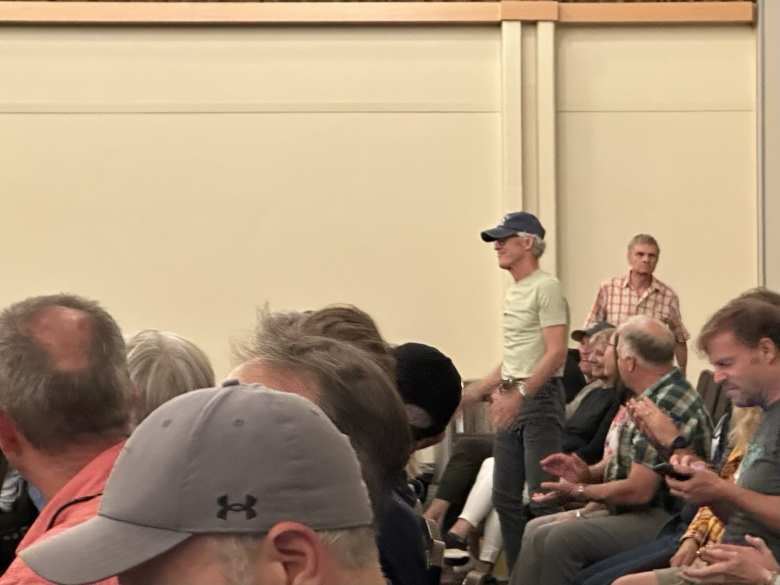
Scott concluded the pre-show by sharing handful of behind‑the‑scenes stories, including the following:
- Robert Townsend—the actor who played Jerome, Muzzin’s teammate—was a working comedian at the time. He used his comic chops to keep everyone entertained during the long stretches when absolutely nothing was happening.
- There was so much downtime overall that the extras started racing bikes downhill to amuse themselves—often ending in crashes.
- Morgul–Bismark—Stage 1 of the Hell of the West bicycle race—took its name from the cat (Morgul) and dog (Bismark) owned by local riders who regularly trained on that loop.
- Rae Dong Chang—who played Sarah, Marcus’ girlfriend and crew support—was genuinely skilled at changing flat tires. Still, during the very first take of a tire‑change scene, she accidentally launched the rear wheel straight into a group of extras.
- One of the motorcyclists went off the road in an accident. He was ultimately fine, but the mishap still made it into the movie.
- There were no lights inside the tunnels the cyclists rode through, and the actors had no idea which shots through them would actually end up being usable. On the sixth run in one of those tunnels, Luca Bercovici—who played Barry Muzzin—crashed and broke his collarbone. Despite the injury, he kept filming for another four and a half weeks, taped up and able to raise only one arm. There’s even a scene where he holds up a trophy with the good one.
Watching American Flyers on the Big Screen
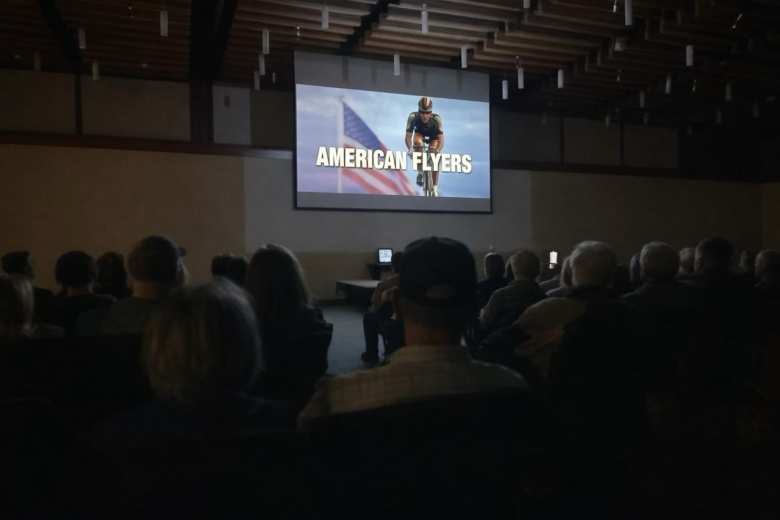
Then the lights dimmed and the film began. Watching American Flyers on a large screen with proper sound—and with an audience that understood every nuance—was a completely different experience from watching it at home. For one thing, Andrea stayed awake this time—unlike when we first watched it together after she came back from a 24-hour shift in March!
As the film unfolded, I pointed out places she recognized from our own Colorado travels: Golden with its “Howdy Folks!” sign, the Coors Brewery, and the Flatirons near Boulder. The landscapes felt like familiar friends.
Conversations After the Film
After the screening, I spoke with Marianne Martin. Despite suffering serious injuries from a crash over the past year and being unable to ride much during that time, she had still completed the ride from Denver to Grand Junction. I told her how much I admired that resilience. Her accomplishments are remarkable: in 1984 she became the first American to win the Tour de France Féminin, completing the 1,080-kilometer, 18-stage race alongside the men’s event.

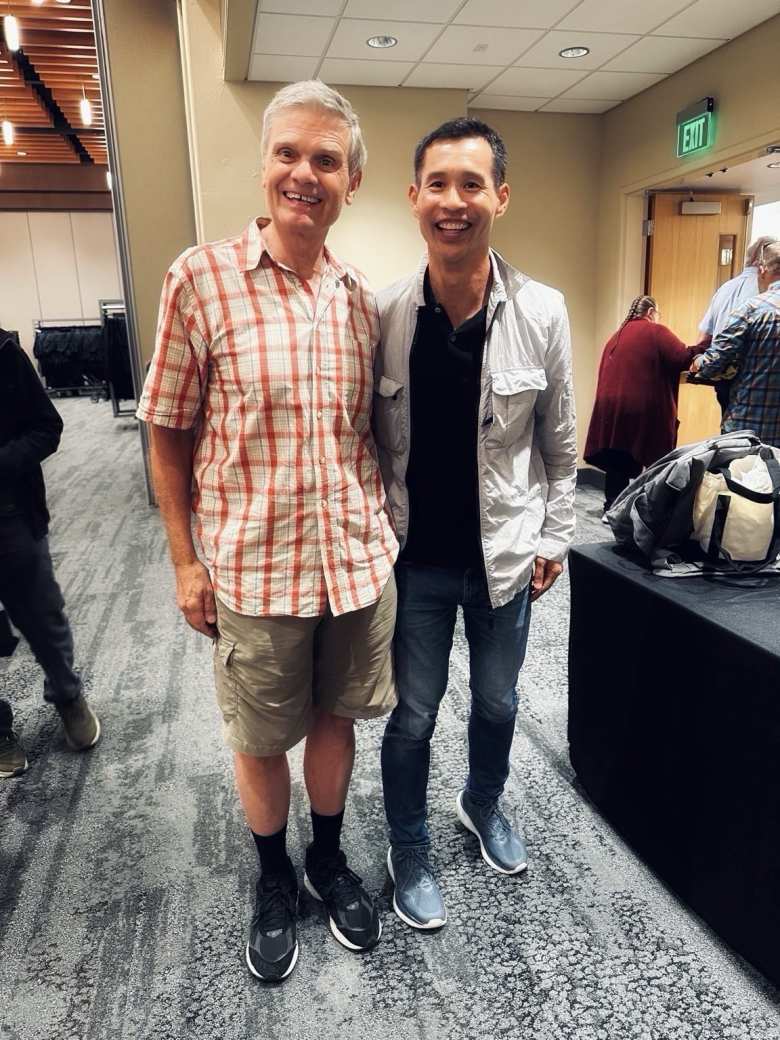
I also had time to talk again with Bob Shaver and get a few photos with him. He told me about the four days of riding he had just completed across Colorado, covering roughly 300 miles and more than 18,000 feet of climbing. It felt fitting that this celebration of a cycling film was inseparable from real miles ridden on real roads.
Learning About the Ride and the Tour of the Moon
In the months that followed, I learned more about the four-day pre-ride and how the Tour of the Moon unfolded. The ride from Denver to Grand Junction was designed to raise awareness for vulnerable road users and to honor cyclists who had been killed or seriously injured. By the time the group reached Grand Junction, the peloton had grown, drawing attention and support along the way.
The Tour of the Moon itself delivered what it always does: stunning scenery through the Colorado National Monument, challenging terrain, and a strong sense of community. Despite weather challenges the night before, crews worked through the night to ensure the route was safe, allowing riders to experience one of Colorado’s most beautiful events.
A Meaningful Outcome
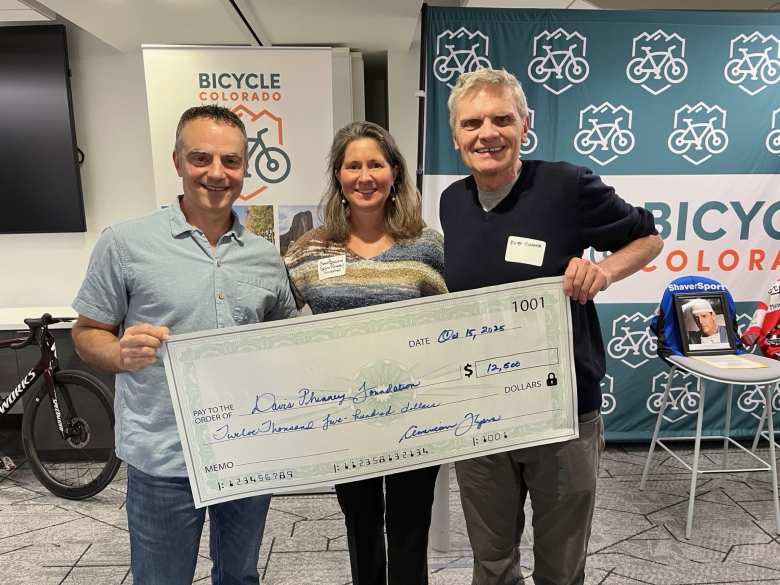
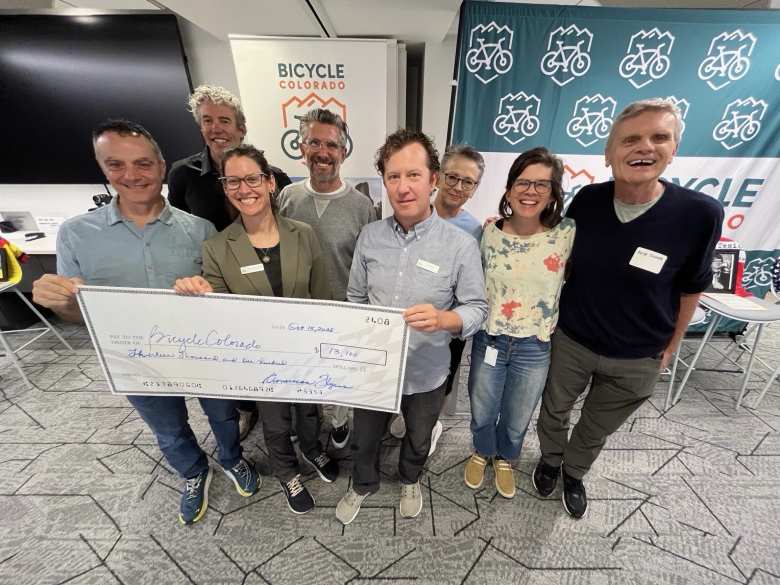
In total, the two anniversary screenings raised about $30,000 for Bicycle Colorado, the Davis Phinney Foundation, and the Grand Valley Streets Alliance. Because sponsors covered all production and venue costs, every dollar from ticket sales and donations went directly to those beneficiaries.
Although I couldn’t make it to the Denver screening myself, my friends Lisa and Scott went and absolutely loved it. The event even included displays of classic bikes—exactly the kind of thing I would have lingered over for hours. Those included Steve Tesich’s 1973 Colnago—which was gifted to Bob Shaver by Steve’s wife Becky and lovingly overhauled by Bob in 2021—and
I also wish I’d seen the Eddy Merckx tribute bikes in person. Master frame builder Rich Gangl crafted them, and he’s not only a legend in the workshop but a two‑time UCI Masters world champion. He was also a high school mate of Bob.
In a perfect nod to the film’s legacy, American Flyers director John Badham recorded a one‑minute tribute to celebrate the 40th anniversary just in time for the Denver show, and is below. Thanks to John for the excellent production!
For more information and photos, download and read this excellent write-up by Bob Shaver (PDF, 11.4 MB).