By Sean Benesh
On the Baker City Cycling Classic as a Proving Ground
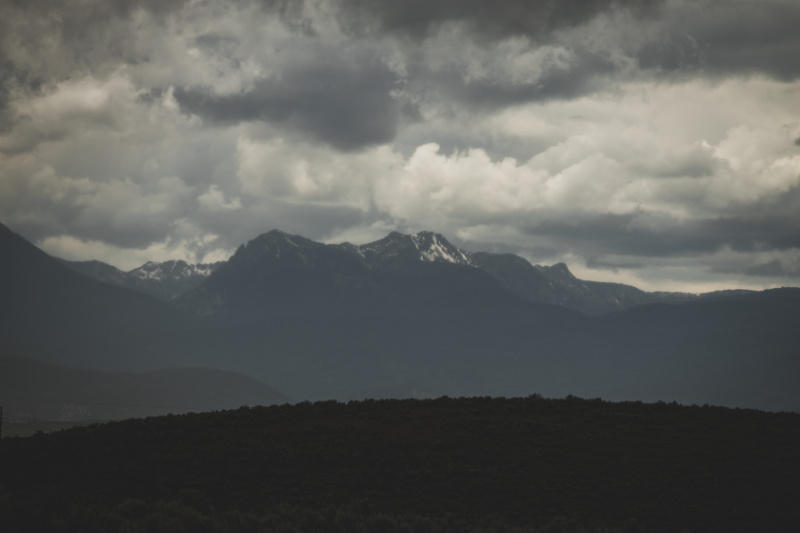
Last year, I stood on the side of a wide Eastern Oregon highway and watched a field slowly come apart with the snow-capped Wallowa Mountains in the background.
Not explode.
Not some dramatic highlight-reel moment.
Just … come apart.
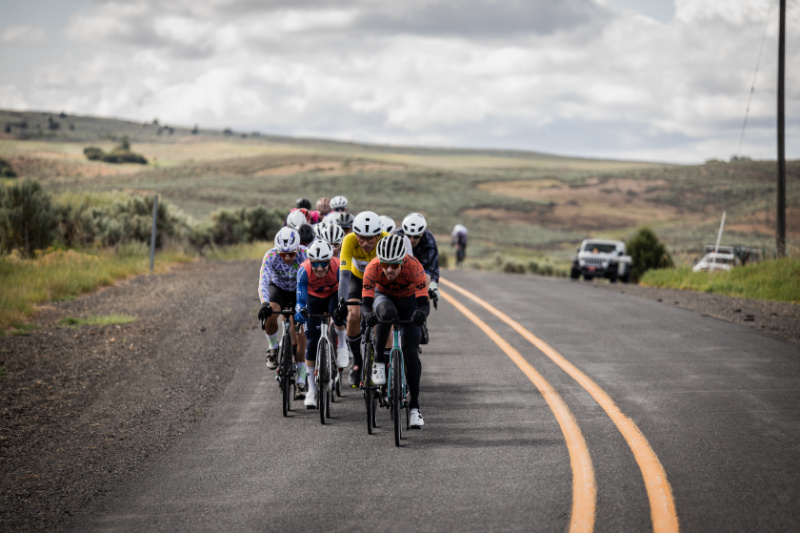
It was late morning. That dry Eastern Oregon light that makes everything feel sharper than it probably is. I could hear freehubs and the hum of tires on the road before I could see faces. A thin line of riders stretched across the road. Shoulder dust lifting slightly when someone drifted too far left.
Then the hesitation.
A rotation half a second late. The crosswind shifts just enough.
That’s all it takes out there. Separation.
There’s something about racing in Baker City that doesn’t give you much cover. And I don’t mean shade. I mean margin.
For many parts of the course, there’s no tree-lined protection. Just long stretches of routes like the Elkhorn Drive Scenic Byway and the Grand Tour Route, where you can see what’s happening long before you can fix it.
Which means you know you’re in trouble before you’re actually dropped.
The wind can be constant. It doesn’t roar. It just stays. Constant pressure on one side of your face. Jerseys snapping, but never violently. Enough to make the gutter feel safer than the draft.
Wind doesn’t care who you are. It’s in your face.
That’s what the Baker City Cycling Classic feels like to me.
Raw.
Real.
Not dramatic.
What Makes the Baker City Cycling Classic a Legitimate Stage Race Proving Ground
I hesitate to call it “Euro-style,” because that phrase gets used loosely … usually by people who haven’t pinned a number in Europe.
But I understand what’s meant.
The courses don’t gimmick you.
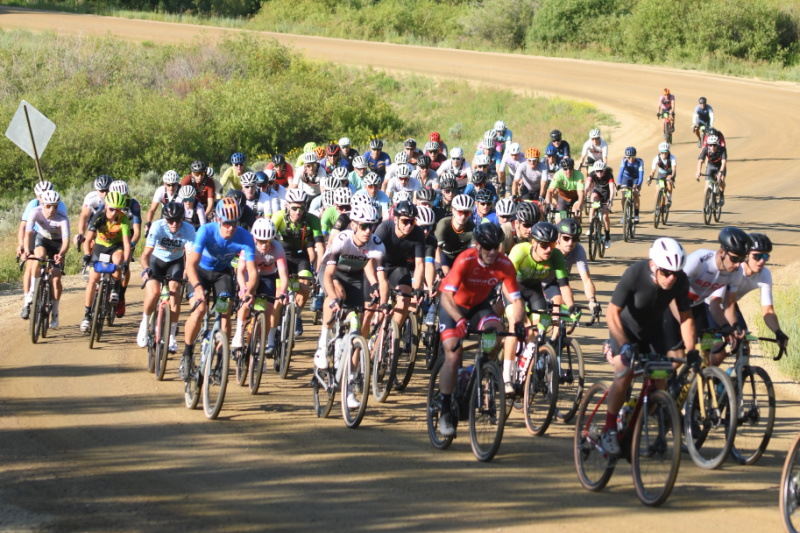
The first road stage rolls longer than you think it should. Aid stations are efficient. Neutral support is there, but it’s practical. If something goes wrong, you solve it quickly … or you don’t.
The time trial strips things down even further.
Riders roll up quiet. Someone counts down from five in a voice that sounds more practical than ceremonial. Then it’s just wind, pavement, and your own breathing.
No teammates to hide behind there.
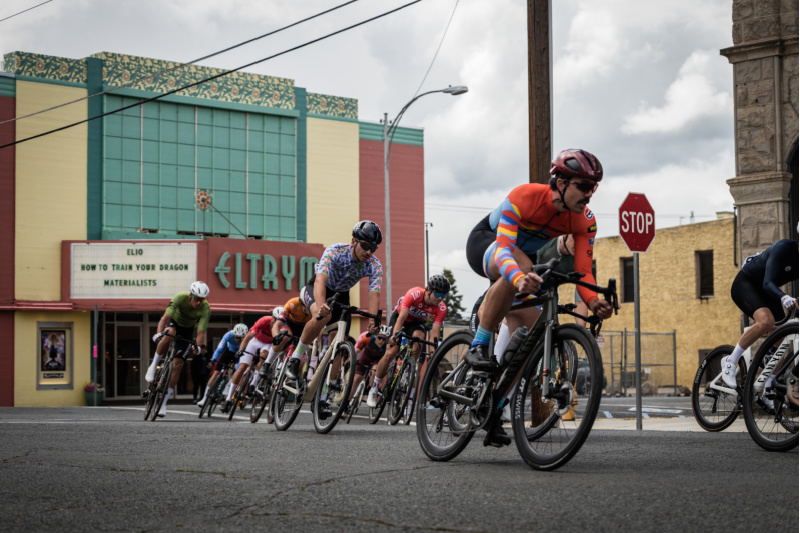
By the afternoon, when the criterium circles downtown, the town feels different.
Barriers stacked along brick storefronts. Cowbells echoing off old buildings just a little too long.
Locals who may not follow cycling year-round still understand that something real is happening on their main street.
The race doesn’t feel imported from abroad. Locals feel this is “their” race, even though they’re more at home at rodeos in blue jeans than ever thinking of donning a Lycra onesie.
However, this sense of ownership and pride matters … a lot, especially in a rural place.
Inside the Baker City Cycling Classic Stage Format
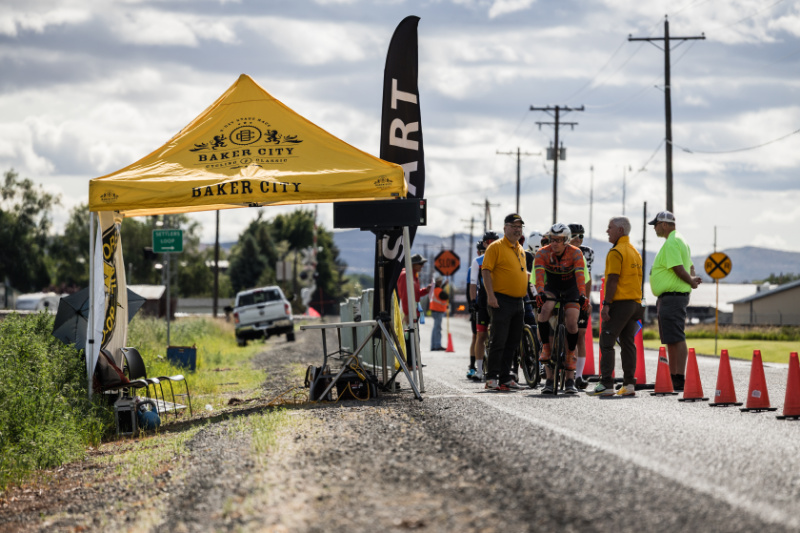
Stage racing is strange.
It asks you to come back the next morning and do it again. Which feels reasonable on Friday. Less reasonable when you’re staring at hotel coffee Sunday morning trying to convince your legs this was a good idea.
Three days. Four stages.
Two road races that stretch you thin in different ways. A time trial that reduces everything to watts and position. A downtown criterium that doesn’t care how tired you are.
There isn’t an easy stage. And there isn’t one that lets you fake fitness.
Past overall champions include Sepp Kuss, Tayler Wiles, Brianna Walle, and Cameron Jones.
You can treat that as prestige if you want.
I tend to treat it as evidence.
Riders who go on to bigger things often pass through environments like this first.
I like to think that courses like these don’t create champions.
They reveal them.
Why the Baker City Cycling Classic Works in Eastern Oregon
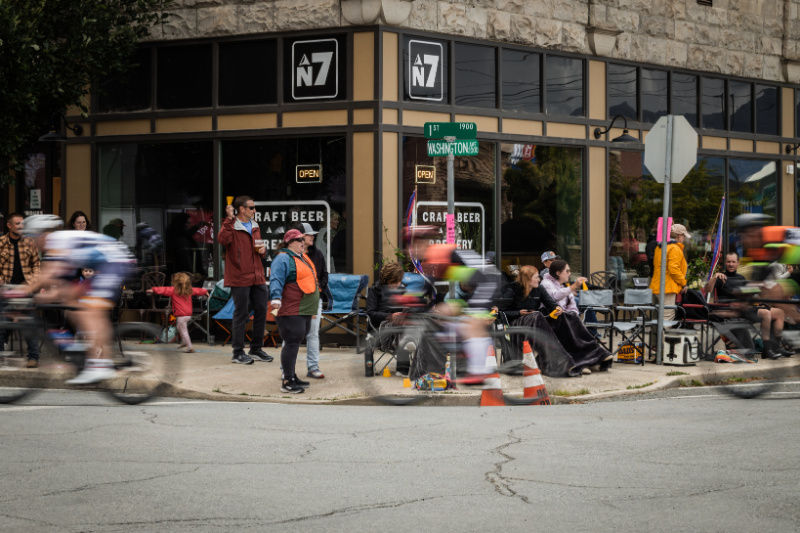
Baker City isn’t a cycling capital trying to prove something.
It’s a small Eastern Oregon town that, for one weekend, rearranges itself around a stage race.
Hotels fill. Restaurants extend hours. Main Street becomes part of the course.
I spend a lot of time writing about rural communities that are figuring out how to build something durable without losing themselves in the process.
Events like this are part of that conversation.
Not pretending. Just committed.
For teams looking for a legitimate alternative proving ground, especially those who don’t need spectacle to validate their experience, this race deserves attention.
It doesn’t market itself loudly with hype and outlandish claims.
Why? Because over three days, the stages don’t lie.
And eventually, neither do your legs.
The 2026 Baker City Cycling Classic returns this June with the same three-day, four-stage format that has quietly built its reputation.
If you’re mapping out your calendar and looking for a stage race that is tough and rewarding, Baker City is worth a serious look.
And if you’ve raced here before, you already know … the roads don’t get easier just because you’ve seen them once.
I’ll be smiling with camera in hand, sipping on a Diet Mountain Dew and leaning on my SUV, when you pass by.
See you there.
By Sean Benesh