by: AvidCyclist.com | March, 5 2026
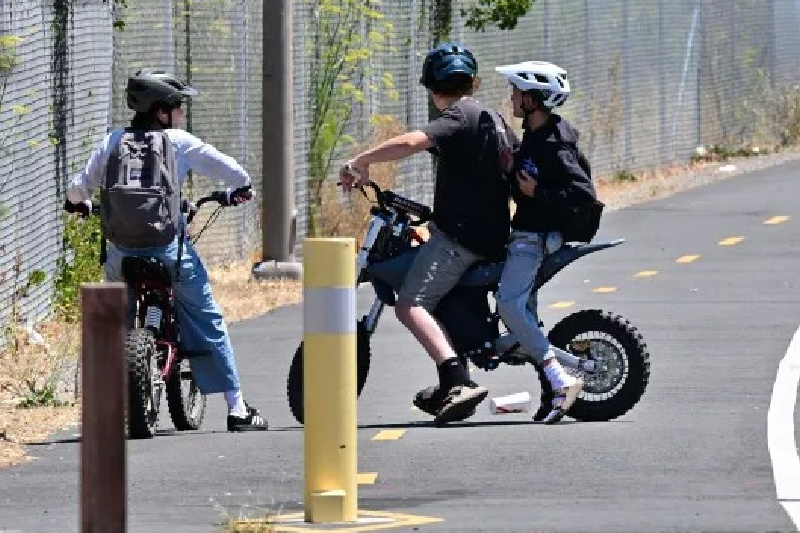
A legislative battle is underway in California to address a growing safety crisis: high-powered electric motorcycles being deceptively marketed and sold as “e-bikes.” Senate Bill 1167, introduced by Senator Catherine Blakespear, aims to stop this dangerous practice, which has contributed to a staggering 18.6-fold increase in e-bike-related accidents over five years.
The problem is particularly acute among young riders, with a 2025 survey finding that 88% of electric devices at several Bay Area schools were not legal e-bikes but misclassified e-motorcycles.
Backed by a coalition of advocacy groups including CalBike and PeopleForBikes, SB 1167 seeks to restore clarity and safety to the two-wheeled electric vehicle market.
The Problem: A Motorcycle in Bicycle’s Clothing
California law is clear: an electric bicycle must have fully operable pedals and a motor not exceeding 750 watts. They are divided into three classes with speed caps of 20 or 28 mph. In short, they are bicycles and are regulated as such, requiring no license, registration, or insurance.
In contrast, the high-powered e-motos being sold as “e-bikes” are motor vehicles. They are faster, more powerful, and often lack pedals, making them electric motorcycles in all but name. This mislabeling allows unlicensed and untrained riders, including minors, to operate machines that should legally require a driver’s license, registration, and insurance.
What SB 1167 Does: A Multi-Pronged Solution
SB 1167 amends California’s Vehicle Code to close the loopholes that enable this deception. Its key provisions are designed to re-establish a clear line between bicycles and motor vehicles.
First, the bill makes it explicitly illegal to advertise or sell a motor-driven cycle or moped as an “electric bicycle,” making such acts prosecutable as false advertising.
To ensure transparency, sellers must provide a mandatory disclosure in all advertising—including online—stating that these vehicles are not e-bikes and are subject to full motor vehicle regulations.
Second, the bill modernizes the vehicle code to properly classify these devices. It redefines motor-driven cycles and mopeds to include electric-powered variants, subjecting them to the same rules as their gas-powered counterparts.
The practical difference between E-Bikes and Motorcycles for consumers is significant:
| Requirement | Legal E-Bike | E-Moto / Electric Motorcycle (Under SB 1167) |
| Driver’s License | Not required | M1 or M2 license required |
| Vehicle Registration | Not required | Required (DMV) |
| License Plates | Not required | Required |
| Insurance | Not required | Required |
| Helmet Standard | Bicycle helmet | DOT-approved motorcycle helmet |
| Bike Lane Access | Permitted | Not permitted |
The Case For and Against SB 1167
The arguments for SB 1167 center on public safety and consumer protection. By ensuring high-powered e-motos are operated by licensed drivers, the bill aims to reduce accidents, particularly among youth.
It also protects consumers from deceptive marketing and preserves the reputation of the legitimate e-bike industry, which is being tarnished by the actions of a few bad actors.
However, critics raise valid concerns. Enforcement will be a major challenge, as distinguishing a legal e-bike from an illegal one on the street is not always straightforward. There are also worries that the new rules could stifle innovation in the electric mobility market or prove difficult to enforce on major online marketplaces where many of these sales occur.
The Bottom Line: An E-Motorcycle Is Not an E-Bike
At its core, SB 1167 is about a simple truth: an electric motorcycle is not an e-bike. A true e-bike supplements human power, while an electric motorcycle replaces it. The latter is a motor vehicle, regardless of its power source, and should be regulated accordingly for the safety of everyone on our roads and trails.
SB 1167 is a crucial, common-sense step toward ending a dangerous deception. By drawing a clear line in the sand, California has the opportunity to protect consumers, enhance public safety, and set a national precedent for sensible regulation in the burgeoning world of electric mobility.