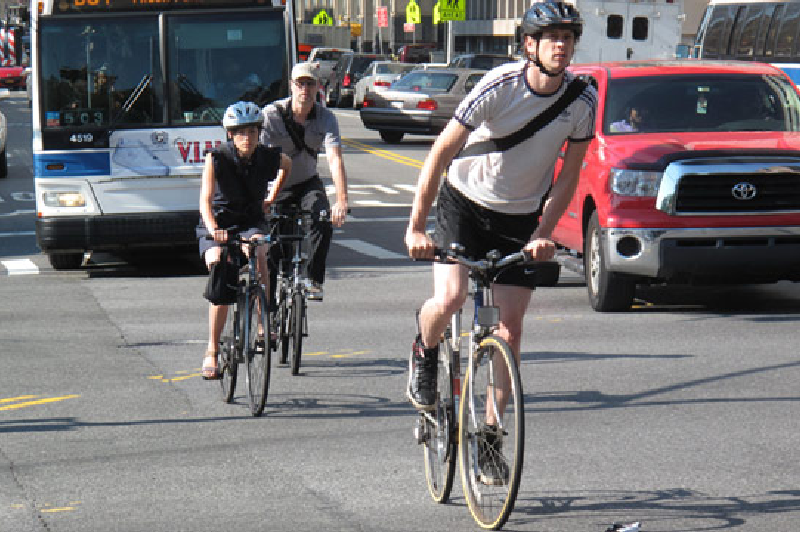
If you have ever been behind the wheel and watched a cyclist slow down at a stop sign, look both ways, and roll through without coming to a complete stop, your first instinct may have been frustration. They ran that stop sign. But here is the truth: in 14 states and Washington, D.C., that cyclist may have been following the law perfectly. The practice is known as the “Rolling Stop,” the “Idaho Stop,” or the “Stop as Yield” law — and it is one of the most misunderstood, yet most thoroughly validated, pieces of bicycle legislation in the United States.
This guide breaks down everything cyclists and drivers need to know: which states have these laws, the physics and science behind why they work, the statistical evidence proving they improve safety, and the critical education gap that continues to pit drivers against cyclists at intersections across the country.
What Is the “Stop as Yield” or “Idaho Stop” Law?
The Idaho Stop is the common name for laws that allow bicyclists to treat a stop sign as a yield sign, and in some states, a red light as a stop sign. The core principle is straightforward: when a cyclist approaches a stop-controlled intersection, they must slow down and assess the situation. If there is cross-traffic or pedestrians with the right of way, the cyclist must stop and yield. If the intersection is clear, the cyclist may proceed without coming to a complete, foot-down halt.

This is fundamentally different from “blowing through” a stop sign. The law does not give cyclists permission to ignore intersections. It requires them to yield — the same standard applied to all drivers at yield signs — and it holds cyclists fully responsible if they fail to do so.
The law’s name comes from its origin: Idaho was the first state to enact it, in 1982 1. The idea grew out of a comprehensive revision of Idaho’s traffic code, where a court administrator recognized that requiring cyclists to come to a complete stop at every intersection was both physically burdensome and out of step with how cyclists actually, and safely, behaved.
Which States Allow Cyclists to Treat Stop Signs as Yields? (2026 State-by-State Guide)
For 35 years after Idaho passed its law, no other state followed. Delaware broke the silence in 2017, and since then the movement has accelerated dramatically. As of June 2026, 14 states and Washington, D.C. have enacted some version of a Stop as Yield law. The laws vary in scope: some cover only stop signs, while others include “Dead Red” provisions allowing cyclists to treat red lights as stop signs.
| State | Stop Sign as Yield? | Red Light as Stop? | Year Enacted |
| Idaho | Yes | Yes | 1982 |
| Delaware | Yes | No | 2017 |
| Arkansas | Yes | Yes | 2019 |
| Oregon | Yes | No | 2019 |
| Washington | Yes | No | 2020 |
| Utah | Yes | No | 2021 |
| North Dakota | Yes | No | 2021 |
| Oklahoma | Yes | Yes (right turns only) | 2021 |
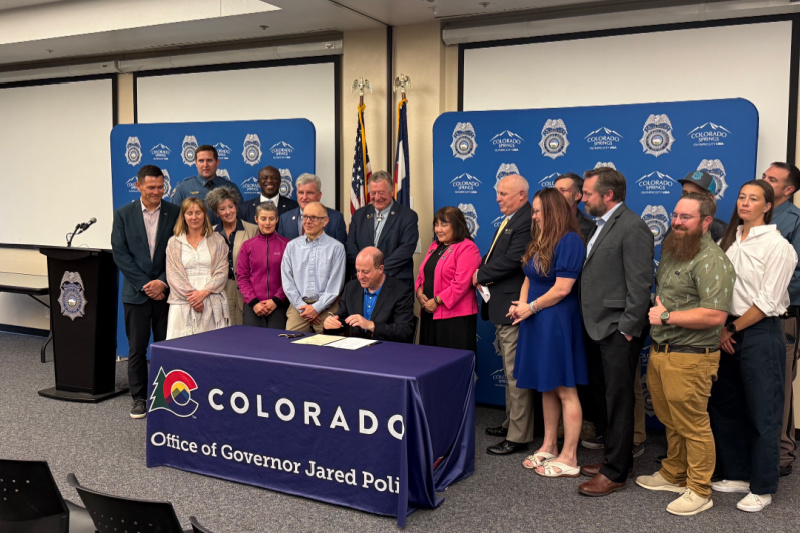
| Colorado | Yes | Yes | 2022 |
| Washington, D.C. | Yes | No (limited) | 2022 |
| Minnesota | Yes | No | 2023 |
| Alaska | Yes (Anchorage only) | Yes | 2023 |
| New Mexico | Yes | Yes | 2025 |
| South Carolina | Yes | Yes | 2026 |
Sources: Wikipedia Idaho Stop 1, WSPA News 3
Notable milestones: In June 2026, South Carolina became the first East Coast state to fully adopt both stop-as-yield and red-light-as-stop provisions, signing the “Palmetto Stop” into law 3. In March 2025, New Mexico enacted its law, signed by Governor Michelle Lujan Grisham 1. Together, these 14 states plus D.C. cover approximately 14% of the U.S. population for stop-as-yield, and roughly 6.9% for the full red-light-as-stop provision.
States where legislation has been introduced but not yet passed include California, Virginia, New York, Texas, Georgia, and New Jersey 1. California is a notable holdout: the state legislature passed a bicycle safety stop bill in 2021 and again in 2022, but Governor Gavin Newsom vetoed both.
Quick Fact Box: Is It Legal in Your State?Before you roll that stop sign, check your state. The 14 states where some form of Stop as Yield is currently legal are: Idaho, Delaware, Arkansas, Oregon, Washington, Utah, North Dakota, Oklahoma, Colorado, Minnesota, Alaska (Anchorage), New Mexico, South Carolina, and Washington D.C. In all other states, cyclists are legally required to come to a complete stop at stop signs and red lights, just as motor vehicles are.
The Science and Physics Behind Why Rolling Stops Are Safer
To a driver sitting in a 4,000-pound vehicle powered by a 200-horsepower engine, a stop sign is a minor inconvenience. To a cyclist powered entirely by their own body, it is a significant physical and safety challenge. Understanding this difference is the key to understanding why Stop as Yield laws exist.
The Energy Problem: Momentum Is Everything
In a landmark 2001 paper published in ACCESS Magazine, UC Berkeley physics professor Joel Fajans and editor Melanie Curry analyzed the energy demands placed on cyclists by stop signs 5. Their findings were striking.
The average commuting cyclist produces roughly 100 watts of propulsion power — about the same as a reading lamp. A car engine generates approximately 100,000 watts. When a cyclist must come to a complete stop and restart, the energy cost is enormous relative to their total capacity. On a street with a stop sign every 300 feet, calculations showed that the average speed of a 150-pound rider putting out 100 watts would drop by approximately 40 percent compared to riding without stops.
The practical implication is significant: a cyclist who rolls through a stop at 5 mph needs 25 percent less energy to return to a cruising speed of 10 mph than a cyclist who comes to a complete stop. This is not laziness; it is physics. And it has direct safety consequences.
When a cyclist comes to a complete stop, they must unclip from their pedals, balance the bike, and then laboriously restart — often wobbling at dangerously low speeds while clipping back in. This process means the cyclist spends more time in the intersection, which is the most dangerous place on the road. The rolling stop allows a cyclist to clear the intersection faster, dramatically reducing their exposure time to cross-traffic.
The Visibility Problem: Moving Objects Are Easier to See
Human visual perception is evolutionarily calibrated to detect moving objects more readily than stationary ones 6. A cyclist who maintains a slow, controlled roll is more visible to an approaching driver than a cyclist who is stopped at the edge of an intersection. This is not a minor point: according to the NHTSA, bicyclists not being visible is the second-highest factor in fatal bike crashes 7.
The Delaware Department of Transportation articulates this dual benefit clearly: the rolling stop maneuver enables cyclists to both increase their visibility to drivers and reduce their exposure time in the intersection. By entering and exiting the intersection more quickly than a cyclist who must come to a full stop, the risk window is minimized.
The Safety Statistics: What the Data Actually Shows
The most powerful argument for Stop as Yield laws is not theoretical — it is empirical. Decades of crash data from multiple states consistently show that these laws either improve cyclist safety or have no negative effect whatsoever.
Idaho: 40+ Years of Evidence
Idaho has had the rolling stop law since 1982. In the year following its introduction, bicycle injury rates in the state declined by 14.5%, with no change in the number of bicyclist fatalities 8. Over the following decades, Idaho’s bicycle fatality rate remained among the lowest in the nation. A comparison of Boise, Idaho (which has the Idaho Stop) to two similar California cities without the law found Boise to be 30.4% to 60.6% safer than Sacramento and 150% to 252% safer than Bakersfield in terms of the injury-to-bicycle-commuter ratio.
Delaware: A Controlled Before-and-After Study
Delaware’s “Delaware Yield” law, enacted in 2017, provides perhaps the cleanest data set because the state police tracked crash data in a structured before-and-after comparison. The results were unambiguous:
Crashes involving bicycles at stop sign-controlled intersections fell by 23% in the 30 months after the Delaware Yield law was enacted, compared to the 30 months preceding it. During the same period, all other bicycle crashes in Delaware fell by only 8%.
This differential is critical: the improvement was concentrated precisely at the intersections where the law applied, strongly suggesting a causal relationship.
Oregon State University: A Groundbreaking Simulator Study (2024)
A 2024 peer-reviewed study published in Transportation Research Part C: Emerging Technologies used a novel experimental technique — linking separate bicycle and motor vehicle simulators — to observe how both cyclists and drivers behaved under rolling stop conditions 9. The study involved 60 participants observed in pairs navigating 16 live-interaction scenarios at four-way stop-controlled intersections.
The findings were clear: laws that let bicyclists treat stop signs as yield signs lead neither riders nor motorists to act unsafely. After receiving education about the rolling-stop law, cyclists preferred to yield rather than stop and moved through intersections faster. Drivers, meanwhile, approached intersections at a similar or slower speed after being educated about the law — suggesting that awareness of the law actually made drivers more cautious, not less.
UC Berkeley and NHTSA: Nationwide Confirmation (2024–2025)
A 2024 study by the University of California, Berkeley’s SafeTREC analyzed crash data from five states with stop-as-yield laws — Idaho, Arkansas, Oregon, Washington, and Delaware — and compared them to contiguous states without such laws. The results did not indicate a significant increase in cyclist crashes in any of the states that adopted the law.
A December 2024 NHTSA study analyzed crash records in urban areas across eight states with stop-as-yield laws and found that the laws correlated with lower crash rates and did not increase crashes involving children 4. The study also found that stop-as-yield laws did not lead to more reckless behavior by cyclists and could encourage more people to ride bikes — which itself improves safety through the well-documented “safety in numbers” effect.
By the Numbers: Key Safety Statistics
| Statistic | Source |
| 14.5% decline in bicycle injuries in Idaho in the year after the Idaho Stop law passed | CTDOT Idaho Stop Study 8 |
| 23% reduction in crashes at stop-sign intersections in Delaware after the Delaware Yield law | Delaware State Police / BikeDE 6 |
| 1,103 bicyclists killed in U.S. traffic crashes in 2024 | NHTSA 7 |
| ~50% of all bicycle-car crashes occur at intersections | OSU / TechXplore 9 |
| 14 states + D.C. have enacted some form of Stop as Yield law as of 2026 | Wikipedia / WSPA 13 |
| 14% of the U.S. population lives in a state where stop-as-yield is legal | Wikipedia 1 |
The Awareness Gap: Why Drivers Still Accuse Cyclists of Running Stop Signs
Here is the uncomfortable truth: even in states where rolling stops are perfectly legal, many drivers have no idea. The Gonzaga University and Oregon State University study published in the Transportation Research Record in October 2024 found that awareness of rolling stop laws was significantly lower among non-cyclists, particularly in states where the laws were recently enacted 11. The researchers concluded that there is a clear and urgent need for broader educational outreach.
This awareness gap has real consequences. Previous research has established that drivers tend to be more aggressive toward cyclists when they believe riders are breaking the law 9. When a driver in Colorado, Oregon, or Washington sees a cyclist roll a stop sign — a completely legal act — and believes it to be illegal, the driver’s frustration and aggression can escalate into a dangerous confrontation.
The Double Standard in Traffic Law Compliance
The data on who actually breaks traffic laws is illuminating. A survey of road users in Idaho found the following:
- 95.9% of bike riders reported breaking a traffic law
- 97.9% of pedestrians reported breaking a traffic law
- 99.97% of drivers reported breaking a traffic law
The most common reason drivers broke the law was to save time (85%). The most common reason pedestrians broke the law was also to save time (71%). However, the most common reason cyclists broke traffic regulations was for their own safety (71%).
This data powerfully undermines the narrative that cyclists are uniquely reckless or disrespectful of traffic law. The reality is that virtually all road users bend the rules, but cyclists are the ones who most often do so for safety reasons — and they are the ones who pay the highest physical price when things go wrong.
What Needs to Change
The solution is not to repeal Stop as Yield laws; the data shows they work. The solution is education. The Oregon State University study specifically recommended that states include information about rolling stop laws in official driver handbooks and licensing exams 9. Even Idaho, the state that pioneered the law in 1982, does not currently include it in its driver education materials.
Until drivers understand that a cyclist rolling a stop sign in a state with a Stop as Yield law is performing a legal, safety-enhancing maneuver, the hostility at intersections will continue. Cyclists and drivers share the road, and shared understanding is the foundation of shared safety.
What “Stop as Yield” Does NOT Mean
Because of the awareness gap, it is worth being explicit about what these laws do and do not permit. Understanding the limits of the law protects cyclists legally and physically.
Stop as Yield DOES allow cyclists to:
- Slow down at a stop sign and proceed without a complete stop if the intersection is clear
- Proceed through a red light after a complete stop, if the state’s law includes a “Dead Red” provision and the way is clear
Stop as Yield does NOT allow cyclists to:
- Ignore stop signs entirely or blow through at full speed
- Proceed if there is any vehicle or pedestrian with the right of way
- Treat yield signs any differently than before
- Ride recklessly or without due care for other road users
Cyclists who are involved in an accident after performing a rolling stop in a state where it is legal will still be evaluated on whether they properly yielded. If you have been involved in a crash at an intersection, understanding the nuances of your state’s laws is critical. For a deeper dive into how right-of-way disputes are handled, see our article on Failure To Yield: What It Means in Plain English.
What About States Where It Is NOT Legal?
If you ride in one of the 36 states where Stop as Yield is not yet law, you are legally required to come to a complete stop at stop signs and red lights, just as a motor vehicle driver is. Performing a rolling stop in those states is a traffic violation that could result in a ticket and, more importantly, could affect your legal standing if you are involved in a crash.
That said, advocacy efforts are ongoing in many states. If you want to see Stop as Yield laws in your state, consider contacting your state legislators, joining a local cycling advocacy group, or supporting national organizations like the League of American Bicyclists.
For cyclists traveling across state lines, our article on 10 Essential Laws to Know When Traveling with a Bicycle is essential reading.
The Bigger Picture: Why This Law Matters for Cycling Culture
The Stop as Yield movement is about more than just stop signs. It represents a broader recognition that bicycles are not cars, and that traffic laws designed for two-ton motor vehicles do not always serve the safety needs of human-powered, low-speed, highly visible cyclists.
When laws align with the physical realities of cycling, cyclists can operate more legally, more predictably, and more safely. When laws are out of step with reality, cyclists are forced to choose between following the letter of the law at the cost of their safety, or following the logic of safety at the cost of legality. Stop as Yield laws close that gap.
As more states adopt these laws, and as public education catches up with legislation, the roads will become safer for everyone. The data is clear, the physics are sound, and the trend is unmistakable. The rolling stop is not a loophole — it is the future of sensible bicycle law.
This article is intended for informational purposes only and does not constitute legal advice. Bicycle laws vary by state and locality. Always consult a qualified attorney for advice specific to your situation. If you have been injured in a cycling accident, contact a qualified bicycle attorney in your state.