Wild, rugged and breathtakingly beautiful, Patagonia is one of the most stunning places on Earth – and the best way to appreciate this wild frontier is on a bike.
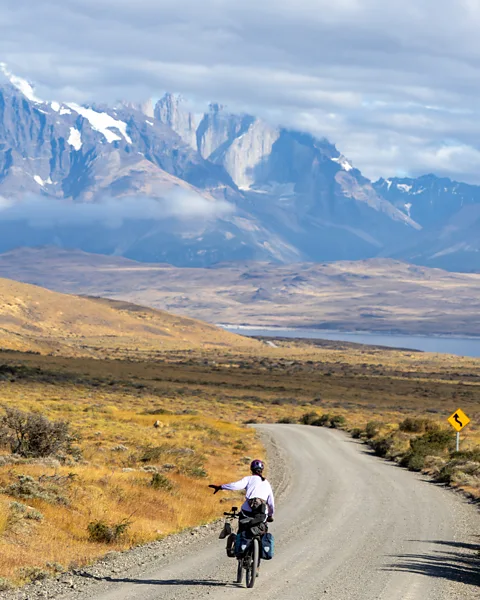
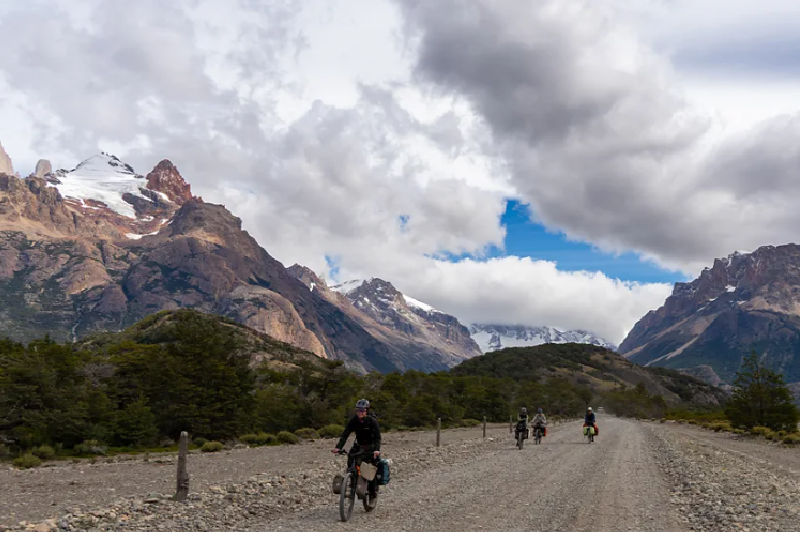
For most of the day, the pampas appeared raw and deserted. The paved highway and tour buses had long vanished from view, and I pedalled a lonely gravel road used by just a handful of Argentine cowboys and cyclists.
Then, without warning, the wind stilled and the landscape began to stir. A herd of young guanacos – llamas’ wild ancestors – leapt over a cattle fence. To the west, the setting sun cast a deep honey hue over the wind-scoured steppe, while a crimson Moon rose behind the clouds to the east. In the day’s final light, a flightless Darwin’s rhea sprinted across the arid grassland; a burst of quivering tail feathers and gangly legs.

It was March, the end of the Patagonian summer, and my partner and I were at the southern tip of the Americas, cycling more than 1,400km (870 miles) on a variation of the aptly named Fin del Mundo (End of the World) cycling route. The journey, much of it unpaved, starts in the Argentine hamlet of El Chaltén and weaves across the border into Chile before finishing in the world’s southernmost city, Ushuaia, Argentina.
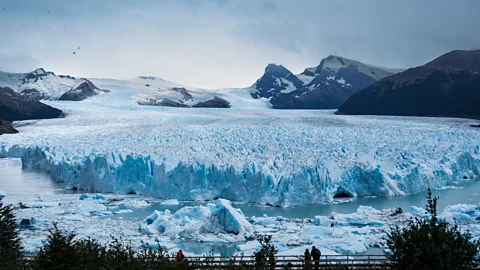
Millions of tourists fly into Patagonia to trek its jagged granite peaks, marvel at its electric-blue glaciers and photograph its serrated pinnacles. From the comfort of a rental car or tour bus, you can cover Southern Patagonia in about a week. But cycling offers a different way to experience one of Earth’s last vast wildernesses.
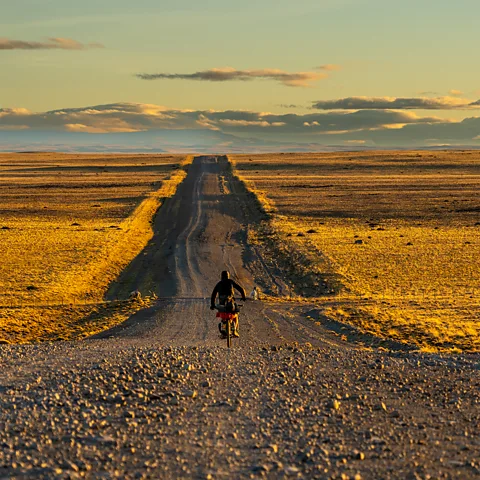
As we soon found, this slow, self-directed odyssey also brings you into a world of wildlife that is slowly returning to land where it had all but disappeared, and lets adventurous travellers immerse themselves in some of the world’s most striking landscapes.
A fragile landscape
Wild, rugged and breathtakingly beautiful, Patagonia was once dominated by sprawling sheep farms, which degraded the land. When the wool industry collapsed at the end of the 20th Century, many ranchers sold their remote pastures and conservationists saw an opportunity to rewild it.
“Back then, Patagonia was seen as worthless,” said Libertad Giliberto, a tour guide who works across Chile. Starting in the 1980s and ’90s, environmental groups began purchasing the degraded land, restoring it, turning it into reserves and donating it to Chile and Argentina’s governments on the condition that they also protected surrounding land.
Today, this vast expanse of temperate rainforests, towering glaciers and treeless steppes contains some of the largest protected areas on Earth. Chile alone has a 28-million-acre conservation network encompassing 17 national parks.
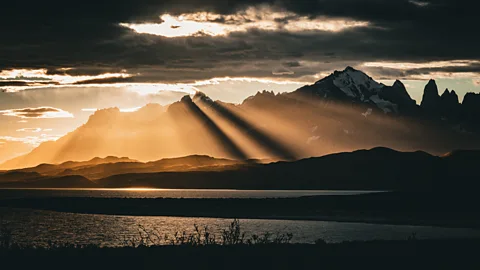
A week into our trip, we approached one of Patagonia’s most iconic parks – Torres del Paine and wild-camped at a viewing platform overlooking the three granite spires that give the territory its name. As the late summer sunset threw golden shafts of light between its peaks, the last of the tourist buses pulled away and we now had the view to ourselves.
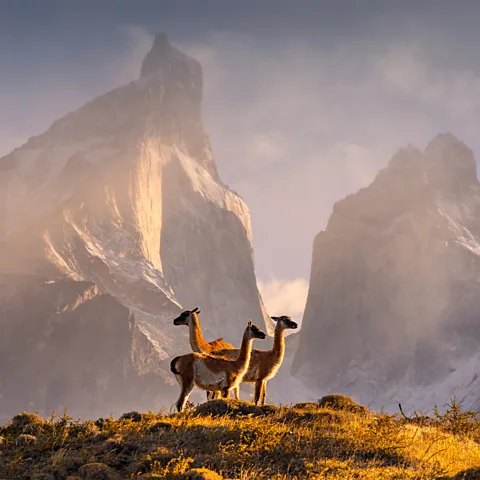
A day earlier, I had met Ciro and Carlos Barría, two retired park rangers who grew up nearby, back when large parts of the park were still ranchland. By the late 1980s, ranching had largely ceased and authorities began building tourism infrastructure.
Ride the route
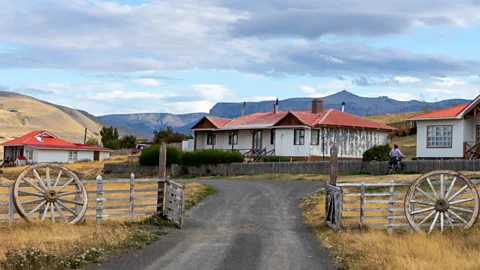
Southern Patagonia’s cycling season typically runs from mid-November to early April. Most cyclists travel north to south to avoid getting caught in Patagonia’s infamous headwinds and sleep at wild camping spots, vialidades (road maintenance huts) or estancias (ranches). You can find crowd-sourced, up-to-date resupply points, official and wild camping spots and hotel recommendations on the iOverlander app. Towns and small settlements are frequent enough that you rarely need to carry more than a day’s worth of food. You can download the full route here and shorter segments with more details from Bikepacking.com here and here.
For years, few people visited. “We were like a side-trip from Perito Moreno [one of Patagonia’s most famous glaciers],” Carlos said. In 1986, the park received less than 8,000 visitors. In 2024, crowds surpassed 305,000.
But as the park drew bigger crowds, its infrastructure buckled – thousands of hikers jostled for the same viewpoints, eroding trails, trampling fragile plants and overwhelming campsite waste systems. Illegal wildfires by tourists have burned nearly 30,000 hectares of the park since 2005. To keep crowds moving within the park, Carlos said, authorities have recently scrapped the once-mandatory orientation videos, leaving visitors unclear on the rules and the park prone to further damage.
“It only takes one person to cause a catastrophe,” Carlos said.
For the Barrías, the solution is to spread tourism beyond the hotspots. “There are so many other areas that are as interesting as [Torres del] Paine,” Ciro said. “Why not go there?”