A monthly check helps catch dried-out sealant before a tiny puncture ruins your ride.
By: Matt Phillips
Tubeless is great right up until it isn’t. One day, everything works like magic. The next, a tiny puncture that should have sealed has you stopped on the side of the road, annoyed, and wondering what the hell went wrong.
Usually, the answer is simple: the sealant is spent.

Sealant is not permanent. It dries out, separates, sticks to the casing, and gradually stops doing the job you’re trusting it to do. That means the flat protection you think you have can quietly disappear before you notice.
And that leads to the question that matters more than most riders realize: How often should you refresh tubeless sealant?
The Short Answer
Check your tubeless sealant about once a month.
That is the easy rule, and for most riders, it is the right one. If the sealant looks low, watery, dried out, or clumpy, refresh it. If you live somewhere hot and dry, check it more often. If you live somewhere cool and damp, you can probably stretch the interval a bit. But monthly is the safest default because it catches problems before they turn into flats.
Why Sealant Doesn’t Last
Tubeless sealants are liquid systems built around water, latex, and suspended solids. Over time, the water evaporates. The latex and particles that are supposed to rush to a puncture and plug it can instead coat the inside of the tire or dry into clumps.
At that point, there may still be something in the tire, technically, but it is no longer doing useful work.
What Makes It Dry Out Faster
Climate is the big one. Hot, dry conditions are hard on sealant. So are porous casings, frequent riding, frequent inflation, and warm storage.
Formula matters, too. Fast-sealing race formulas can be terrific, but they usually demand shorter service intervals. Race sealants are often thicker and use more and larger particulates, so they coagulate faster and plug bigger holes more quickly—but they also need more frequent replacement.
Some of the best sealers are also some of the highest-maintenance formulas.
Signs It’s Time
Sometimes, clues appear before you even open the tire. Your tires deflate faster than usual, and small punctures no longer seal as effectively. These signs often indicate that the internal components are no longer in good condition.
The surest way to know, though, is to look. If you open the tire and find sealant that is thin, watery, scarce, or dried into rubbery clumps stuck to the casing, it is time.
Don’t wait for the flat to confirm it.
How to Check It
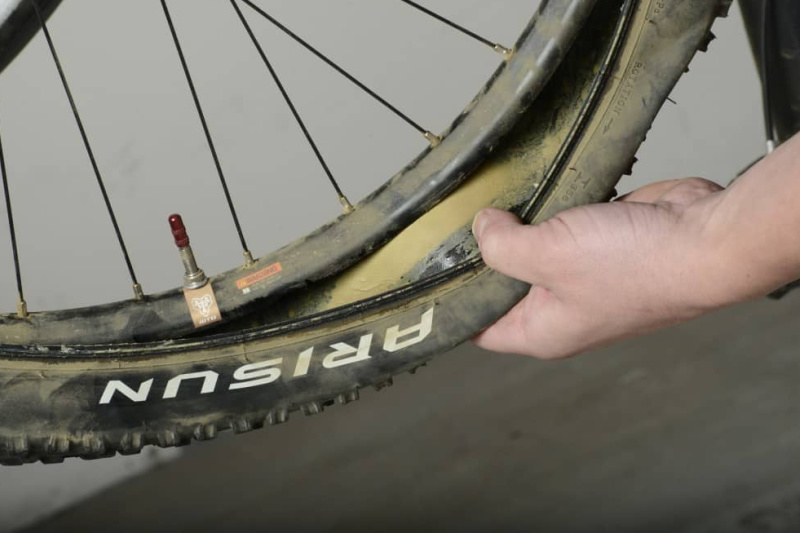
The best method is simple: Unseat a small section of bead and look inside.
Start by cracking open a small section of the tire bead, then turn the wheel so this opening is at the bottom, where the sealant will collect. What do you see? Good sealant remains liquid, somewhat thick, opaque, and in sufficient quantity. Poor sealant appears watery, clumpy, dried out, or minimal.
Top Off or Clean It Out?
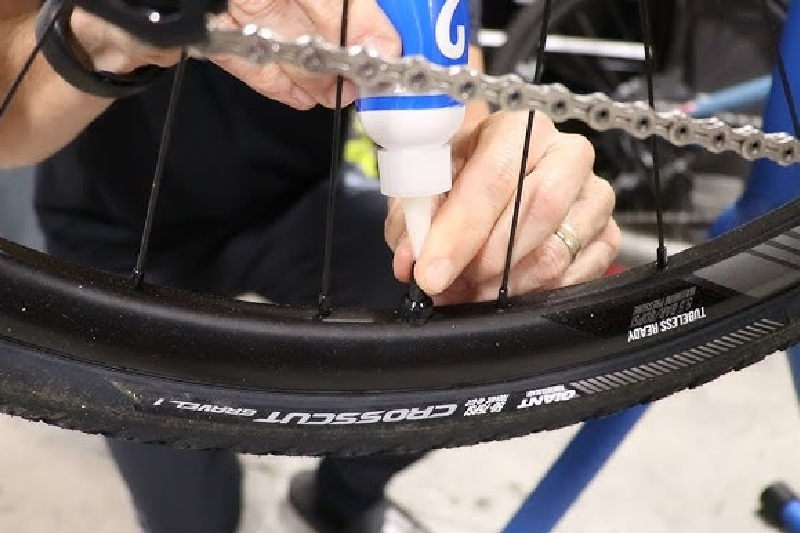
If the sealant is still liquid but there just is not enough of it, top it off.
If it has dried into chunks, built up heavily inside the tire, or you are switching brands, clean it out and start over.
Even if you are good about topping off throughout the year, it is smart to fully clean out the tire and start fresh at least once a year. Doing this is a good preventive maintenance before dried buildup turns into a bigger mess.
If you are switching sealant brands, starting fresh is usually the smart move. Some formulas do not play especially well together, and a tire is a dumb place to run a chemistry experiment.
A Few Useful Tricks
When adding sealant via the valve, avoid positioning the valve at the very bottom of the tire, as sealant might pool and flow back through it. Instead, rotate the wheel so the valve is positioned off to the side.
Shake the bottle thoroughly to ensure the solids are fully blended. If the sealant is entirely liquid with no suspended particles, it won’t perform optimally.
Using a brand-new tire? Be a little more generous with sealant than you would for a routine top-off, because fresh casings tend to absorb some of it. Initial setup can take about double what a routine top-off does.
If a tire will not hold air, do not blame the sealant right away. The problem may be the bead, tape, valve, or casing. Before you dump in more sealant, spray a little soapy water on the tire, rim, and valve, and look for bubbles. That will often tell you whether the real problem is a bad seal somewhere else in the system. Setup and repair issues can come from several parts of the system, not just the fluid inside the tire.
How Much Sealant?
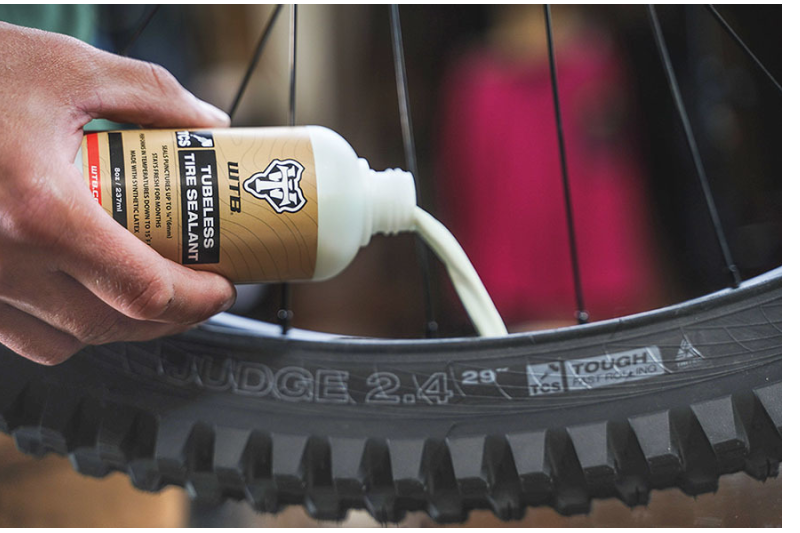
Follow the sealant maker’s recommended range and err a little high rather than a little low.
Too little sealant means shorter service life and less puncture protection. A little extra adds some weight, yes, but this is not the place to get weird about grams.
One other thing: A fresh setup usually needs more sealant than a routine refresh. A new tire tends to soak up some of the sealant, which is why first-time setup takes more than a simple top-off.
Tired of the Sealant Hassle? TPU Tubes Are an Option
Not everybody wants another consumable maintenance chore. If you are over the mess, the checking, and the reality that your flat protection can quietly dry up while the bike sits in the garage, TPU tubes are worth a look.
For road riders especially, they offer a light, low-fuss alternative. No liquid sloshing around inside the tire. No dried latex boogers stuck to the casing. No clogged valve cores. And no wondering whether the sealant that was supposed to save your ride gave up three weeks ago.
That does not make TPU tubes better in some universal sense. Tubeless still brings real advantages, especially for riders who want lower pressures and puncture sealing. But if what you value most is simplicity, cleanliness, and fewer maintenance chores, TPU tubes make a pretty strong case for themselves.
The Takeaway
Tubeless is not set-it-and-forget-it. Sealant is consumable maintenance, just like chain lube or brake pads.
A monthly sealant check is cheap insurance. It takes a few minutes, costs almost nothing, and helps make sure your tubeless setup still has the puncture protection you think it does.
And if that kind of upkeep sounds more annoying than worthwhile, that may be your sign to think hard about whether tubeless is the right system for you in the first place.