By: Gary Robinson, AvidCyclist.com
From the rugged peaks of the Rockies to the lush forests of the East Coast, the United States is home to a diverse and thrilling collection of trails and greenways. For cyclists, these paths represent freedom, adventure, and a safe haven from vehicular traffic. However, beyond the obvious recreational and health benefits, these corridors of protected open space are quietly serving as powerful engines for economic growth. Across the country, communities are discovering that investing in trails and greenways is not just an environmental or recreational decision—it is a highly lucrative economic strategy.
Like a magnificent gem on display, trails and greenways attract visitors from near and far. Many communities realize the economic potential of these highly desirable recreation destinations. Trails and greenways bring job growth in construction and maintenance as well as tourism-related opportunities like bike rentals, restaurants, and lodging. A National Park Service study revealed that the economic impact of a trail involves a combination of newly created trail-related jobs and the expansion of existing businesses related to travel, equipment, clothes, food, souvenirs, and maps.
Breathing New Life into Local Economies

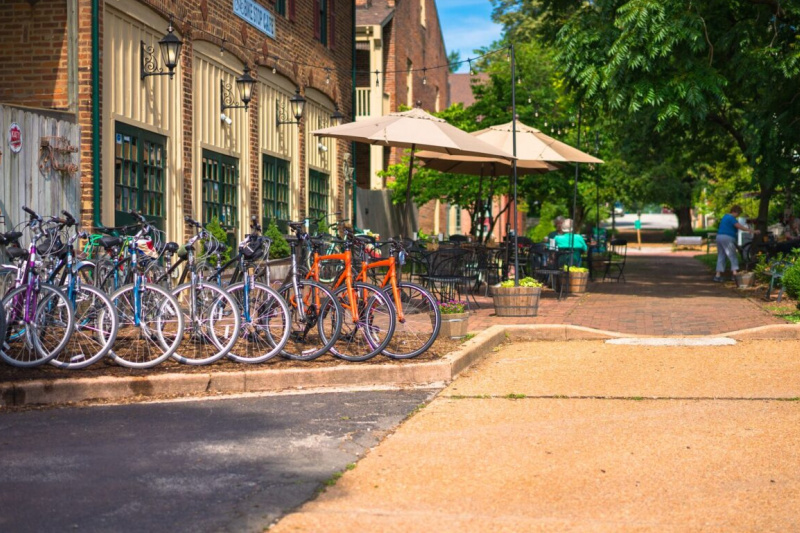
The evidence supporting the conclusion that trails and greenways improve local economies grows greater by the day. Across the United States, trails and greenways are stimulating tourism and recreation-related spending. Trail and greenway systems have become the central focus of tourist activities in some communities and the impetus for kick-starting a stagnating economy.
Consider the Great Allegheny Passage, a celebrated trail stretching from Pittsburgh, Pennsylvania, to Cumberland, Maryland. According to a 1998 study, the direct economic impact of the Great Allegheny Passage exceeded $14 million a year—even though the trail was only half-finished at that time.
In Confluence, Pennsylvania, one of the project’s first trailhead towns, the trail has encouraged the development of several new businesses and a rise in real estate values.
Similarly, in the months following the opening of the Mineral Belt Trail in Leadville, Colorado, the city reported a 19 percent increase in sales tax revenues. Owners of restaurants and lodging facilities report that they are serving customers who have come into town specifically to ride the trail. The trail has helped Leadville recover from the economic blow of a mine closure in 1999.
Even smaller, regional trails are seeing massive returns. The Mineral Wells to Weatherford Rail-Trail near Dallas, Texas, attracts approximately 300,000 people annually and generates local revenues of $2 million.
Meanwhile, visitors to Ohio’s Little Miami Scenic Trail spend an average of $13.54 per visit just on food, beverages, and transportation to the trail—and an estimated $277 per person each year on clothing, equipment, and accessories. The total economic benefit is impressive considering there are an estimated 150,000 trail users per year
Attracting Businesses and Boosting Property Values
It is not just tourism that drives the economic benefits of greenways; these amenities are also powerful magnets for new residents and corporate investment. Americans living in rural, suburban, and urban communities are demanding that green places be protected as a way to maintain their quality of life. Local governments are finding they can no longer permit poorly planned development if they are to compete for residents and businesses.
Many companies seeking to relocate or establish a corporate headquarters have cited the availability of trails as a significant factor in their decision to choose one locale over another. After considering several cities, Ruby Tuesday, Inc., moved its Restaurant Support Center to a site adjacent to the Greenway Trail in Maryville, Tennessee. Chairman and CEO Samuel E. Beall, III, stated, “I was very impressed with the beauty of the park, which helps provide a sense of community to this area, as well as the many benefits it provides to our more than 300 employees”.
Furthermore, trails and greenways have been shown to bolster property values and make adjacent properties easier to sell. A 1998 study of property values along the Mountain Bay Trail in Brown County, Wisconsin, shows that lots adjacent to the trail sold faster and for an average of 9 percent more than similar property not located next to the trail.
In a 2002 survey of recent home buyers sponsored by the National Association of Realtors and the National Association of Home Builders, trails ranked as the second most important community amenity out of a list of 18 choices.
Realizing the selling power of greenways, developers of the Shepherd’s Vineyard housing development in Apex, North Carolina, added $5,000 to the price of 40 homes adjacent to the regional greenway. Those homes were still the first to sell.
The Ecological Dividend
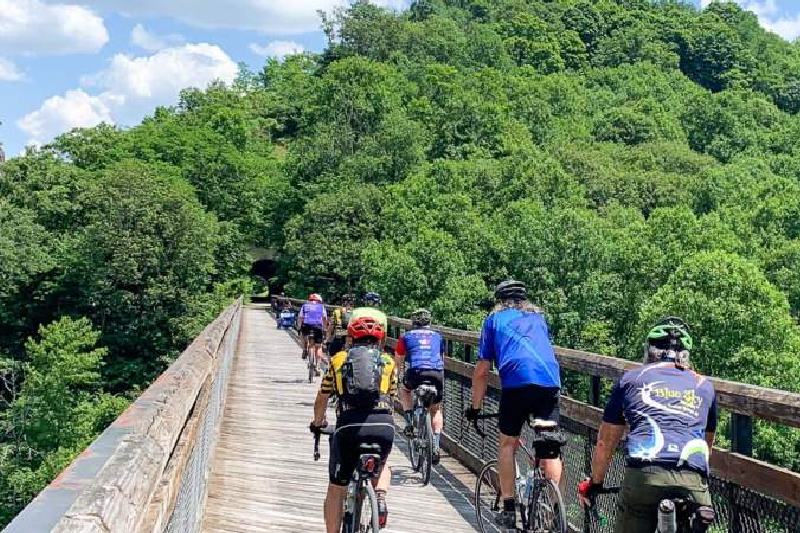
The economic benefits of trails and greenways extend beyond direct revenue and property values; they also provide significant cost savings through ecological services. Greenways preserve critical open space that provides natural buffer zones to protect streams, rivers, and lakes from pollution run-off caused by fertilizer and pesticide use on yards and farms. They also serve as flood plains that absorb excess water and mitigate damage caused by floods.
The estimated annual value of the water filtration attributed to wetlands along a three-mile stretch of Georgia’s Alchoy River alone is $3 million.
Approximately 10 million homes are located in flood plains across America, and the Federal Emergency Management Agency estimates that flooding causes more than $1 billion in property damages every year.
Converting these areas to greenways would free that money to be spent on other needed projects. After years of devastating losses from flooding, Tulsa, Oklahoma, designed a greenway along Mingo Creek that preserved and enhanced the floodplain to include woodlands, wetlands, parks, and trails. As a result, flood insurance rates in Tulsa dropped by 25 percent.
A Path Forward
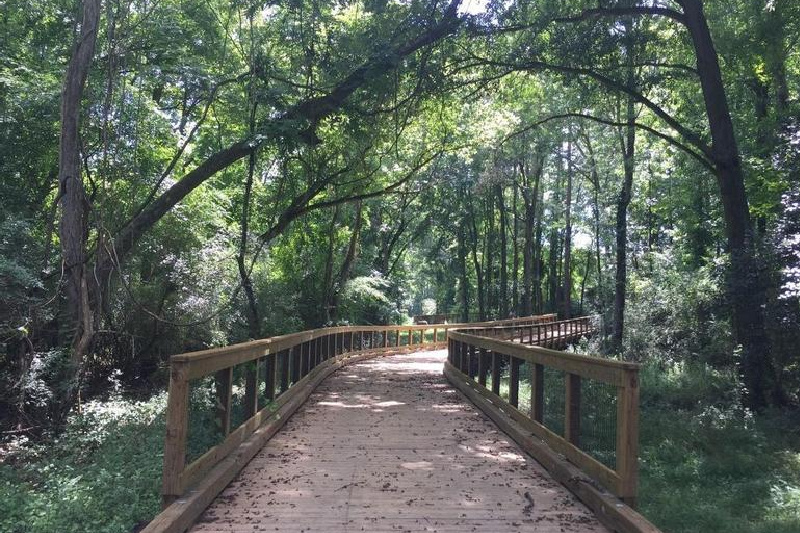
As cyclists, we inherently understand the value of a well-maintained trail. It provides a sanctuary for our rides, a route for our commutes, and a connection to the natural world. However, the data clearly shows that the value of these greenways extends far beyond the cycling community. They are vital economic assets that revitalize downtowns, attract forward-thinking businesses, increase property values, and save municipalities millions in ecological management costs.
The next time you clip in and roll out onto your local greenway, take a moment to appreciate not just the smooth pavement or the scenic views, but the profound economic impact that path is having on the community around it. Trails and greenways are not just places to ride—they are investments in a more prosperous, sustainable future.