By Gary Robinson, Avid Cyclist
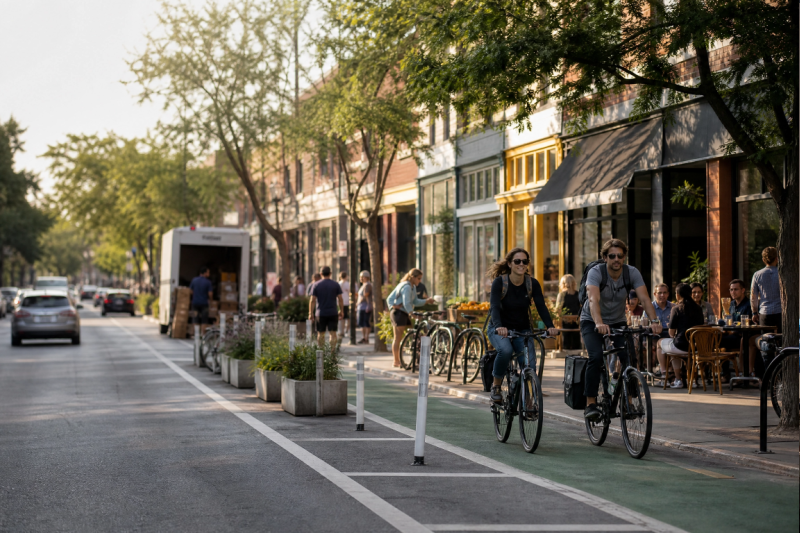
If you’ve ever stopped for coffee mid-ride or picked up a spare tube at a local shop, you already know that cyclists are customers. But when city councils and planning boards debate adding a bike lane or extending a trail, the conversation often turns into a perceived battle between bicycles and business. Merchants worry that losing street parking or narrowing a traffic lane will drive customers away, while cycling advocates promise that two-wheeled traffic is the key to revitalization.
The reality is more nuanced—and ultimately more promising. A growing body of economic evidence shows that cycling infrastructure is not a threat to local business. In fact, when integrated thoughtfully into a community, better biking connections can increase retail access, spur repeat visits, and bring new visitor spending into both urban neighborhoods and rural trail towns.
As we’ve noted in previous AvidCyclist coverage on rural trail economies and the enduring value of independent bike shops, cycling thrives as part of a broader ecosystem . A painted lane alone doesn’t transform an economy. But when connected to safe crossings, good bike parking, and welcoming storefronts, cycling infrastructure can become a powerful engine for local prosperity.
The Economics of the Repeat Customer
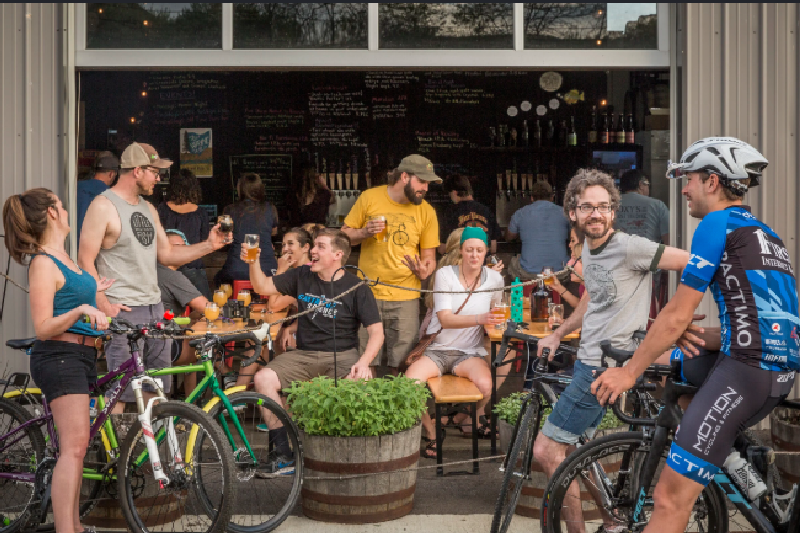
One of the most persistent fears surrounding bicycle infrastructure is that people on bikes simply don’t spend as much money as people in cars. However, research suggests that while cyclists may spend less per individual trip because they can’t carry as much cargo, they make up for it in frequency.
A synthesis of 23 North American economic impact studies published in Transport Reviews found that active-travel facilities generally have positive or non-significant economic impacts on nearby retail and food-service businesses . The review noted that this pattern held true even when vehicle parking or travel lanes were reduced to make room for the infrastructure.
This makes intuitive sense: a cyclist traveling at 10 to 15 miles per hour is far more likely to notice a new café, a window display, or a “Sale” sign than a driver navigating traffic at 35 miles per hour. Furthermore, because cyclists save money on fuel, parking, and vehicle maintenance, more of their household budget remains available to circulate within the local economy .
Summary of Cycling’s Economic Impact Mechanisms
|
Economic Driver
|
Mechanism
|
Primary Beneficiaries
|
|
Repeat Local Spending
|
Cyclists travel at slower speeds, notice storefronts, and make more frequent trips.
|
Cafés, restaurants, grocery stores, and neighborhood retail.
|
|
Visitor Tourism
|
Traveling cyclists spend on lodging, meals, and specialized gear.
|
Hotels, restaurants, outdoor retailers, and regional economies.
|
|
Household Savings
|
Reduced spending on fuel and vehicle maintenance leaves more disposable income.
|
The broader local retail and service economy.
|
|
Infrastructure Efficiency
|
Active-travel projects create more jobs per dollar than materials-heavy road projects.
|
Local construction and planning workforces.
|
Main Street Impacts: What the Data Shows
When we look at specific corridors where bicycle infrastructure has been installed, the data largely refutes the “bike lanes kill business” narrative.
A multi-city National Street Improvements Study, summarized by Portland State University’s Transportation Research and Education Center, examined 14 corridors across six U.S. cities . Using consistent methods to measure sales and employment, the researchers found that the projects had positive or non-significant impacts on local economies. Food-service businesses often saw the clearest benefits. For example, after a bike lane was installed on Central Avenue in Minneapolis, food sales grew by 52.44%, compared with 22.46% in a nearby control area. In Seattle, a protected bike lane on Broadway coincided with a 30.78% rise in food-service employment, vastly outpacing control areas .
A detailed technical report by UC Berkeley researchers for Caltrans looked at business performance in San Francisco and Alameda counties . The study found that dedicated bike lanes (Class II facilities) were not associated with a statistically significant change in sales overall, though they did show a positive association on lower-volume neighborhood roads. The researchers also found that removing on-street parking to add bike lanes had no significant association with sales changes or business turnover in San Francisco.
The Caltrans report offers a crucial caution: infrastructure impacts vary by roadway type and business category. While food service and neighborhood retail often benefit, some auto-centric businesses may see declines . The lesson for planners is not that bike lanes are universally perfect for every business, but that they are generally neutral-to-positive, especially when placed on appropriate corridors.
The Tourism Multiplier
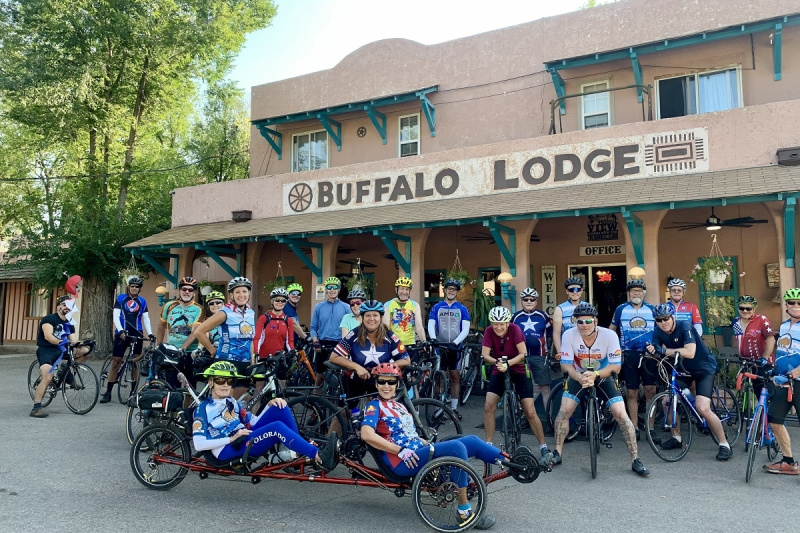
Beyond neighborhood retail, bicycle tourism represents a massive infusion of “new money” into local economies. From the Great Allegheny Passage to the rural mountain biking hubs of the West, visiting cyclists spend heavily on lodging, meals, and gear.
A 2025 report by the Trust for Public Land and the International Mountain Bicycling Association synthesized findings from mountain-biking destinations across the country. Across the included studies, the average mountain-biking tourist spent $416 per visit. This spending ripples through the economy, supporting jobs in hospitality, retail, and trail maintenance.
However, as the report notes, these benefits do not happen by accident. Successful trail economies require more than just dirt paths; they require a coordinated effort to connect trails to existing business districts, provide adequate amenities, and maintain the infrastructure over time . When a trail connects directly to a town’s Main Street, the likelihood that riders will stop for a post-ride meal or overnight stay increases dramatically.
Building the Ecosystem
Bicycling means business, but realizing that potential requires treating cycling infrastructure as part of a complete community ecosystem. A bike lane that ends abruptly at a dangerous intersection won’t bring customers to a local shop. A world-class trail system without nearby lodging or dining won’t capture maximum visitor spending.
To truly pedal toward prosperity, communities must pair infrastructure with secure bike parking, traffic calming, and active merchant participation. When local businesses embrace cyclists—whether through “bike-friendly” discount programs, providing water and tools, or simply advocating for safer streets—they aren’t just supporting a healthy mode of transportation. They are investing in their own bottom line.