The Pre-Race Jitters
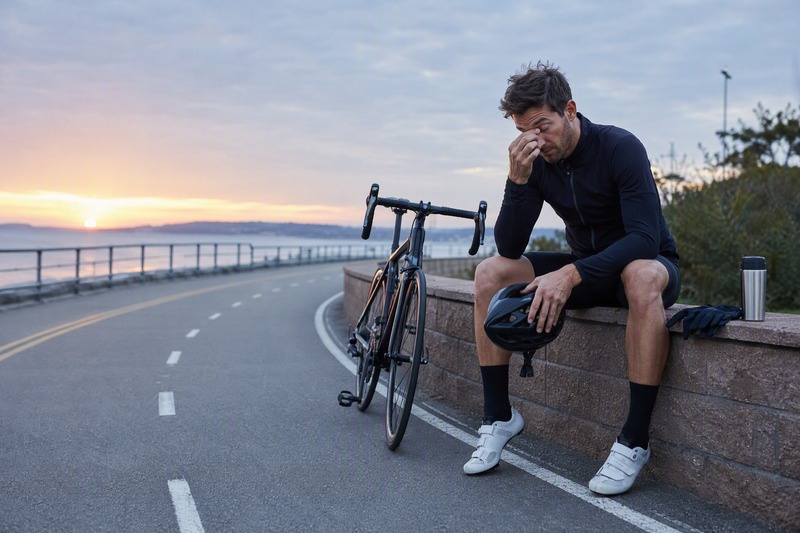
It is a familiar scene for almost every dedicated rider: staring at the ceiling the night before a major ride or race, watching the hours slip away, and mentally calculating how little rest you are going to get. The anxiety about poor sleep can sometimes be worse than the fatigue itself. But how much does one bad night actually ruin your ride?
A recent 2026 study in the European Journal of Applied Physiology specifically investigated the effects of one-night sleep deprivation and recovery on endurance cycling performance . The findings offer a nuanced picture: while total sleep loss made moderate riding feel significantly harder and impaired vigilance, it did not necessarily destroy short-term high-intensity performance like a 20-minute time trial. Furthermore, in this specific study, one normal recovery night restored the measured moderate-intensity responses.
Disclaimer: The following article discusses recent research findings and is intended for general informational purposes only. It is not a substitute for individualized medical advice. The study cited was conducted on a small sample size of 26 trained male amateur cyclists and triathletes. Results may vary for female cyclists, elite professionals, or less trained individuals.

The Study: What Actually Happens After 25 Hours Awake
To understand the impact of sleep loss, researchers designed a rigorous protocol. They tested 26 male amateur cyclists and triathletes, with an average age of 30.5 years, over three consecutive days. The sleep deprivation group stayed awake for 25 hours, while the control group slept normally .
The testing protocol involved two distinct cycling challenges: a 40-minute moderate-intensity ride and a 20-minute time trial . The results were telling. During the 40-minute moderate ride, the sleep-deprived cyclists reported a significant increase in their Rating of Perceived Exertion (RPE)—meaning the effort simply felt much harder than usual . Their scores on the Feeling Scale also dropped, indicating they felt worse overall . Additionally, objective measures of vigilance and sleepiness were impaired .
However, the study revealed a surprising resilience in short-term, high-intensity performance. There was no significant interaction effect on the actual work completed during the 20-minute time trial . Interestingly, physiological markers such as heart rate and blood lactate levels were not significantly affected by the sleep deprivation .
The Mind vs. The Body: Why It Feels So Hard
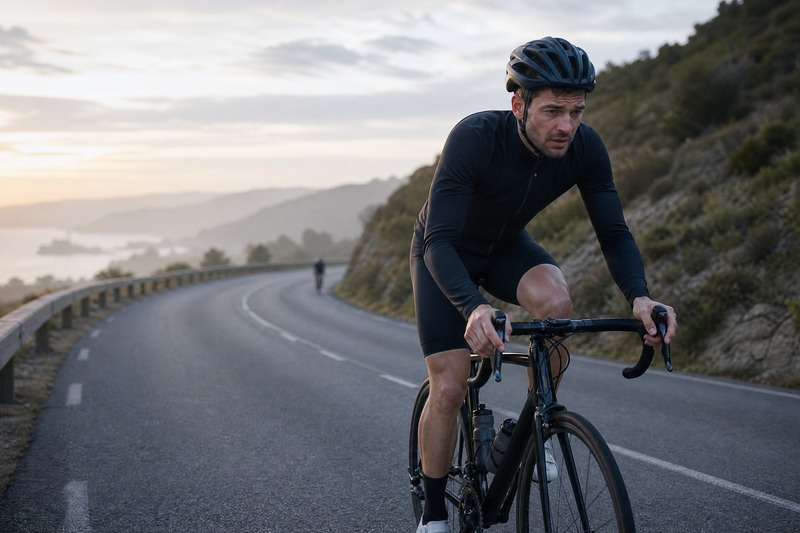
These findings highlight a crucial distinction between physiological capacity and mental perception. Sleep deprivation acts primarily on the brain’s perception of effort rather than the muscles’ physical ability to perform. This is where understanding Rating of Perceived Exertion (RPE) becomes essential .
For cyclists, this means you might still have the physiological “watts” available to push hard, but accessing that power requires significantly more mental resilience when you are sleep-deprived. The brain interprets the same physical workload as more demanding, making it harder to sustain the effort, even if your heart rate and lactate levels remain stable. This aligns with broader research on the importance of sleep for athletic performance, which emphasizes sleep’s role in cognitive function and perceived exertion . The cognitive toll can be even more pronounced in extreme scenarios, as seen in studies on the cognitive costs of sleep deprivation in ultracycling .
The Bounce Back: The Power of One Recovery Night
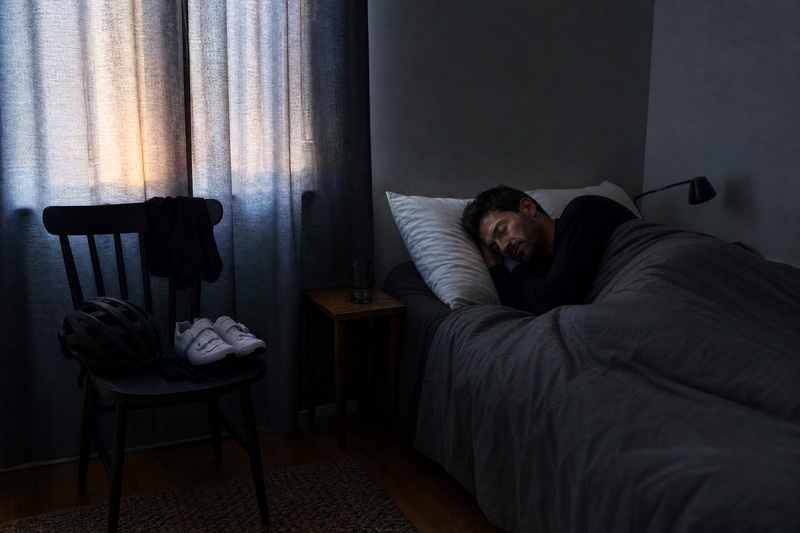
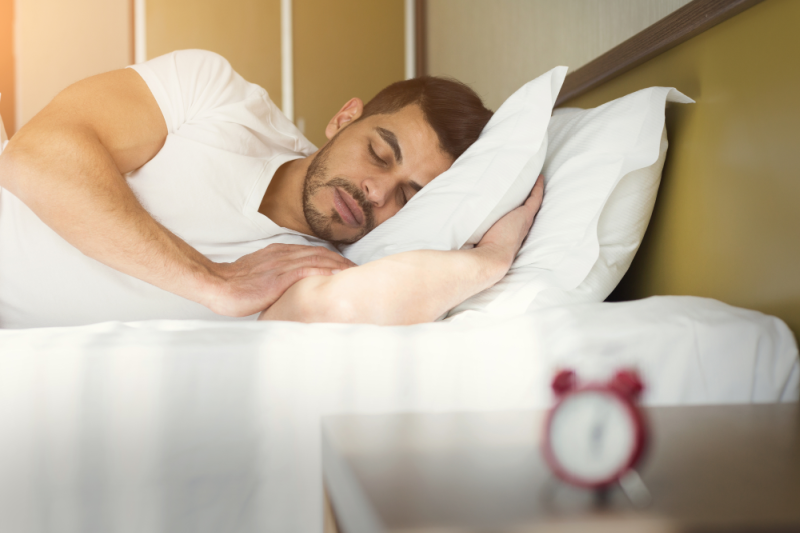
A realistic photo of a cyclist sleeping peacefully in a comfortable bed, sunlight gently coming through the window, illustrating recovery.
Perhaps the most reassuring finding from the 2026 study is the rapid recovery observed after just one normal night of sleep. In this specific sample and protocol, one recovery night restored sleepiness, vigilance, RPE, and Feeling Scale responses to baseline levels during moderate-intensity cycling .
This offers practical reassurance for riders. Do not treat one poor night of sleep before an event as automatic proof that your race or ride is ruined. The physiological engine may still be capable of a strong 20-minute effort. However, it is crucial to prioritize multiple nights of adequate sleep in the long term and understand how sleep affects heart rate variability and recovery . If you are experiencing significant drowsiness or poor concentration, reconsider high-risk activities like driving to the start line, navigating heavy traffic, or tackling technical descents. For more on managing challenging conditions, see our guide on When the Air Turns Orange: The New Rulebook for Riding Through Heat and Wildfire Smoke and What Cyclists Can Learn From Runners About Consistency.
Safety and Practical Takeaways for Everyday Cyclists
While the study suggests that a 20-minute time trial effort might be preserved after a sleepless night, the drop in vigilance is a critical safety concern. Decreased vigilance makes navigating traffic, reacting to unexpected obstacles, or executing technical descents significantly more dangerous.
| Condition | Recommended Action |
| Mild fatigue after one poor night | A short, low-risk ride or indoor trainer session may be reasonable. |
| Significant drowsiness or microsleeps | Stop riding immediately; avoid driving. |
| Impaired concentration | Avoid technical descents, heavy traffic, and group rides. |
| Repeated sleep loss or illness | Rest and prioritize recovery over training. |
In summary, a short, low-risk ride may be reasonable for some riders after an ordinary night of poor sleep. However, if you experience drowsiness, microsleeps, illness, medication effects, repeated sleep loss, or impaired concentration, these are clear reasons to stop, delay your ride, opt for an indoor session, or avoid driving to the ride altogether. As you prepare your bike for your next outing, perhaps using our Late-Summer Bike Maintenance Checklist, remember that maintaining your own physical and mental readiness is just as important as maintaining your equipment.