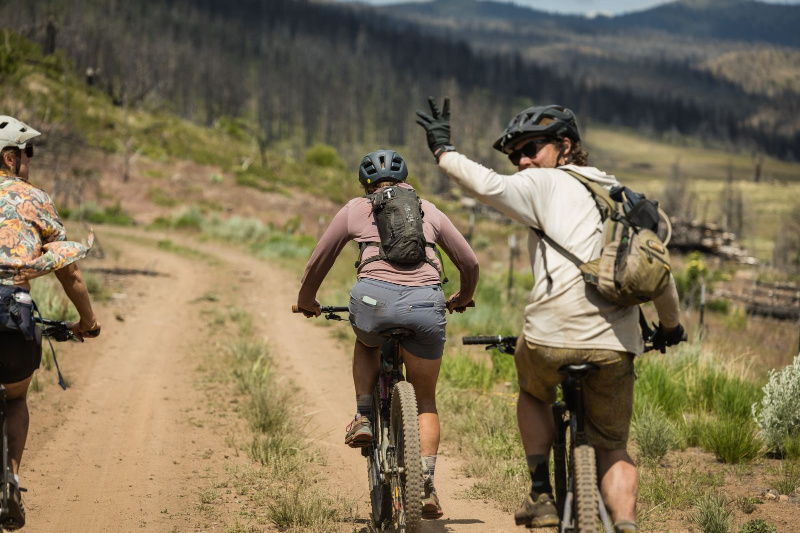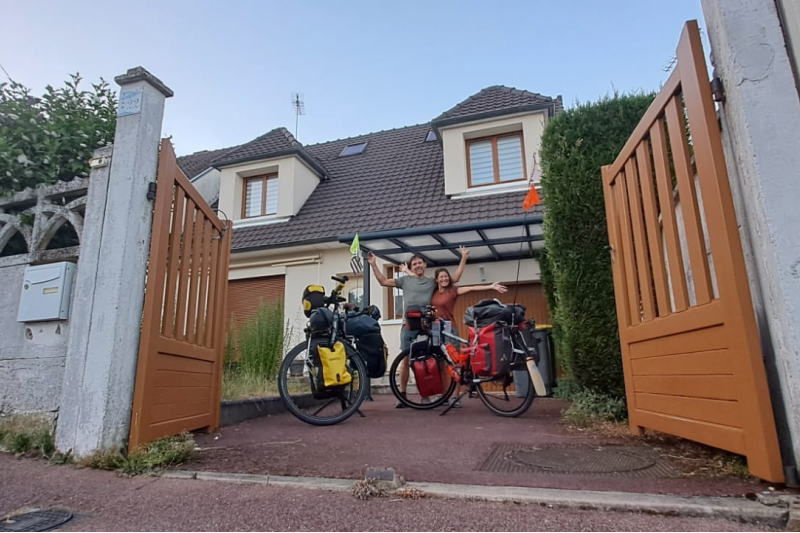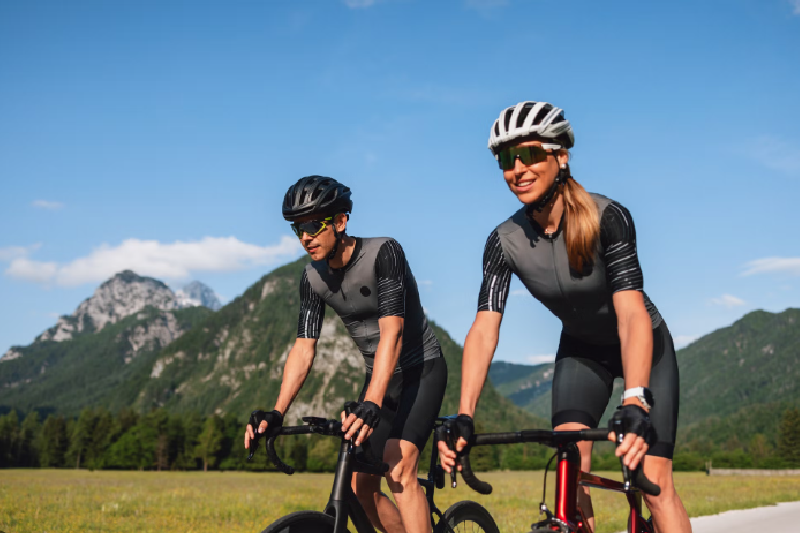
Cycling is often romanticized as the perfect shared pursuit. Two people, two bikes, the open road, and nothing but time. Yet for a surprising number of couples who both ride, the reality is far more complicated. When one partner trains for centuries and the other commutes a few miles to work, when one chases Strava segments and the other just wants to stop and look at the view, the very sport that brought them together can quietly begin to drive them apart.
A recent Reddit thread in r/cycling captured this tension with striking clarity. A woman posted that her boyfriend — a serious, dedicated cyclist — kept dismissing her suggestions for scenic weekend rides together. She had bought a bike at his encouragement, she rode for commuting, and she was admittedly slow. “It makes me sad,” she wrote, “because I wanted to do this as a fun activity with him.” 1 The post struck a nerve. Within hours, hundreds of cyclists weighed in, many sharing nearly identical stories. The thread was not an isolated complaint. It was a mirror held up to a dynamic that plays out in cycling households everywhere.
This article draws on that Reddit conversation and a broad range of expert voices, community discussions, and real-world case studies to examine why couples who both cycle so often end up riding separately — and what they can do about it.
Why Cycling Is Uniquely Difficult to Share
Most hobbies can be enjoyed together at different skill levels without much friction. Two people of different abilities can hike the same trail at the same pace, watch the same film, or cook the same meal side by side. Cycling is different. Speed and fitness create a physical separation that is hard to ignore and even harder to bridge. The faster rider is either waiting at the top of every hill, circling back to check on their partner, or — as many Reddit users described — simply not showing up to ride at all.
There is also a psychological dimension that makes cycling particularly fraught. For many serious cyclists, the sport is not just a hobby — it is an identity. As sports psychologist Josephine Perry has explained, “We’re always looking for a way to feel a part of a community, and cycling is an easy one for feeling part of ‘the gang.’ Being part of a group makes us feel important and wanted or needed, and so having an identity as a cyclist can be important to us.” 2 When that identity is built around performance — watts, KOMs, average speed, weekly mileage — riding with a slower partner can feel like a threat to the self-image the faster rider has carefully constructed.
This is not a character flaw. It is a well-documented feature of how deeply cyclists can become invested in their sport. Cycling Weekly has noted that the measurable, trackable nature of cycling — power meters, GPS data, Strava leaderboards — makes it uniquely addictive and uniquely prone to obsessiveness. 2 The problem arises when that obsessiveness crowds out the relational value of riding with someone you love.
The Faster Rider’s Dilemma
From the perspective of the more experienced or fitter partner, the situation is genuinely difficult. A serious cyclist who has trained for months to achieve a certain level of fitness faces a real dilemma when asked to ride at a pace that barely registers as exercise. The frustration is not necessarily about ego — it can be about the very real physiological reality that a recovery-pace ride for one person is a maximum-effort ride for the other.
As one user on Bike Forums put it plainly: “Biking with the S/O is ‘Us’ time, while riding at speed is Me time.” 3 This framing — separating the two functions of cycling — is actually one of the healthiest approaches a couple can take, but it requires the faster rider to be honest with themselves about what they are hoping to get out of a given ride.
The Bicycling magazine article “How These Couples Solved the Cycling Speed Gap” interviewed more than a dozen couples who had navigated this challenge. Pro cyclocross racer Dan Chabanov put it well: “Racing bikes and training are not so important when I think about the sheer enjoyment of going for a nice ride with my partner. If I agree to go for a ride with someone then I ride with them. I’m not hunting Strava segments or doing intervals. It’s just simple group-ride etiquette.”
The key insight here is that a couples’ ride and a training ride are two different things, and conflating them is the source of much of the tension.
The Slower Rider’s Burden
The slower rider carries their own set of pressures. There is the constant anxiety of holding someone back, the awareness of being watched, the fear that the more experienced partner is bored or frustrated. One Reddit user described the experience of dating a faster cyclist with striking vulnerability: “I am scared that they’ll get bored or annoyed at me because I’m slow… This has been transformational for my health, wellbeing, and happiness. My entire social life is my local bike community. I’ve made so many friends and gone on so many adventures. I’ve slowly gotten stronger and have been challenging myself bit by bit.”
Krista Ciminera, who rides with her pro-racing partner Dan Chabanov, has described the emotional toll of being the slower rider: “I’ve definitely been on those 60-mile rides with acquaintances who, even though I expressed my limits, left me feeling like I was chasing after the white rabbit in Alice in Wonderland — except in spandex and gasping for breath the whole time.” Even when the faster rider waits at the top of climbs, she notes, they rarely leave enough time for the slower rider to catch their breath before the pace resumes.
The slower rider in a relationship also often faces unsolicited coaching, which is almost universally received as criticism. Jen Hudak, a professional freeskier turned mountain biker, has written about this dynamic: “I can’t tell you the number of times I’ve coached women who, after I explain a skill, exclaim, ‘Wow, that makes so much sense! My [significant other] always says “just do it.” The ability to ride well does not automatically confer the ability to teach, and the intimacy of a relationship can make instruction feel even more charged than it would from a stranger.
When Cycling Strains the Relationship
In some cases, the speed gap is merely a symptom of a deeper imbalance. Cycling is a sport that consumes enormous amounts of time, money, and energy. When one partner is deeply embedded in the sport — training 12 to 14 hours a week, spending weekends at races, planning holidays around routes — and the other is not, the asymmetry can erode the relationship in ways that have nothing to do with pace.
One Reddit user described her partner’s training schedule in terms that will resonate with many: “We just moved, and there’s been a lot of activities that I have had to tackle alone because between his work and training, there really isn’t a lot of extra time in the day (or weekends) to do much else. I’m struggling because I feel that I’m completely responsible for the house, the cleaning, and the putting away of stuff.” The cycling itself was not the problem; the imbalance in shared responsibilities was. The bike had become a proxy for a broader conversation about priorities and partnership.
This is a crucial distinction. When an argument about a ride’s distance or pace is really an argument about feeling unseen or deprioritized, no amount of gear adjustment or route planning will resolve it. As Shimano’s Gravel platform noted in a piece on couples cycling, “An argument about a ride’s distance or speed is, in most cases, not about the ride. Nor is it about cycling.” 8
Practical Strategies That Actually Work
For couples where the core relationship is healthy and the challenge is genuinely one of logistics and pace, there is a rich toolkit of strategies that experienced cyclists have developed over years of trial and error.
Reframe the Ride as a Date, Not a Workout
The single most effective mindset shift is to stop treating a couples’ ride as a training opportunity. Joel Maisenhelder, who rides with his partner three to four times a month despite a significant pace difference, has a simple mantra: “Pick a route you will both enjoy, and have a conversation to keep yourself attached and engaged. Tell yourself, ‘This isn’t a race, this isn’t a workout — this is a date that happens to be while riding bikes.’”
Triathlete Kira Schlesinger has adopted a similar approach with her husband, who rides more casually: “I’ve adjusted my mindset to view it as time together, or extra easy miles rather than a workout, which helps me not to get frustrated. If my husband falls behind, I slow down until he catches up, or if I drop him on a hill, I circle back to pick him up.”
Communicate Before You Clip In
Clear pre-ride communication prevents the majority of on-road conflicts. Before heading out, both partners should discuss the following questions honestly:
| Question | Why It Matters |
| What is the goal of this ride? | Aligns expectations around pace, distance, and effort level. |
| How hard does each person want to work? | Prevents the faster rider from unknowingly pushing beyond the slower rider’s comfort zone. |
| Are we stopping for coffee, views, or snacks? | Transforms the ride into an experience rather than a performance. |
| Is coaching or feedback welcome today? | Removes the ambiguity that leads to unsolicited advice feeling like criticism. |
| What happens if one of us wants to turn back early? | Establishes a safety valve and prevents either partner from feeling trapped. |
Selene Yeager, a pro cyclist and Bicycling contributor, met her husband through cycling and has watched the gap between their abilities grow over decades of her racing and training. Her solution was direct conversation: “It’s all about communication. If he hadn’t said anything because he was concerned about upsetting me it could have created a rift — with me riding the same way and him feeling bad about it and me not knowing how bad he felt about it.” 4 They now commit to riding together twice a week on days when Yeager has no specific training goals.
Level the Playing Field with Equipment
When the fitness gap is significant, equipment can be a surprisingly effective equalizer. Several approaches have proven successful across a range of couples:
E-Bikes as Equalizers. The rise of high-quality electric bikes has transformed the landscape for couples with mismatched fitness levels. On an e-bike, a rider who would otherwise struggle to keep pace can ride comfortably alongside a much stronger partner. One case study from Average Joe Cyclist documented a couple — Amanda and Wayne — who had never been able to ride together because of Wayne’s decades of advanced cycling experience. After Amanda borrowed an e-bike, not only could she keep up, but Wayne had to increase his pace to stay with her. “There is nothing quite like the feeling of fun and freedom you feel when you ride a bike,” Wayne said. 9 The e-bike did not diminish either rider’s experience; it enabled a shared one.
Different Bike Types. A simpler and less expensive approach is for the faster rider to ride a heavier or less efficient bike. A strong road cyclist riding a mountain bike with knobby tires will face significantly more rolling resistance, naturally slowing them down. This approach requires no additional investment if the faster rider already owns multiple bikes. 10
Carrying the Load. In the context of bikepacking or longer adventure rides, the faster rider can carry the majority of the gear. Sarah Swallow, who has toured in over fifteen countries with her partner Adam, describes this as their primary strategy: “Adam and I address our speed differential by packing Adam’s bike with more gear. For instance, he typically carries the tent, the heaviest food items, and the cooking gear. Loading the faster person’s bike with more weight creates more of a challenge and slows them down. It also takes the load off of the slower person and allows them a less encumbered ride.”
Tandem Bicycles. For couples who want to guarantee they will never be separated on a ride, a tandem is the ultimate solution. Tandems eliminate the speed gap entirely, since both riders are on the same bike. They also require a level of communication and trust that many couples find genuinely rewarding. The captain (front rider) controls steering and braking, while the stoker (rear rider) contributes pedaling power. The experience is not without its challenges — tandems require more patience and coordination than solo bikes — but many couples report that their best rides have been on a tandem.
The “Separate but Together” Approach
One of the most widely endorsed strategies among experienced cycling couples is to ride separately for the performance-focused portion of the ride and then reunite for a shared social segment. The faster rider heads out early for a hard training session, gets in their intervals or climbs, and then circles back to meet their partner for a leisurely spin to a coffee shop, a viewpoint, or a picnic spot.
Bicycling Deputy Editor Emily Furia describes her version of this approach: “If you think you’ll have trouble riding at your partner’s pace, ride on your own earlier or later in the day or go out for a bit first, then come back and pick them up. But don’t add on at the end — have a celebratory beer instead.” 4 Ciminera echoes this: “Our only real compromise is when we ride out together, separate to do our own little rides, and then meet back up at a coffee shop to have a drink and a snack and then ride home together.”
This approach respects both partners’ needs. The faster rider gets their training. The slower rider gets a ride at their own pace. And both partners share the experience of the destination and the ride home.
Plan Routes Together — and Plan Them Well
Route selection is often overlooked as a source of conflict, but it matters enormously. A route chosen unilaterally by the faster rider — with climbs that are challenging for them but brutal for a less fit partner — sets the ride up for failure before it begins. Routes should be planned collaboratively, with the slower rider’s abilities as the primary constraint.
Jiri Kaloc, writing for We Love Cycling, recommends planning routes that include something for both riders: “You can include an optional big climb for the better cyclist and maybe some fun downhill for the other partner, whatever they prefer. And if your partner is still kind of new to cycling, you can plan to stay away from vehicles and stick to bike paths, parks, and forests.” 12
The goal, as Kaloc puts it, is to optimize for fun rather than performance: “Let’s face it, trying to make a training ride work for two cyclists with substantially different fitness levels is not going to be practical or even enjoyable very often. That’s why cycling couples often go with a different approach — optimising for having fun.”
Set Personal Riding Times — and Protect Them
One of the most counterintuitive pieces of advice for couples who cycle together is to also make sure they cycle apart. Jen Hudak is direct on this point: “You can’t expect to go on every ride with him or her. In fact, it’s unhealthy and is a breeding ground for resentment. The fact is, everyone needs time to ride alone and with other friends.” 6 When the faster rider has protected time for hard training rides with people of similar ability, they come to couples’ rides without the frustration of feeling held back. When the slower rider has their own rides with people at their level, they come to couples’ rides without the anxiety of feeling inadequate.
The goal is not to cycle together as much as possible, but to cycle together in the right context — and to have enough separate riding time that the shared rides feel like a gift rather than a compromise.
Celebrate Progress and Find Common Goals
Over time, if the slower rider is riding regularly, their fitness will improve. Celebrating these improvements — a new personal best on a climb, a longer distance than ever before, a first group ride — reinforces the slower rider’s confidence and deepens the shared investment in cycling as a couple.
Kaloc describes how he and his partner found common ground despite having very different cycling goals: “We both need to build up a decent amount of endurance, and we both want to ride regularly and often. So we do one long ride on the weekend to get the endurance gains. Plus, this gives us several hours on the bike together every week.” 13 They also share Strava challenges, celebrate hitting monthly distance goals, and occasionally ride routes that blend both of their interests. “You could say that we are both compromising a little bit,” Kaloc writes. “But these small adjustments and ways to find common ground help us stay connected a lot more in cycling.”
A Note on the Deeper Issue
It would be incomplete to discuss couples cycling without acknowledging that the speed gap is sometimes a proxy for something else entirely. The Reddit post that inspired this article was not simply about cycling pace. It was about a woman who felt dismissed, whose enthusiasm was being consistently deflected, and who was beginning to wonder whether her partner valued her company on the bike at all. Several commenters noted that the boyfriend’s behavior — consistently finding reasons not to ride together despite his partner’s repeated invitations — raised questions that went beyond cycling logistics.
As Shimano’s Gravel platform observed, “The faster one can slow down, but the slower one can’t speed up.” 8 If a faster rider is unwilling to slow down even occasionally, the issue is not a fitness gap. It is a question of whether they value the relationship enough to ride at a pace that makes their partner feel welcome.
Cycling can be a beautiful shared language between two people. But like any language, it requires both parties to want to communicate.
The Bottom Line
Couples who both cycle face a genuinely unique challenge. The sport is time-consuming, physically demanding, and deeply tied to identity for many of its most devoted practitioners. When two people ride at different levels, the gap between them can feel like a chasm — not just in speed, but in goals, culture, and what cycling means to each of them.
But the gap is bridgeable. It requires honest conversation, a willingness to reframe what a couples’ ride is for, and some creative use of equipment and route planning. It requires the faster rider to occasionally leave their training ego at home, and the slower rider to communicate their needs without apologizing for them. And it requires both partners to remember that the point of riding together is not to arrive first — it is to arrive together.