By Jacqueline Claudia, Executive Director, The White Line
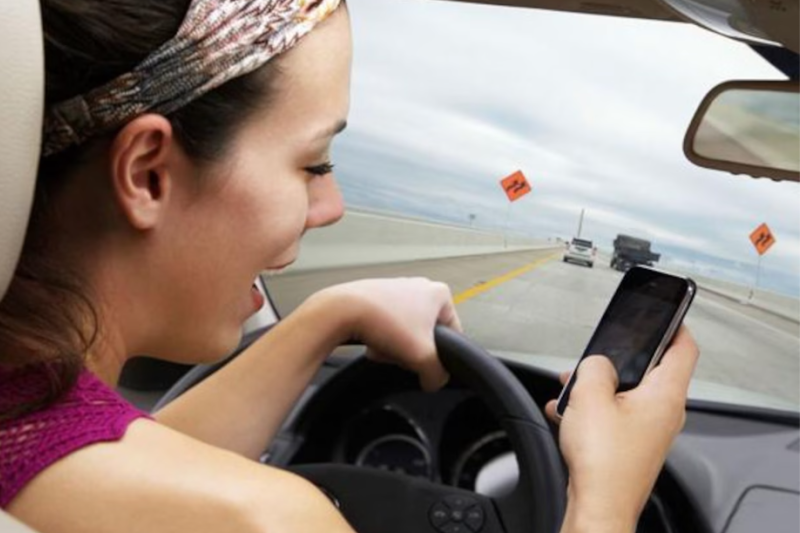
We all have a version of “that driver” in our heads. The one weaving through traffic. The one staring at a screen instead of the road. The one blowing past a crosswalk or squeezing too close to someone on a bike. We see them, we get angry, and 94% of us agree: they are a serious threat to our lives.
But our new Blind Spots report reveals a truth that is much harder to swallow: we are that driver.

When we surveyed 1,000 drivers, we found a staggering disconnect. Nearly 3 in 4 drivers say they see speeding all the time, but only 1 in 5 admits to doing it frequently. We are remarkably good at spotting danger in other people and remarkably bad at recognizing our own role in it.
The most heartbreaking finding may be what we call the Parent Paradox. You would think parents, those of us with children in the back seat, would be the safest people on the road. Instead, the data shows parents of minor children report speeding 45% more often than non-parents and using their phones nearly twice as much while driving. That is not because parents care less. It is because so many people are moving through daily life overwhelmed, distracted, late, and stretched too thin.

Interested in learning more? Download the full survey report here
We are also living inside a legal illusion. Sixty-eight percent of Americans believe killing a pedestrian or cyclist usually results in heavy jail time. In reality, only 11% chose the answer that reflects what most often happens in the legal system. In most cases, the consequences are far more lenient than people assume. We tell ourselves there is already a strong backstop. There is not.

And yet, buried in the data, there is something profoundly important and unexpectedly hopeful.
When we asked drivers what actually changed how they drive, the top answer was not fear of a ticket. It was not insurance costs. It was not public awareness campaigns. The number one answer, chosen by 49% of respondents, was fear of hurting someone else. Empathy won.
Interested in learning more? Download the full survey report here

Interested in learning more? Download the full survey report here
That finding matters.
It tells us that beneath the denial, beneath the self-protection, beneath the instinct to say “I’m a good driver,” people do understand the stakes when the human cost becomes real. They may not see themselves clearly in the abstract. But they respond to the reality of another person’s life. A child in a crosswalk. A cyclist on the shoulder. A family that never gets to be whole again.
That is why storytelling matters so much.
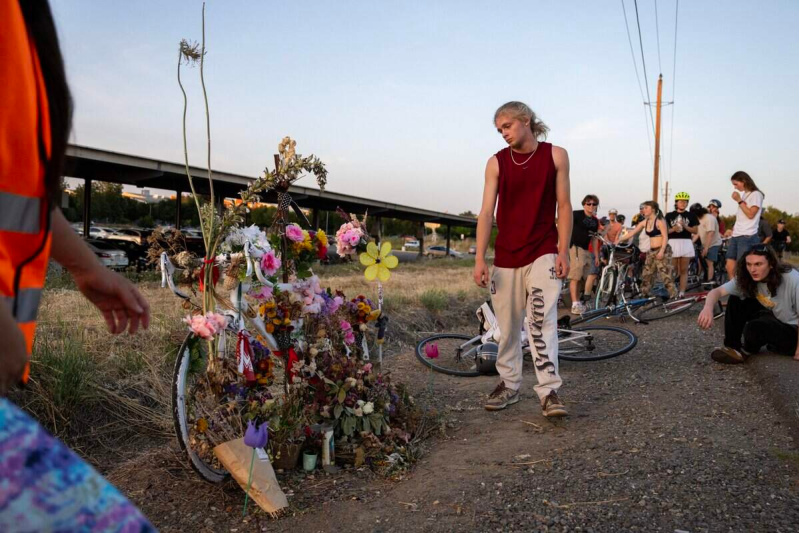
At The White Line, we have always believed that victim stories are not a side note to this work. They are central to it. If empathy is one of the strongest forces that can change behavior, then telling the truth about who has been lost, who has been injured, and who has been left behind is one of the clearest ways to break through the “good driver” delusion. It makes the stakes impossible to shrug off. It reminds us that road violence is not abstract. It is personal. It is permanent. And it is often preventable.
But empathy alone is not enough.
We cannot build a transportation system that depends on every single person being perfectly attentive, perfectly regulated, perfectly patient, and perfectly self-aware at all times. Human beings are flawed. We get distracted. We rationalize. We rush. We look away. That is exactly why we are fighting so hard for H.R. 7353, the Magnus White and Safe Streets for Everyone Act.
Because we need a safety net that accounts for human failure before it becomes irreversible tragedy. Automatic Emergency Braking that detects pedestrians and cyclists is not about replacing responsibility. It is about recognizing reality. If we know people have blind spots, and we do, then we have an obligation to build systems and technology that can help save lives when those blind spots show up.
The data in Blind Spots gives us both a warning and a path forward. The warning is that most drivers still believe the danger is someone else. The path forward is that people can change when they are forced to confront the human consequences of what happens on our roads.
It’s time to stop looking for the “bad driver” and start looking in the mirror. And then it’s time to build a world that is safer than our instincts.
Interested in learning more? Download the full survey report here