Comfort is a key factor for long rides, and US cyclists are always looking for ways to enhance their experience without sacrificing performance. This article addresses a common concern for both casual riders and serious enthusiasts, offering practical upgrades that can make a significant difference on those extended outings.
Smarter adjustments to your fit, tires, and contact points can enhance your comfort without costing you any speed.
Many cyclists hold onto the notion that comfort comes at the expense of speed. The prevailing thought is that to ride fast, you must endure hours of suffering with gritted teeth, as if starring in a moody black-and-white cycling advertisement.

Sometimes that is true. If you transform a road bike into a plush recliner, you will likely feel slower, and you might actually be slower. However, this old trade-off is often exaggerated, typically by riders who confuse comfort with mere softness.
Those two concepts are not the same.
A comfortable road bike does not have to be overly plush, upright, or sluggish. Often, it is simply a bike that fits your body better, offers superior support, and stops battering your hands, feet, back, and rear end for reasons entirely unrelated to speed. In certain instances, the modifications that make a bike more comfortable also make it faster, as they reduce physical fatigue, enhance your control, and allow you to maintain a powerful riding position for longer periods.
This is the crucial detail many riders overlook. They assume that experiencing discomfort proves they are riding a fast, serious machine. It does not. Sometimes, discomfort is simply an indicator that something is incorrectly set up.
Address the Bike Before Purchasing Upgrades
Before you spend money on new gear, determine whether your discomfort stems from your riding position, tire pressure, or a contact point that just does not suit your anatomy.
A proper bike fit is often the most valuable comfort upgrade a rider can invest in. This is not because a bike fit is a magical cure-all, nor because everyone requires a three-hour session involving lasers and a solemn expert. Rather, a significant amount of common road-bike pain originates from predictable issues: excessive reach, too much saddle-to-bar drop, inadequate hand support, incorrect saddle placement, or a posture that places undue weight on the hands and shoulders.
Modern performance testing and research have also shown that an aggressively slammed front end is not as universally fast as previously thought. Many cyclists can actually achieve greater speed and aerodynamic efficiency with a slightly taller front end. This makes a professional bike fit a potential double benefit: increasing both comfort and speed. Ensure you are working with a fitting professional who stays current with modern research and best practices.
Additionally, consider your tire pressure, an area where a surprising number of cyclists are still operating with outdated mindsets. If you are still inflating your tires to the maximum pressure indicated on the sidewall, you are actively making yourself slower and less comfortable. Generally speaking, a slightly underinflated tire is preferable to an overinflated one; when in doubt, opt for a lower pressure.
If your road bike feels harsh, jittery, or unusually exhausting on rough pavement, it is highly likely your tires are too hard. Utilize a tire-pressure calculator app as a baseline, and then test those pressures on the actual roads you frequent. A difference of just a few psi can be significant.
Excessive pressure degrades ride quality, handling, and often rolling resistance on imperfect surfaces. This is not a comfort penalty traded for speed; it is simply an error that results in a more fatiguing and slower ride.
Wider Tires: The Ultimate Double Benefit
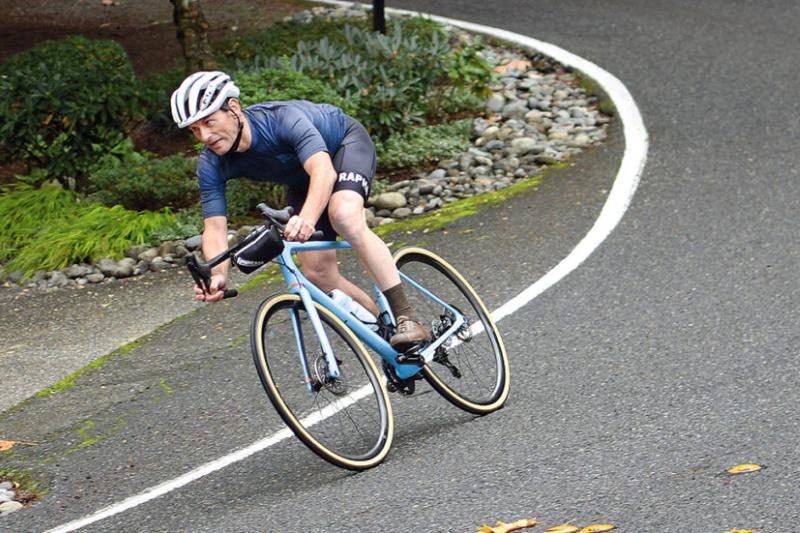
Modern road bikes frequently accommodate wider tires than riders realize, and running wider tires at lower pressures generally excels at dampening road vibration, enhancing grip, and mitigating the constant low-level battering that exhausts you over a long ride. They also tend to make the bicycle feel more stable and planted, which should not be confused with feeling slower. Frequently, they are actually faster.
The traditional belief was that narrow, extremely high-pressure tires were the quickest choice. Improved testing methodologies and advancements in tire technology have effectively debunked this idea. However, while broad statements like “wider tires are faster” are easy to grasp and accurate for a large portion of cyclists, the actual dynamics are more nuanced.
This complexity arises because tires influence two primary forces that dictate your speed: rolling resistance and aerodynamics. Which factor is more critical depends on your speed.
Generally, at lower speeds, the decreased rolling resistance of a wider tire (all else being equal) is more impactful than the aerodynamic benefit of a narrower tire. At higher speeds, this dynamic reverses. The exact crossover point varies significantly, but it frequently occurs around 20 to 25 mph (33 to 40 kph). Below this threshold, rolling resistance is usually the dominant factor. Above it, aerodynamics become more crucial.
While these are broad generalizations and caveats exist (such as the aerodynamic relationship between tire and rim width), the overarching point remains: you must be riding quite fast for extended periods before the aerodynamic edge of a narrower tire outweighs the numerous advantages—including speed—of a wider option.
Therefore, if your frame and wheels permit, opting for a slightly wider tire is frequently a wise decision. For the majority of riders, a fast-rolling 32mm or even 34mm tire will likely be faster most of the time compared to a narrower alternative, while simultaneously providing superior comfort and traction.
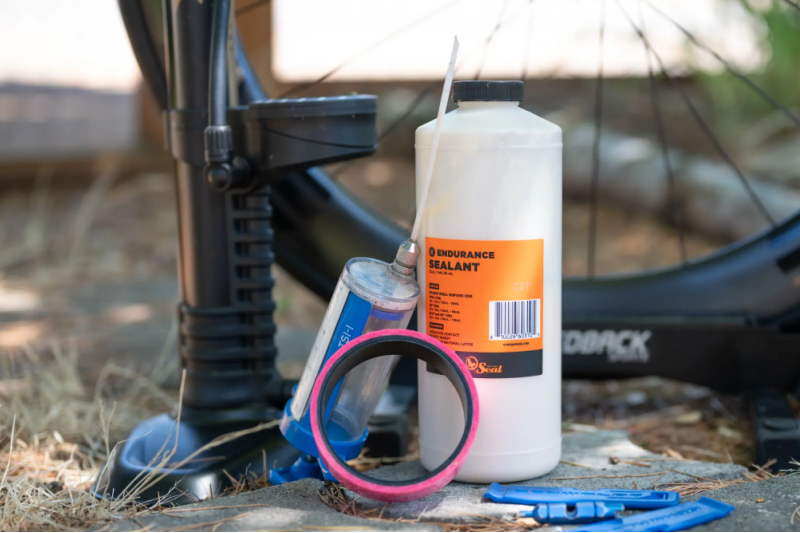
Going tubeless is another method to enhance both speed and comfort. This is not because tubeless systems are flawless or universally necessary, but because they allow for lower tire pressures without the constant worry of pinch flats. This can tangibly improve both comfort and control.
Furthermore, tubeless setups are typically the fastest available option, outperforming latex, TPU, and especially standard butyl inner tubes. While the initial setup can be tedious, the performance benefits are often worthwhile.
Comfort Originates at the Contact Points
This is the area where comfort becomes highly individualized.
If your saddle does not fit your anatomy, no amount of mental toughness will fix the issue. The same principle applies to bib shorts, as well as cycling shoes that are too narrow and progressively cause agonizing foot pain. It is illogical for riders to spend thousands of dollars on lightweight carbon components, only to ride in ill-fitting bibs, on a saddle that causes distress, while wearing shoes that compress their feet like a vise. That is not dedication; it is simply unwise.
As these physical annoyances accumulate throughout a ride, they drain your energy and motivation, which ultimately reduces your speed.
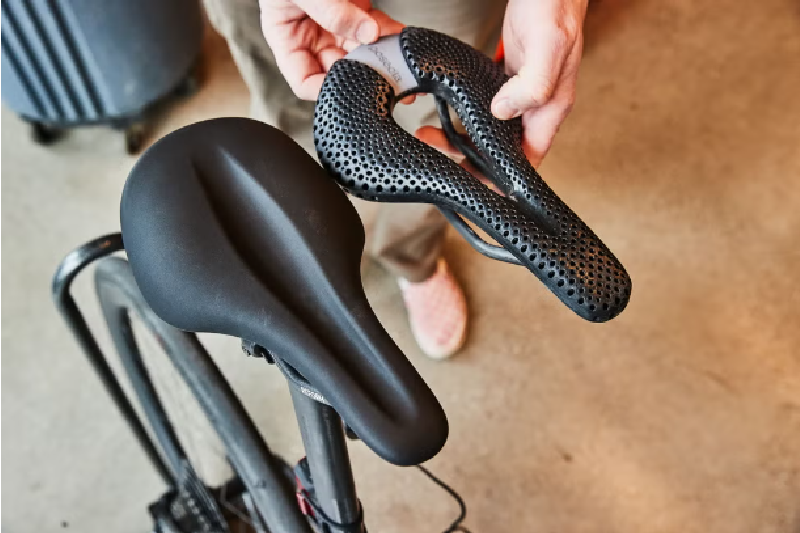
Begin by evaluating your saddle. More padding does not automatically equate to better comfort. Typically, the correct shape and positioning are far more important than sheer plushness. A saddle is designed to support you, not to mimic a luxurious sofa. If it feels wrong, address it. Most saddle manufacturers and local bike shops can assist in guiding riders toward a more suitable shape and style. Many saddles also feature generous return policies, allowing riders to test them on a few rides and exchange them if they prove incompatible. Numerous professional fit studios now utilize saddle-pressure mapping systems to visually demonstrate, in real-time, whether a saddle is providing correct support or generating painful hot spots.
Next, evaluate your bib shorts. High-quality bibs are a critical performance product, not merely a fashion choice. When you experience less discomfort in the saddle, your overall ride quality improves. There is a vast array of chamois designs available because, similar to saddles, there is no single solution that accommodates every rider. If you find yourself constantly shifting your weight to alleviate pressure or struggling to maintain a comfortable pedaling rhythm, it is likely time to investigate different bib or chamois options. A premium pair of bib shorts featuring a well-engineered chamois can truly transform your cycling experience.
The same logic applies to your cycling footwear. If your feet are swelling, experiencing numbness, or developing painful hot spots, transitioning to wider shoes may improve your ride significantly more than purchasing an exotic, expensive component.
Handlebar tape is also a factor, although it ranks slightly lower in importance than the major contact points mentioned above. Upgrading your bar tape can marginally reduce hand fatigue and dampen vibrations, but it will not compensate for a poor bike fit or an incorrectly sized handlebar. Additionally, thicker, softer bar tape is not inherently superior or more comfortable, so do not hesitate to experiment with thinner options.
Avoid Changing the Front End Blindly
Installing a new handlebar can undeniably increase the comfort of a road bike. However, this is only true if you clearly understand the specific problem you are attempting to resolve.
Sometimes the issue is the width of the bars. Other times, it is the reach or the drop. Occasionally, it is the shape of the tops or how they transition into the brake hoods. A handlebar that aligns with your personal preferences, body mechanics, and riding style makes the bike easier to grip, simpler to control, and less exhausting over long distances.
A handlebar can also serve a dual purpose by enhancing both comfort and speed. Narrower handlebars generally improve your aerodynamic profile, enabling you to cut through the air more efficiently. If you are currently using handlebars that are too wide, switching to a narrower set will likely make your ride more comfortable while simultaneously improving your aerodynamic efficiency.
The stem is also relevant to this discussion, but it is important to clarify: a stem is a tool for adjusting your position, not a direct comfort product. The correct stem can mitigate excessive reach, assist in balancing your body weight, or help you achieve a more efficient posture. Conversely, the wrong stem can make the bicycle feel awkward and unpredictable. Altering your stem length and handlebar height will directly impact your bike’s steering characteristics. Therefore, avoid swapping stems simply because your neck is sore or because someone on an internet forum claimed a shorter stem revolutionized their riding experience.
Suspension is a Possibility, Not the Primary Solution
Suspension stems and suspension seatposts can be logical additions for certain cyclists, particularly those riding on exceptionally rough roads or on bicycles that blur the line between traditional road bikes and all-road machines. If your frame is compatible and your riding conditions warrant it, these components are worth exploring.
However, suspension should not be viewed as the primary solution for most road cyclists who are focused on maintaining speed. It is a situational remedy, not the first step in the process.
The most effective comfort upgrades do not make a road bike feel sluggish or dull. Instead, they optimize how the machine functions. They minimize wasted energy, eliminate unnecessary physical punishment, and make it significantly easier to remain relaxed, supported, and efficient on the bike.
Comfort is not the enemy of speed.
A poor setup is.