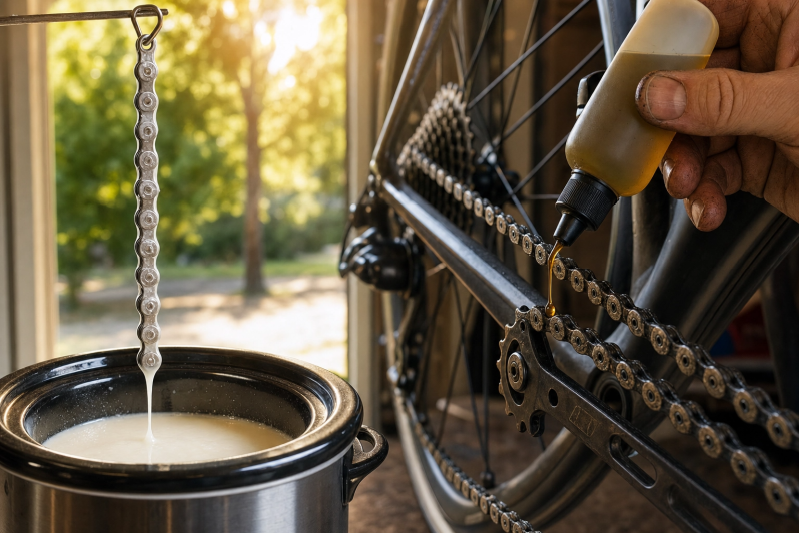
The cycling internet is currently at war over chain lube, and the stakes are your cassette, your watts, and your sanity. As the dry, dusty days of summer approach, the most fiercely debated topic on Reddit, Instagram, and weekend club rides isn’t about aero frames or tire pressure—it’s about how you lubricate your drivetrain.
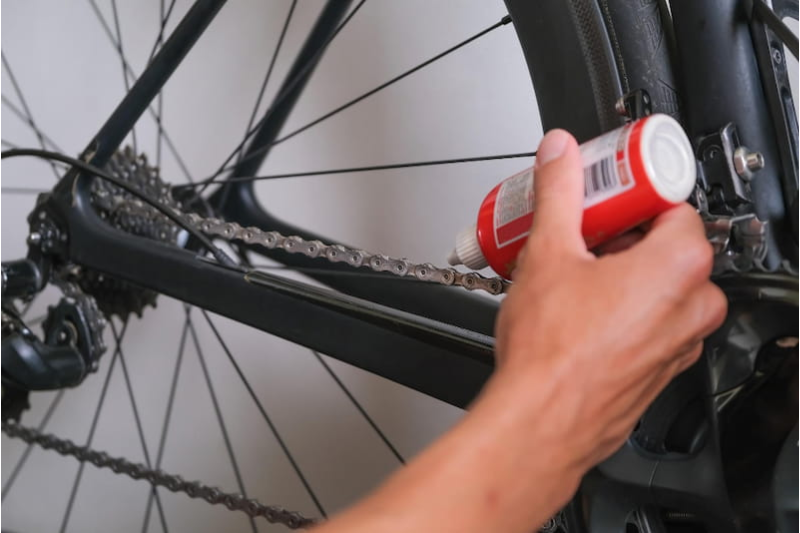
On one side of the aisle, you have the traditionalists: riders who rely on a trusty bottle of wet or dry drip lube, applying it before a ride and wiping off the excess. On the other side is a rapidly growing cult of “waxers”—cyclists who have bought slow cookers, stripped their chains with harsh chemicals, and now swear by immersive hot wax.
If you are preparing your road bike for spring and summer, you might be wondering if you should make the switch. Is the significant time investment of chain waxing actually worth the performance gains, or is traditional oil-based lube still the best choice for the average rider?

We break down the science, the faff, and the costs to help you decide the best way to maintain your drivetrain this summer.
Understanding the Difference: Wax vs. Oil Chain Lube
To understand the debate, we first have to understand how these two lubricants work on a microscopic level.
Traditional oil-based lubes (both wet and dry) are liquids. When you apply them to your chain, they penetrate the rollers and pins, essentially floating the metal parts apart to reduce friction. The problem is that oil is inherently tacky. As you ride, your chain acts like a magnet for road grit, dust, and sand. This mixture of oil and dirt creates a dark, abrasive grinding paste that wears down your chain and cassette.
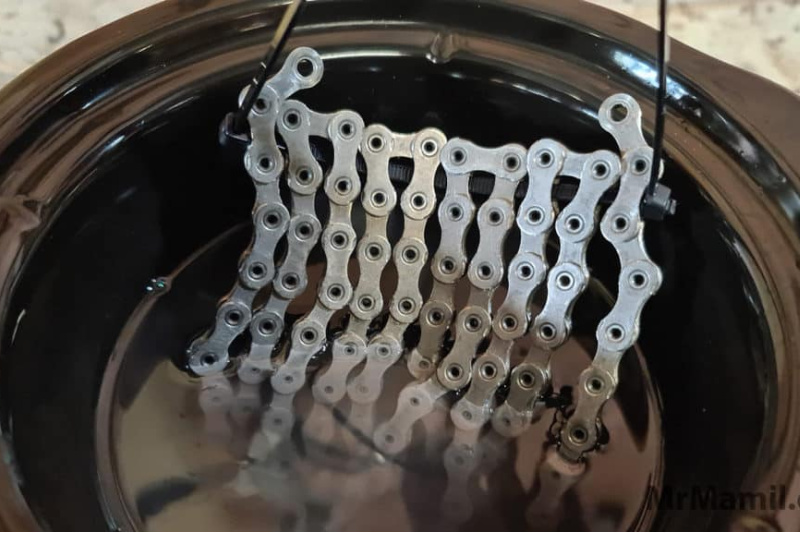
Immersive hot wax, on the other hand, is a solid lubricant. Products like Silca’s Secret Chain Blend contain nano-scale friction modifiers (like tungsten disulfide) suspended in wax. When you melt the wax in a pot and submerge your chain, the liquid wax penetrates the rollers. As it cools, it hardens into a dry, solid coating. Because it is dry to the touch, dirt and grit simply bounce off rather than sticking to the chain.
The Case for Hot Wax: Free Watts and Drivetrain Longevity
The argument for hot wax is backed by a mountain of independent data, most notably from Zero Friction Cycling (ZFC), the industry’s leading authority on drivetrain wear.
Massive Reductions in Drivetrain Wear
The most compelling reason to switch to wax isn’t speed; it’s money. ZFC’s exhaustive 6,000-kilometer block testing shows that the best hot waxes produce almost zero measurable chain wear in dry conditions. Even in wet, contaminated conditions, top-tier hot waxes can reduce chain wear by roughly 12 times compared to a typical oil-based lubricant.
For cyclists running high-end groupsets, extending the life of a cassette by five to ten times pays for the cost of the wax setup almost immediately.
Measurable Watt Savings
Friction reduction is where wax shines for racers. Testing shows that a properly waxed chain runs at about 3.8 watts of friction loss at a 250-watt output. In contrast, standard oil lubes can lose 5 to 8 watts under real-world contamination. Saving 2 to 4 watts might not sound like much, but over a 100-mile summer century, that efficiency compounds.
The Immaculate Drivetrain
Perhaps the most beloved benefit among wax converts is cleanliness. A waxed chain is dry. You can touch it with your bare hands and come away clean. You will never again suffer from the dreaded “Cat 5 tattoo” (the greasy black chainring mark on your right calf), and cleaning your drivetrain becomes a matter of wiping it with a dry microfiber cloth.
“A properly waxed chain does not sound lubricated. It sounds absent… That silence is not magic. It’s friction reduction. Not witchcraft. Watt-craft.” — The Road Book of Cycling
The Case for Traditional Wet and Dry Lubes: Convenience is King
If wax is so objectively superior in the lab, why isn’t everyone using it? The answer comes down to one word: faff.
The Initial Setup is Daunting
To switch to hot wax, you cannot simply drop a new chain into a slow cooker. Factory chains are packed in thick, anti-corrosive grease that must be completely stripped away using mineral spirits and isopropyl alcohol. If even a trace of oil remains, the wax will not adhere to the metal. This process is messy, time-consuming, and involves harsh chemicals (though new products like Silca’s StripChip aim to simplify this by allowing you to strip the chain directly in the wax pot).
Reapplication Requires Effort
When a waxed chain needs a top-up (usually every 300 kilometers), you must remove the chain from the bike using a quick-link, melt the wax in your pot, re-submerge the chain, let it cool, and reinstall it. While brands like Weldtite and Muc-Off offer excellent drip waxes that can extend the time between hot wax baths, the ultimate maintenance cycle is undeniably more involved than using oil.
Wet Weather Vulnerability
Wax is incredible in dry summer dust, but it has a kryptonite: sustained rain. If you ride a waxed chain in a downpour, the water can wash away the wax coating much faster than a heavy wet lube.
As CyclingNews recently noted after a year-long test of chain waxing: “In the space of 20km [in the rain] I could go from the quietest, smoothest drivetrain to something that sounded like it was devoid of lubricant almost entirely… If you leave it in situ it may well go rusty very fast.”
For commuters or cyclists who regularly ride in wet climates, a high-quality wet lube is often far more reliable and requires less panicked post-ride drying to prevent rust.
Cost Comparison: Which is Cheaper?
| Lubricant Type | Upfront Cost | Long-Term Cost (Drivetrain Wear) | Best For |
| Hot Wax System | High (Wax + Slow Cooker + Solvents) | Very Low (Chains and cassettes last significantly longer) | Performance riders, dry climates, those who love a clean bike. |
| Traditional Drip Lube | Low (Just the bottle of lube) | High (Frequent chain and cassette replacement due to grit paste) | Commuters, wet climates, riders who prefer quick, easy maintenance. |
Which Should You Choose This Summer?
If your summer riding consists of dry, dusty gravel routes or long, sunny road miles, hot wax is the undisputed champion. The initial hassle of removing and prepping your chain is heavily outweighed by the watt savings, the immaculate cleanliness, and the massive extension of your drivetrain’s lifespan.
However, if you are a daily commuter, if you live in an area prone to sudden summer thunderstorms, or if you simply cannot stomach the idea of cooking bike parts in your kitchen, stick to a high-quality drip lube. Just remember that the convenience of oil requires diligence; you must degrease and clean your drivetrain frequently to prevent that abrasive black paste from eating your cassette.