By Gary Robinson, Publisher
If you’ve been paying attention to the professional peloton over the past year, you’ve probably noticed a quiet arms race happening off the bike. In 2026, Team Ineos signed a massive €100 million, five-year deal with Danish AI giant Netcompany, aiming to use artificial intelligence to cut through the noise of their riders’ data. Meanwhile, Olympic gold medalist Kristen Faulkner revealed she built her own AI model to analyze 4,400 hours of her physiology data, leading to a personal-best 20-minute power output.
But here is the real story: the AI revolution isn’t just for WorldTour riders with million-dollar budgets. For the first time in cycling history, a recreational rider with a power meter and a smartphone can access a level of personalized, adaptive training intelligence that was unimaginable a decade ago.

As everyday cyclists juggle demanding careers, family life, and aging bodies, the question isn’t whether AI coaching apps are here — it’s whether you should fire your human coach and hire a digital one.
The Problem With the “Static” Training Plan
For years, the standard approach for an amateur cyclist looking to get faster was to buy a static 12-week training plan. You would plug it into your calendar, take a grueling Functional Threshold Power (FTP) test, and follow the prescribed intervals.
The problem? Life happens. You sleep poorly. You get stuck at work. You catch a cold.
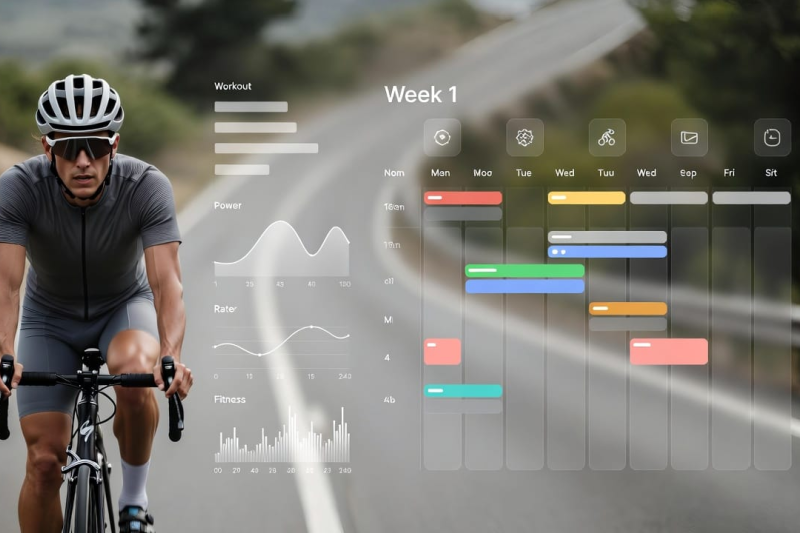
A static plan doesn’t know you tossed and turned all night, but an AI coach does. Today’s AI training apps — powered by machine learning algorithms — process real-time data from your wearable devices, including heart rate, sleep quality, power output, and Heart Rate Variability (HRV).
If you wake up groggy and your HRV is tanked, an AI coach like HumanGO or TrainerRoad will automatically downgrade your planned threshold intervals to an easy endurance spin. It’s this hyper-responsiveness that is making AI so appealing to the everyday rider.
The Leading AI Platforms in 2026
The market for digital coaching has exploded, with apps catering to different types of riders. Here is a look at how the leading platforms are changing the game:
| Platform | How It Works | Best For |
| FasCat CoachCat | Conversational AI built on 20+ years of FasCat coaching data. You talk to it like a real coach — tell it about your fatigue, schedule, and goals — and it adapts your plan in real time. Includes a daily Optimize Score, auto FTP detection, and direct Zwift integration. | The rider who wants a human-feeling coaching experience grounded in proven Sweet Spot methodology. |
| TrainerRoad | Uses AI FTP Detection (no more ramp tests) and analyzes over 250 million past workouts to adapt your daily plan based on fatigue and performance trends. | The structured indoor/outdoor rider focused on measurable power gains. |
| Vekta | Positions itself as a “digital assistant.” It analyzes workouts to estimate critical power and adjust zones automatically, without the need for formal testing. | Riders who want continuous, real-time zone adaptations alongside a human coach. |
| Garmin Coach | Integrates directly with Garmin wearables and cycling computers to build adaptive plans based on your VO2 max, training load, and recovery metrics. | The data-hungry cyclist already invested in the Garmin ecosystem. |
| Whoop Coach | Uses OpenAI to answer specific questions about your strain, sleep, and recovery data, acting as an interactive health consultant. | Cyclists prioritizing recovery and holistic wellness over pure wattage. |
When Coaching Pedigree Meets Artificial Intelligence
Of all the AI platforms currently on the market, perhaps none carries a deeper coaching legacy into the digital age than FasCat’s CoachCat. Founded by Frank Overton in 2002, FasCat Coaching built its reputation over two decades by analyzing more than a million power files and guiding athletes from ambitious amateurs to WorldTour professionals. Overton is widely credited with popularizing “Sweet Spot” training — a highly efficient method of building aerobic fitness without the crushing fatigue of constant threshold work — and that philosophy is baked into every recommendation CoachCat makes.
What truly distinguishes CoachCat from its competitors is its conversational interface. Rather than presenting users with a wall of charts and graphs, the app invites you to interact with it the way you would a real coach. You can tell CoachCat that work ran late and you missed your ride, that you are feeling run-down after a big weekend, or that you have a gravel event in eight weeks and need to peak for it. The AI adjusts your plan instantly and explains its reasoning. Critically, CoachCat also features a memory function — it retains context from previous conversations, building a personalized profile of your goals, constraints, and tendencies over time.
“It’s a remarkable, game-changing app that feels more human than human coaches. It delivers premium coaching at a fraction of the cost, integrates seamlessly with my training tech, and instantly adapts when life happens — from travel conflicts to injuries.”
— Ken Rahaim, CoachCat user, Alexandria, VA
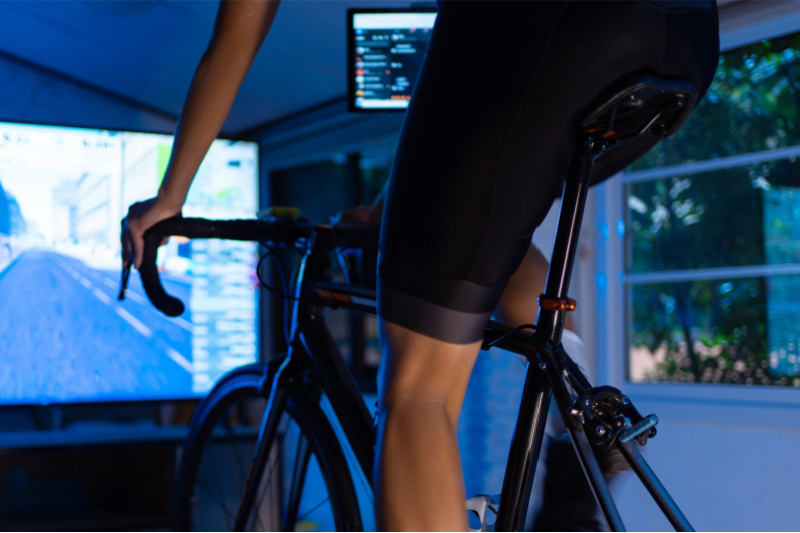
On the data side, CoachCat generates a daily Optimize Score by pulling in sleep, resting heart rate, and HRV data from wearables including Garmin, Wahoo, Whoop, Oura, and Apple Watch. A green score means you are primed for hard Sweet Spot intervals; a red score means the AI will steer you toward an easy spin or a rest day. For indoor training enthusiasts, the platform connects directly to Zwift and Rouvy via API, pushing custom workouts into the virtual world without any manual file exporting.
At $17.50 per month on an annual plan ($210/year), CoachCat is priced almost identically to TrainerRoad’s annual subscription, making the choice between them less a question of budget and more a question of philosophy: do you want a clinical, data-heavy progression system, or a coach that actually talks to you?
The End of the FTP Test?s
Perhaps the most universally celebrated feature of AI coaching is the death of the traditional FTP test.
Any cyclist who has done a 20-minute all-out effort or a ramp test knows the dread associated with testing week. It hurts, it requires immense mental fortitude, and pacing errors can easily skew the results.
AI platforms have largely rendered these tests obsolete. TrainerRoad’s AI FTP Detection, for example, analyzes every ride you do for signs of fitness changes and updates your FTP in the background. According to the company, their AI is 38% less likely to overestimate your FTP compared to a standard 20-minute test. CoachCat takes a similar approach, using continuous power file analysis to detect fitness changes automatically — so your training zones stay accurate without you ever having to pin yourself to the red line on a Tuesday evening.
“It prevents you from spending months in the wrong zone and then regretting not having re-tested earlier,” says Bernd Eichinger, an amateur cyclist who uses Vekta alongside a human coach.
What About Masters Cyclists?
The rise of AI coaching is particularly relevant for the fastest-growing demographic in the sport: masters cyclists.
As riders cross into their 40s, 50s, and 60s, recovery becomes the ultimate performance limiter. While VO2 max declines by roughly 0.5% to 1% per year after age 40, metrics like durability and economy decline much more slowly. The key to getting faster as a masters athlete isn’t necessarily pushing harder; it’s resting smarter.
AI platforms excel at fatigue management. By continuously monitoring resting heart rate and sleep data, these algorithms can spot the subtle signs of overtraining long before an athlete feels the burnout. For a 50-year-old cyclist who is prone to pushing through the fatigue of a stressful work week, an AI app that objectively says “take a rest day” can be the difference between a productive season and a lingering injury.
CoachCat’s conversational design is particularly well-suited to masters riders. One user, Libby Skinner of Winston-Salem, NC, age 64, noted that the app “has a knowledge base I wouldn’t expect, like intelligently addressing my scoliosis and how it affects my cycling, even suggesting specific exercises. As someone who wants lots of feedback but can’t afford premium coaching, this is a great alternative”. That kind of nuanced, context-aware guidance — combining training load management with individual physical considerations — represents a meaningful step beyond what most algorithmic platforms can offer.
The Human Element: Why Coaches Aren’t Obsolete
With AI apps starting at less than $15 a month, human coaches are facing unprecedented competition. But sports scientists and professional coaches are quick to point out the limitations of the algorithm.
“Recreational cyclists risk becoming too reliant on AI, potentially ignoring their body’s feelings,” warns David Bailey, head of sport science at NSN Cycling Team. “Over-dependence on tech can overshadow internal cues, intuitive training, and body awareness.”
AI only knows the data it is fed. It doesn’t know that your dog died, that you are stressed about a presentation at work, or that you are losing your confidence descending in a pack.
“A good coach is using the data but taking a much more holistic approach to things,” explains Jake Hales, head coach at RideRevolution. “One of the main reasons to get a coach is to take the thinking out of the rider’s hands and remove any emotional bias in decision-making”.
Even FasCat, whose CoachCat platform is among the most conversational and human-feeling AI tools on the market, acknowledges this boundary. The app includes access to a complimentary call with a real FasCat coach, and its in-app support team is staffed by experienced cyclists — a recognition that the best outcomes likely come from AI and human expertise working in tandem, not from the algorithm operating alone.
The Verdict
So, should you hand your training over to a machine?
If you are currently riding without any structure, an AI coaching app is undeniably the most cost-effective way to get faster, avoid overtraining, and make the most of your limited time on the bike. The technology has moved far beyond simple spreadsheets; it is now a dynamic, highly personalized tool that adapts to your life.
For riders who want the deepest analytical engine and the largest workout library, TrainerRoad remains the gold standard. For those who want a platform that genuinely converses with them, remembers their goals, and delivers coaching wisdom built on two decades of real-world experience, FasCat’s CoachCat is the most compelling option in the market today — and at $210 per year, it costs about the same as a single session with a human coach.
But technology should bring us more in tune with our bodies, not further from them. As Kristen Faulkner noted after using her own AI system to win Olympic gold: “I do not use AI to tell me what I’m feeling. I use it to help explain why I might feel a certain way and what I can do about it”.
Your new cycling coach doesn’t sleep. But it still needs you to pedal the bike — and to know when it’s time to just go out and ride for the sheer joy of it.
We have previously published a full, in-depth review of FasCat’s CoachCat app. Read it here.