By Gary Robinson / AvidCyclist.com
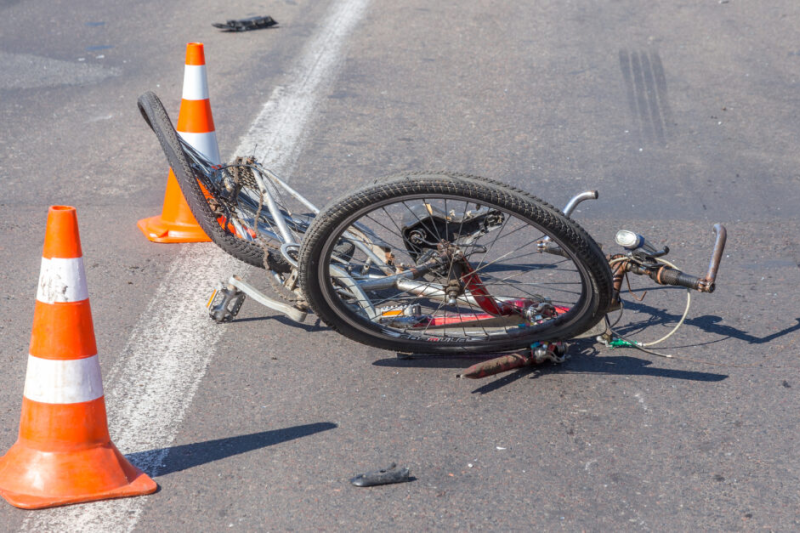
Every time a cyclist is killed on American roads, a tragic script plays out in the local news. The headlines almost universally follow a rigid, passive formula: “Cyclist dies after being struck by vehicle.” The victim is reduced to a role, the driver is vanished from the sentence, and the multi-ton vehicle is treated as an autonomous actor.
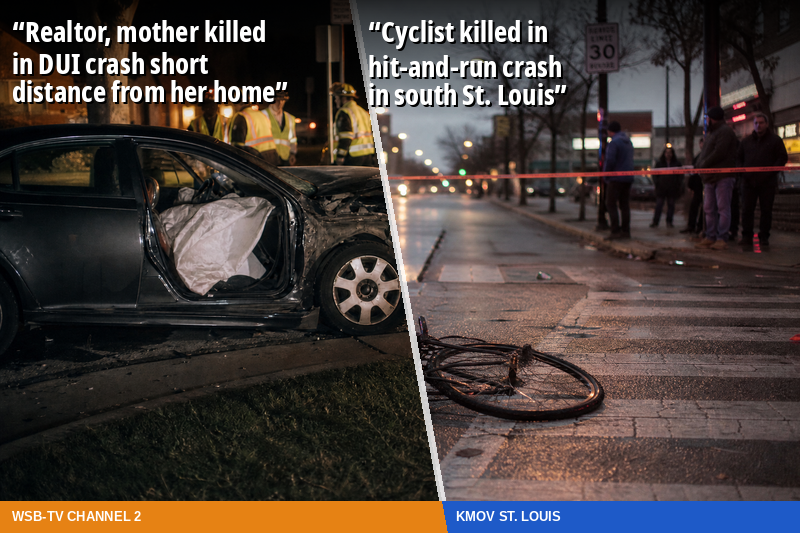
Yet, when a motorist or passenger is killed, the narrative shifts entirely. The headlines suddenly discover humanity: “Mother of two killed in crash,” or “Beloved local teacher dies in tragic accident.”
This stark linguistic divide is not an accident. It is a documented media bias that actively contributes to what we at AvidCyclist.com have called Cyclist Derangement Syndrome — a sociopathic war on cyclists that dehumanizes victims, minimizes driver accountability, and treats traffic violence as an unavoidable fact of life.
With cyclist fatalities hitting a record 1,166 deaths in 2024 , it is time to examine how the words we use shape the justice we receive.
The Data: The “Same Newsroom” Test
To understand the depth of this disparity, we conducted a specific test. We looked at how the exact same newsrooms cover motor vehicle fatalities versus cyclist fatalities.
You cannot blame regional culture, editorial style guidelines, or word counts when the same editors are writing both headlines. Read these matched pairs carefully. The contrast is not subtle.
How the Media Reports Motor Vehicle Fatalities
When individuals in motor vehicles are killed, reporters routinely identify victims by their family roles, professions, and community standing. The language is immediate, intimate, and deeply human. You feel something before you finish the sentence.
| Headline | Media Outlet | Date |
| “Family demands answers after mother of 3 killed in Chicago crash” | ABC7 Chicago | Jan 6, 2026 |
| “Family grieving after father, 3 kids killed in crash with stolen car” | AZFamily (Phoenix) | Nov 26, 2025 |
| “Raleigh mother, four children killed in fiery crash on I-95 in Georgia” | WRAL (Raleigh) | Apr 6, 2025 |
| “Three family members killed in wrong-way crash on Grand Parkway” | KHOU 11 (Houston) | Dec 22, 2025 |
| “Family remembers mother, 2 daughters ‘taken from us too soon’ in car crash” | KMOV (St. Louis) | May 26, 2024 |
| “Parents of 3 young children die in New Year’s Day crash” | WSB-TV (Atlanta) | Jan 6, 2026 |
| “Mother dies 2 months after Sarasota hit-and-run that killed her 2 kids” | FOX 13 (Tampa) | Apr 11, 2025 |
| “Teen who killed 4 in Renton crash sentenced to prison” | The Seattle Times | Apr 25, 2025 |
| “Brighton man charged in DUI crash that killed his daughter” | The Denver Post | Feb 20, 2026 |
Now Read How the Same Outlets Report Cyclist Fatalities
The exact same newsrooms. The exact same editors. But now the victim is on a bicycle — and suddenly, they are no longer a mother, a father, or a family. They are simply a cyclist. The driver vanishes, replaced by a “vehicle” or a “crash.”
| Headline | Media Outlet | Date |
| “Man riding bicycle struck, killed by vehicle in Bridgeport, Chicago” | ABC7 Chicago | Jun 5, 2026 |
| “Police identify bicyclist hit, killed in north Scottsdale intersection” | AZFamily (Phoenix) | Dec 8, 2025 |
| “Bicyclist killed in hit-and-run crash near Wake Forest” | WRAL (Raleigh) | Aug 30, 2024 |
| “Woman on bicycle killed in late-night crash on West Airport Road” | KHOU 11 (Houston) | Feb 9, 2026 |
| “Cyclist killed in hit-and-run crash in south St. Louis” | KMOV (St. Louis) | Apr 24, 2026 |
| “Bicyclist dies after crashing into driver in NW Atlanta” | WSB-TV (Atlanta) | Nov 19, 2025 |
| “Driver hits, kills bicyclist on Fowler Avenue: Police” | FOX 13 (Tampa) | Nov 3, 2025 |
| “Seattle elementary school teacher, 30, fatally struck by Recology truck” | The Seattle Times | Jun 3, 2026 |
| “E-bike cyclist dies after crash in Denver’s Elyria Swansea” | The Denver Post | Jun 12, 2026 |
Did you feel it? The shift from the first table to the second is not a matter of journalistic style. It is a choice. A mother in a car is a mother. A mother on a bicycle is a cyclist. Her name, her family, her life — erased in a single editorial decision by the very same newsroom.
The Science Behind the Bias
This is not merely anecdotal observation; it is a scientifically proven phenomenon. A comprehensive study by researchers at Rutgers University analyzed hundreds of news articles covering bike and pedestrian deaths. They found that media accounts consistently focus blame on the victim’s behavior and sidestep systemic causes .
The study identified several critical failures in standard media reporting:
Lack of agency for drivers. In 35 percent of cases, the wording implied the crash “just happened.” Even when an agent was described as inflicting a blow, it was the car — not the driver — that was singled out in 81 percent of those cases . The human being behind the wheel is rendered invisible.
Focusing on the victim’s actions. A staggering 73 percent of sentences focused on the pedestrian or cyclist’s behavior, while just 11 percent focused on the driver’s behavior . The typical article would state, “One of the riders was hit by a vehicle that was turning left,” instead of, “A vehicle that was turning left hit one of the riders.” The grammatical inversion is small. The moral inversion is enormous.
Victim-blaming through “counterfactuals.” Nearly half of all articles — 48 percent — contained at least one statement implying the victim would not have been killed if they had acted differently, such as noting they were wearing dark clothing or crossing outside a crosswalk . These statements shift blame to the dead.
Using the term “accident.” Despite the Associated Press advising journalists to avoid the term, it appeared in 47 percent of cases, obscuring the preventable nature of the violence. In fact, states like Colorado have eliminated the term in crashes involving cyclist and motorist….they are “Crashes”.
A 2026 study analyzing Swiss media reports of collisions found that cyclists are the primary focus of the narrative in 83 percent of headlines, while motorists appear in only 42 percent — and when they do, they are usually depersonalized and referred to as vehicles rather than people . A separate large-scale computational analysis of 31,480 news headlines found consistent patterns of passive framing and role-based identification that effectively strip cyclists of their humanity in the public record .
“Through grammatical choices and by selectively including some bits of information but not others, local news coverage subtly, but consistently, blames vulnerable road users for crashes.” — Kelcie Ralph, Rutgers University
The NPR Public Editor addressed this issue directly in September 2023, after a reader complained that the headline “Top American cyclist Magnus White, 17, dies after being hit by a car” erased the human element entirely. The original headline submitted by the reporter read “hit by a driver” — but it was changed in the editing process . Even within newsrooms that are aware of the problem, institutional inertia pulls the language back toward dehumanization, in this case, changing the blame from the driver to the car.
Dehumanization Has Deadly Consequences
Words matter. When a cyclist is repeatedly framed as an “other” — a helmeted obstacle rather than a human being — it strips away empathy. A landmark 2019 study by Monash University found that more than half of non-cyclist car drivers view cyclists as “less than fully human,” and established a direct correlation between this dehumanization and aggressive behavior on the road . When you do not see a person, you do not feel responsible for harming one.
This dehumanization bleeds directly into the justice system. As we have covered extensively at AvidCyclist.com, the careless driving loophole means that killing a cyclist with a car is often treated as a mere misdemeanor — the legal equivalent of writing a bad check. When 61-year-old Greg Bachman was killed by a driver who failed to yield in Kansas, the Kansas Highway Patrol crash report actually blamed the cyclist, and no criminal charges were pursued . The local media unquestioningly reprinted the police narrative. A man’s life was reduced to a sentence about a vehicle entering an intersection.
As the value of a cyclist’s life has been measured in courtrooms across America — $150 fines, probation, misdemeanors — the media’s language has helped build the cultural permission structure that makes those sentences possible. When the press writes, “A bicyclist was hit by a car,” they are telling the public — and potential jurors — that this was an unavoidable act of God involving a machine and an object, not a preventable tragedy caused by a human operating a deadly weapon.
The comment sections that follow these stories make the consequence plain. As documented in Cyclist Derangement Syndrome: America’s Sociopathic War on Cyclists, the dehumanizing language of headlines directly enables the dehumanizing language of readers: “He got what was coming to him.” “Brought a bike to a truck fight.” “One less liberal on the road.” These are not fringe views. They are the predictable product of a media ecosystem that has spent decades teaching the public that cyclists are not quite people.
How We Change the Narrative
To end this cycle of dehumanization, we must demand better from our local media. The League of American Bicyclists and advocacy organizations like The White Line Foundation are fighting for legislative reform — but legislative change follows cultural change, and cultural change begins with language.
Journalists must adopt a public health framing when covering traffic violence. That means four concrete commitments:
Name the driver. Cars do not hit people; drivers do. The vehicle is the instrument, not the agent. Every headline that reads “cyclist struck by car” should read “driver strikes cyclist.”
Humanize the victim. Cyclists are mothers, fathers, teachers, nurses, and veterans. Use their names. Use their roles in the community. The first question a reporter asks after a car crash should be the same question they ask after a cyclist is killed: Who was this person?
Stop victim-blaming. Do not print police counterfactuals — notes about dark clothing, missing helmets, or jaywalking — unless they are directly relevant to the legal outcome. These details are almost never included in motor vehicle fatality coverage. There is no reason they should be standard in cycling coverage.
Contextualize the violence. Treat these crashes not as isolated “accidents,” but as part of a systemic crisis of unsafe infrastructure and inadequate laws. Only 8 percent of articles about cyclist and pedestrian deaths mention other crashes in the same area, and only 7 percent mention road design features that may have contributed . That is not journalism. That is erasure.
Colorado has shown that change is possible. The recent passage of eight landmark roadway safety bills — driven in part by the advocacy of families who refused to let the media and the legal system reduce their loved ones to a role on a bicycle — demonstrates that when cyclists are seen as fully human, the law responds accordingly.
Until the media stops erasing the humanity of cyclists, the public will continue to view our deaths as acceptable losses. The next time you read a headline that says “cyclist killed,” ask yourself: What was their name? Who loved them? Who is grieving tonight?
Then ask why the reporter did not tell you.
Share this article. Tag your local news station. Tag your city council member. The language we use is the first line of defense — or the first act of abandonment. It is time to choose.