By Gary Robinson, AvidCyclist.com
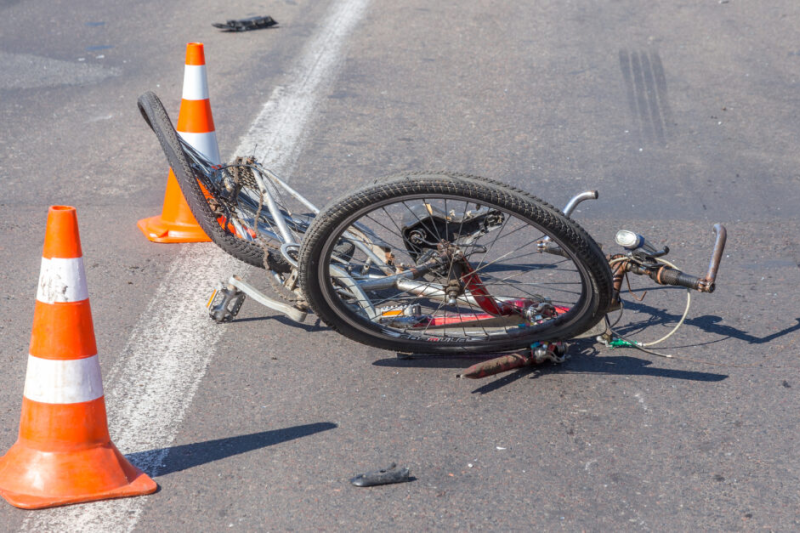
It was a clear September day in Morrison, Colorado, when 60-year-old Gerald Missel, a father of four, veteran, and avid cyclist, set out for a ride. He was traveling eastbound on his bicycle when a driver heading the opposite direction made a left turn, colliding with Missel and causing fatal injuries . Missel’s family spent six agonizing days by his side in the ICU before he was declared brain dead.
When the case finally reached a Jefferson County courtroom in June 2026, the driver, who pleaded guilty to reckless driving and failure to yield, faced a maximum of 90 days in jail. The judge’s final sentence? Twelve months of supervised probation, 200 hours of community service, and a $150 fine .

“I don’t know if there was any punishment that we would have been satisfied with, but I think what we need to do as a community is to make people aware that there are consequences, that if you’re going to drive recklessly, that there’s a consequence behind that, and not just a $150 fine,” said Missel’s widow, Jennifer .
Unfortunately, the Missel family’s experience is not an anomaly. Across the United States, an alarming legal pattern of traffic violence has emerged: when a motorist kills a cyclist, the justice system frequently responds with shockingly light sentences—often amounting to little more than traffic tickets, small fines, or probation. This stark reality forces us to ask a deeply uncomfortable question: What is the value of a cyclist’s life in the eyes of the law?
A Nationwide Epidemic of Leniency and Anti-Cycling Bias
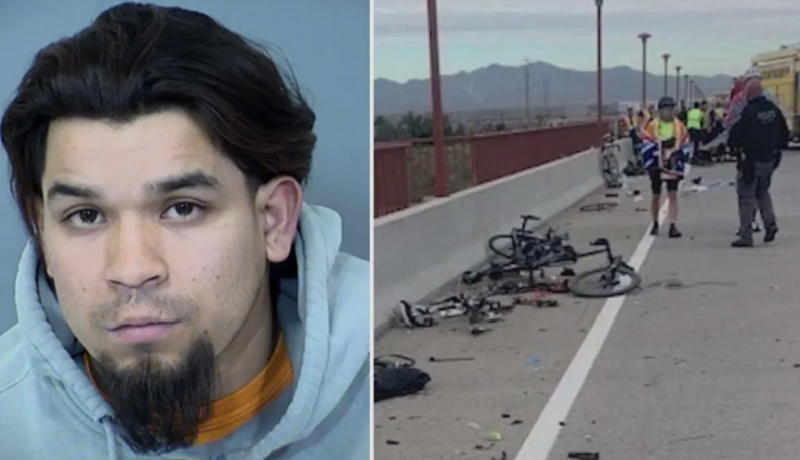
The leniency afforded to drivers involved in a cyclist hit and run or fatal crash spans the entire country, transcending state lines and local jurisdictions. Even in cases involving extreme negligence, distracted driving, or intoxication, the resulting sentences rarely reflect the gravity of a life lost. This is a symptom of what some advocates call Cyclist Derangement Syndrome—a societal bias that dehumanizes cyclists and minimizes driver accountability.
Consider these recent cases from across the nation:
| Victim | Location | Date of Crash | Driver’s Actions | Sentence |
| Gerald Missel (60) | Morrison, CO | Sept. 2025 | Turned left into oncoming cyclist; pleaded guilty to reckless driving. | 12 months probation, $150 fine, community service. |
| Greg Bachman (61) | Emporia, KS | Jun. 2022 | Driver failed to yield at intersection; KHP crash report blamed the cyclist. | No criminal charges pursued. |
| Ethan Boyes (44) | San Francisco, CA | Apr. 2023 | Intoxicated driver veered into bike lane, killing champion cyclist. | 1 year home confinement, 1 year supervised release, $25,000 fine. No prison time. |
| Benjamin Montalvo (21) | Corona, CA | 2020 | Repeat texting driver struck cyclist and fled. | Sentenced to 9 years, but set for early release after 2.5 years. |
| Salih Koç (21) | Denver, CO | Jul. 2025 | Hit-and-run; driver fled after striking the visiting student. | 2 years probation, 100 hours community service. No jail time. |
| Karen Malisa (61) & David Kero (65) | Goodyear, AZ | Feb. 2023 | Fatigued driver plowed into a peloton, killing 2 and injuring 17. | 1 year in jail, 3 years probation, $2,500 fine (pleaded to misdemeanors). |
| Thomas Pribnow (48) | Kearney, NE | Aug. 2024 | Driver rear-ended cyclist; pleaded no contest to misdemeanor motor vehicle homicide. | 60 days in jail, 1 year probation, license revoked for 1 year. |
| Denise Marsh & Carlos Rodriguez | Fort Lauderdale, FL | Nov. 2018 | Distracted driver (speeding at 66 mph in a 55 mph zone) plowed into a group ride. | No jail time. 6 months license suspension, $1,000 fee, 120 hours community service. |
| Xi Zheng (48) | Queens, NY | Jan. 2026 | Driver struck cyclist while turning right; charged with failure to yield. | Misdemeanor charge carrying a maximum of 30 days in jail and a $250 fine. |
These cases highlight a systemic failure to treat the death of a cyclist as a serious crime. As Peter Wilborn, founder of Bike Law, points out, “Negligent drivers kill an average of two to three cyclists a day in the US, but they are rarely charged with homicide” . Instead, unless the driver is severely intoxicated or acts with malicious intent, the justice system often treats these fatalities as tragic but unavoidable “accidents,” resulting in misdemeanor charges or mere traffic citations.
The Careless Driving Loophole
The legal framework surrounding traffic fatalities is heavily skewed in favor of motorists. In most states, causing a cyclist’s death through careless driving has historically been treated as a misdemeanor—often referred to as the “careless driving loophole” . For prosecutors to elevate charges to felony vehicular manslaughter or homicide, they must typically prove “gross negligence” or “recklessness”—a high legal bar that requires showing the driver demonstrated a willful or wanton disregard for cyclist safety .
This creates a jarring disparity when compared to other crimes. For example, in many jurisdictions, stealing a bicycle or shoplifting can carry harsher prison sentences than accidentally killing a cyclist with a multi-ton vehicle. The legal system often focuses heavily on the intent of the driver rather than the outcome of their actions.
“Criminal law punishes bad intentions and bad acts, not traffic accidents,” argued the defense attorney in a Mississippi case where a driver was fined just $250 for running over a cyclist’s head .
However, cycling advocacy groups argue that operating a deadly weapon like a car comes with a profound responsibility, and negligence that results in death should carry proportional consequences. When a driver receives a $150 fine for ending a life, it sends a chilling message that vulnerable road users are essentially second-class citizens.
A Call for Vulnerable Road User Laws
The staggering rise in cyclist fatalities—reaching a record 1,166 deaths in 2024 —has spurred advocates to push for legislative reform. Organizations like the League of American Bicyclists and The White Line Foundation are championing Vulnerable Road User (VRU) laws to ensure true driver accountability.
VRU laws operate on the principle of general deterrence, providing increased penalties for driving behaviors that lead to the serious injury or death of pedestrians, cyclists, and other non-motorized road users . These laws aim to fill the gap between a standard traffic ticket and a felony manslaughter charge.
Currently, only 12 states have comprehensive VRU laws that define vulnerable users and provide specific processes and penalties for actions directed at them . In Oregon, the first state to pass such a law, careless driving that results in the death of a vulnerable user requires a mandatory court hearing, a fine six times the standard maximum, and a one-year license suspension .
Change is possible. Colorado recently enacted stiffer penalties, elevating vehicular negligence to a Class 5 Felony, driven in part by the tragic death of 17-year-old rising cycling star Magnus White. This legislative victory closed the careless driving loophole in the state, serving as a blueprint for national advocacy.
Moving Forward: Ending Traffic Violence
The death of Gerald Missel, Greg Bachman, Magnus White, and the countless others like them, are not merely statistics; they are profound tragedies that rip families apart. The current legal paradigm, which often punishes the taking of a human life with the equivalent of a speeding ticket, is deeply flawed and rooted in anti-cycling bias.
For the cycling community, the fight is twofold: demanding safe streets and infrastructure to prevent crashes before they happen, and pushing for legal reforms that hold negligent drivers truly accountable. Until the justice system recognizes that a cyclist’s life is worth more than probation and a small fine, the roads will remain perilous for anyone on two wheels.
It is time to end the sociopathic war on cyclists. Share this article, contact your local representatives, and demand that your state enacts Vulnerable Road User laws. Because the next life saved could be yours.