“Crashes,” Not “Accidents” is now law. Because what happens to victims is never inevitable.
By Jacqueline Claudia, Executive Director, The White Line Foundation
This movement has something incredible to celebrate this month. HB26-1237: Colorado’s “Crashes,” Not “Accidents” bill, was officially signed into law. For decades, the word “accident” has been written into Colorado traffic law. But “accident” suggests inevitability. It suggests nobody could have prevented what happened.
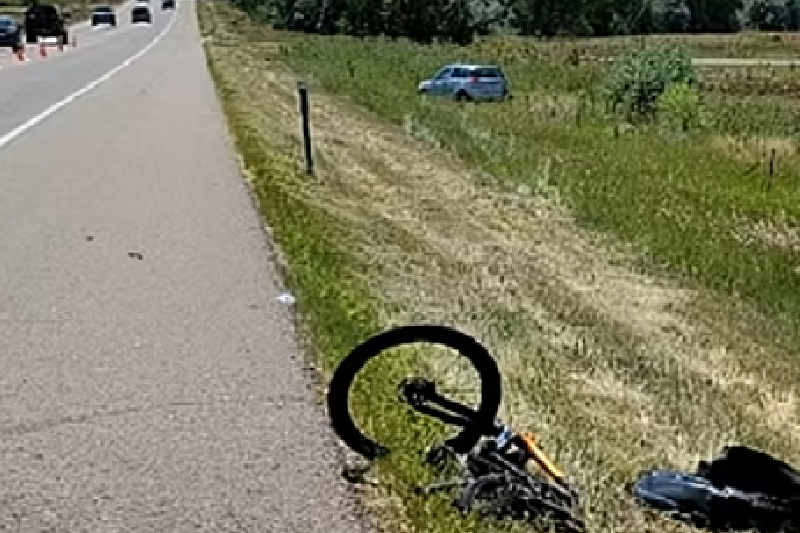
That is not the reality families like the Whites live with every day. Magnus White was 17 years old when he was killed by a driver while riding his bike near his home in Boulder County. Families across Colorado know this pain intimately. A loved one is killed or seriously injured, and almost immediately the language surrounding the crash begins softening what happened.

“Accident. Tragedy. Unavoidable.”
But crashes are rarely inevitable. They are the result of choices, conditions, systems, enforcement failures, dangerous behavior, road design, distraction, speeding, impairment, and policies that can and should change.
That is why this bill matters. The law updates Colorado statute to replace the word “accident” with “crash,” aligning the language of the law with modern traffic safety standards, CDOT and Colorado State Patrol reporting terminology, and the reality families experience after preventable roadway deaths.
The bill also includes additional transportation safety updates, including stronger restrictions on stopping, standing, or parking in bike lanes, clarifications around traction requirements on state highways, and authority to move vehicles, cargo, or debris that obstruct highway safety or maintenance. But at its core, HB26-1237 is about something bigger: bringing Colorado law closer to the truth that crashes are preventable, and our systems should be built around preventing them.
This is not about political correctness or semantics. Words literally shape how society understands harm. When a crash is called an accident, it changes how people process what happened. It can make a preventable death sound unavoidable. It can soften the role of speeding, distraction, impairment, illegal passing, bad road design, or failed enforcement. It can shape how crashes are reported, investigated, and discussed publicly.
For too long, “accident” has quietly framed traffic violence as unavoidable instead of preventable. Colorado law now says otherwise.
Changing one word will not end traffic deaths overnight. But it is a necessary step forward. If we want safer roads, we have to stop using language that normalizes this crisis. We have to name the problem clearly.
This victory belongs to a movement
This bill passed because families, survivors, advocates, transportation leaders, and supporters across Colorado kept pushing. Together. We are proud to have worked alongside Bicycle Colorado, Colorado Department of Transportation, Colorado State Patrol, AAA Colorado, and advocates across the state to help move this legislation forward. And we are especially grateful to Representatives Smith and Taggart and Senator Lindstedt for sponsoring this bill and helping turn this language change into Colorado law.
“What made this effort so powerful was the coalition behind it. This bill brought together transportation agencies, advocacy organizations, safety leaders, survivors, and families around a simple but important truth: words matter.
Changing the language in Colorado law may seem small to some people, but language shapes culture, accountability, and ultimately how seriously we treat preventable traffic violence. This was a meaningful step forward for Colorado, and it happened because so many people worked together to make it happen.” – Fran Lanzer, Lobbyist & Principal, Lanzer Strategies LLC
Most importantly, this victory also belongs to the families and survivors who spoke publicly about the reality of traffic violence and refused to let these crashes be minimized or dismissed. And it belongs to every single person who supported this work, shared these stories, contacted lawmakers, testified, donated, showed up, and helped build momentum around safer streets in Colorado.
Colorado is now one of only two states in the country, alongside Nevada, to formally replace “accident” with “crash” throughout state statute. While more than two dozen state transportation agencies and major cities have moved away from the word “accident” in policy and public messaging, very few states have updated the language written into law itself.
That victory created a real legislative template for other states still operating under outdated language that minimizes preventable roadway deaths. We hope this momentum continues nationwide because changing how we talk about traffic violence is part of changing how seriously we work to prevent it.
Thank you so much for your support. Real change only happens when people refuse to accept the status quo, and this law is proof of that.