by
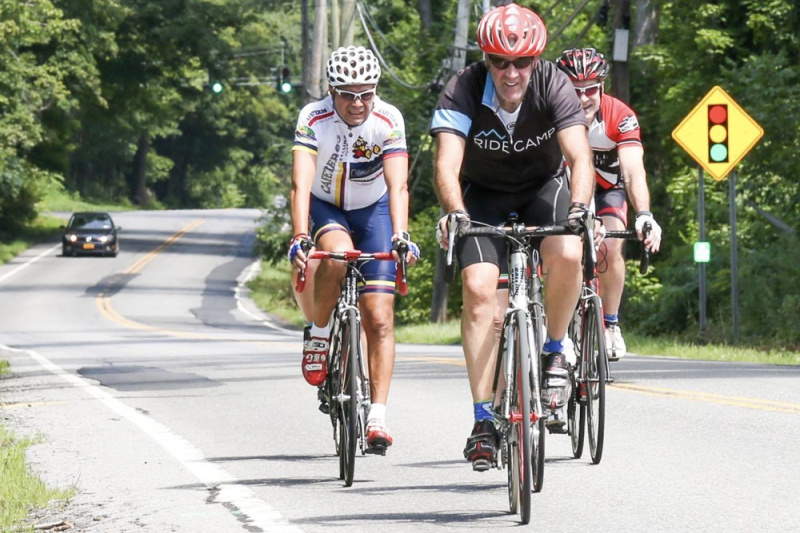
A new economic impact study finds that New York’s Empire State Trail has become far more than a recreational amenity. The 750-mile trail network now generates an estimated $1.87 billion in annual economic activity, supports nearly 10,000 jobs, and delivers outsized benefits to communities across the Hudson Valley and beyond.
Commissioned by Parks & Trails New York (PTNY) and conducted by the Institute for Transportation Research and Education with support from LaBella Associates, the report is the most comprehensive analysis yet of the Empire State Trail, which was completed in 2020 after a major state investment connected existing trail segments into a continuous route stretching from New York City to Canada and from Albany to Buffalo. (The full report is available here.)

The study estimates that the trail attracts 9.75 million visits annually and supports 9,680 jobs statewide. Those visits generate $640.9 million in employee earnings and $206 million in state and local tax revenue each year.

For the Hudson Valley, the numbers are particularly striking.
According to the report, the Hudson River Valley Greenway corridor—the 200-mile section that runs from Albany to Lower Manhattan—accounts for approximately $1.33 billion in annual economic output. The corridor also supports more than $301 million in labor income and generates nearly $154 million in state and local tax revenue.
The findings underscore how dramatically the trail has reshaped communities along its route. In the Hudson Valley, the Empire State Trail links together a patchwork of rail trails, greenways, and riverfront paths, including heavily used stretches such as the Wallkill Valley Rail Trail, the Hudson Valley Rail Trail, and the Kingston waterfront connection. Since the trail’s completion, communities from New Paltz and Highland to Kingston, Hudson, and Albany have increasingly marketed themselves as cycling and outdoor recreation destinations.
“What makes the Empire State Trail so special is its ability to connect,” PTNY Executive Director Paul Steely White said in a statement. “It connects New York City to Canada, Albany to Buffalo, and hundreds of communities in between. It connects people to local businesses, cultural destinations, outdoor recreation, and one another.”

The economic benefits appear to extend well beyond tourism. Nearly one in four business owners surveyed said the trail influenced their decision to locate where they did, while trail-related visitors account for an average of 26.2 percent of annual sales among surveyed businesses. More than 40 percent reported investing in bicycle amenities, trail access improvements, or visitor accommodations.
The study also found that off-road trail segments deliver especially strong returns. Every dollar invested in the Empire State Trail generates $5.43 in sales revenue, while off-road sections produce roughly four times the economic impact of on-road routes. Each off-road mile contributes an estimated $3.9 million in annual economic output.

The report arrives five years after the Empire State Trail’s completion and offers quantitative evidence for something many Hudson Valley communities have observed firsthand. What was once viewed primarily as recreational infrastructure has evolved into an economic development tool, attracting visitors who spend money at restaurants, breweries, hotels, shops, and cultural institutions along the route.
Trail users spend an average of $30.32 per day during visits, while overnight visitors spend an average of $540 per trip. The study also credits the trail with generating approximately $78 million annually in public health benefits through increased physical activity.
For a region that has spent decades converting abandoned rail corridors into public assets, the findings serve as validation of a long-term strategy. The Empire State Trail may have been conceived as a transportation and recreation project, but the new report suggests it has become one of New York’s most productive pieces of public infrastructure.